
The most beautiful trekking sites in the Northeast of Madagascar: from Diego Suarez to Marojejy National Park
From Sugarloaf Mountain in Diego to the cloud forests of Marojejy, a trek through the heart of authentic Madagascar.
Duration
16 days
From
€1,850/pers.
Ideal seasons
Apr, May, Jun, Jul, Aug, Sep, Oct
Style
Expeditions
Comfort
rustique
Travelers
Solo, With friends, Couple
The spirit of travel
In the north of Madagascar, limestone massifs emerge from dry forests where the sacred calls of lemurs echo. At Diego Suarez, the sugarloaf Nosy Lonjo watches over three bays with crystalline waters while the red Tsingy of Sadjoavato sculpt cathedrals of clay and iron. Further south, the karstic formations of Ankarana shelter remarkable endemic fauna between dark caves and sharp peaks.
The journey continues towards the steep reliefs of Marojejy national park, a biodiversity sanctuary where rare silky sifakas roam. The ascent to the summit at 2132 meters unveils an exceptional panorama of the mountain range stretching to the Indian Ocean. Between humid lowland forests and highland cloud forests, each ecosystem reveals its endemic orchids and precious rosewood.
This territory of northeastern Madagascar carries the heritage of the Antakarana and Tsimihety peoples, guardians of millennia-old traditions in preserved nature. A journey that combines cultural discovery and total immersion in one of the last wild frontiers of the continent-island.
The stages of your journey
Highlights
Day-by-day itinerary

Flight to Madagascar, Tongasoa

Flight to Diego Suarez and hiking in Trois Baies
Hiking at Montagne des Français

Heading to Ankarana Massif
Hiking in the Ankarana Tsingys
Ankarana, Ambilobe to Sambava
The road from Ankarana to Ambilobe offers a fascinating adventure through northern Madagascar. Leaving the spectacular karst formations of the Ankarana Tsingys, we head south on National Route 6. The landscape gradually evolves, transitioning from abrupt rock formations to vast green plains.
Ambilobe, located in the heart of the Mahavavy valley, is a major cultural and economic hub of the region. The town is renowned for its bustling market, where local products, such as tropical fruits and spices, abound.
From Ambilobe, we resume our journey towards the town of Vohemar on a beautiful paved road.
We are on RN5A which, for more than fifty years, was previously only accessible to large trucks that churned through the track in its pitiful state. Today, smoother and finally paved, this road is considered life-saving for the people of the North East, allowing the journey to be completed in less than a day, whereas before it took 3 grueling days.
Vohemar has a rich history, dating back to the precolonial era when it was an important trading center. This history is visible in the architecture and urban fabric of the town. Local culture is a blend of Malagasy traditions, with influences from the many ethnic groups that populate the region.
Continuing on to reach the north-eastern part of the large island, heading towards Sambava. We travel a legendary road through a grand landscape, offering breathtaking views. Along the way, we traverse the foothills of the Tsaratanàna massif, which is home to Madagascar's highest peak. The spectacular panoramas and diversity of flora and fauna make this journey unforgettable. We pass through picturesque villages where we can observe the daily life of inhabitants and discover their unique culture. As we approach Sambava, we are greeted by vast vanilla plantations, for which the region is famous. Sambava, known as the vanilla capital of the world, offers us a fascinating glimpse into the production of this precious spice. We arrive in Sambava in the afternoon, ready to explore this vibrant town and its surroundings.
Marojejy National Park to Camp1 Mantella at 450 m altitude
Marojejy National Park is located in the Sava region, in the North-East of Madagascar, between the towns of Sambava and Andapa. It covers 55,000 hectares, over the Marojejy massif which peaks at 2,132 m altitude. Classified as an Integral Nature Reserve in 1952, Marojejy was long accessible only to researchers and scientists, as its biodiversity, among the richest in Madagascar, makes it a site of great scientific and scenic interest. The park has been open to tourism since 1998, and is inscribed on the World Heritage List.
The massif is composed of many different types of habitats and ecosystems, specific to the different altitudes and geographical orientations of the steep slopes and reliefs that create various microclimates. You can find cloud forests, low and sparse vegetation mountain scrubland, humid tropical forests at high and low altitude, which are home to rare endemic species of rosewood and palisander, as well as palm trees.
You can also observe 118 species of birds (including the emblematic and colourful Prevost's Coua), 148 species of reptiles (Brookesia chameleon, Uroplate...) and amphibians, as well as 11 species of lemurs, including the famous Silky Sifaka, the rarest species here in Madagascar.
Many hiking and trekking trails are available within the park, lasting from 1 to 5 days.
After a stop at the guide office in the village of Manantenina, located on the road to Andapa, we drive to the village of Mandena. This is where we leave our vehicles and begin our hike in Marojejy National Park. A walk of approximately 3.5 hours takes us to the first base camp where we spend the night, Camp Mantella, located at 450 m altitude. Depending on our schedule and current wishes, there is the possibility of visiting Humbert waterfall and the natural pool, 800 m from the camp.
Marojejy National Park is open all year round, and the most favourable periods to visit are April/May and September to December, when rainfall is lower. There are 3 base camps, located at different altitudes: Mantella at 450 m, Marojejya at 775 m, and Simpona at 1,250 m. All are equipped with basic wooden bungalows with simple comfort, external sanitary facilities, a shelter for meals and cooking.
Two days of trekking through Marojejy National Park to Camp Simpona at 2132 m altitude
We embark on 02 days of trekking through Marojejy National Park, departing from Camp 1 Mantella.
On the first day, we reach Camp 2 Marojejya, approximately 01 hour's walk away (325m elevation gain). The location is ideal for observing the Silky Sifaka lemur (or Simpona), the rarest of Madagascar's lemurs. This camp is situated at the junction of low-altitude and mountain rainforests, clinging to the mountainside and offering a splendid view of Ambatotsondrona peak.
We continue our ascent in the afternoon to Camp 3 Simpona, at 1250 m altitude (approximately 03 hours' walk, 475m elevation gain), where we spend the night with our heads in the clouds. A viewpoint near the camp offers us a fabulous panoramic view of the National Park and its mountain range.
On the second day, we tackle the ascent of Marojejy's summit: reaching 2132 m altitude, it is the fourth highest peak on the Great Island. The ascent, through thick high-altitude humid forests and cloud forests, lasts approximately 3 to 4 hours, with an elevation gain of 880 m. The 360° panorama offered at the summit is breathtaking.
Weather permitting, we have a picnic at the summit before beginning our descent to Camp 3 and then Camp 2 Marojejya, where we spend the night surrounded by Silky Sifakas.
Two days of trekking through Marojejy National Park to Camp Simpona at 2132 m altitude
We are heading out for 02 days of trekking through Marojejy National Park, departing from Camp 1 Mantella.
On the first day, we reach Camp 2 Marojejya, approximately 01 hour of hiking (325m elevation gain). The location is ideal for observing the Silky Sifaka lemur (or Simpona), the rarest of Madagascar's lemurs. This camp is situated at the junction of low altitude and mountain rainforests, clinging to the mountainside and offering a splendid view of the Ambatotsondrona peak.
We continue our ascent in the afternoon to Camp 3 Simpona, at 1250 m altitude (approximately 03 hours of hiking, 475m elevation gain), where we spend the night with our heads in the clouds. A viewpoint located near the camp offers us a fabulous panoramic view of the National Park and its mountain range.
On the second day, we tackle the ascent of Marojejy summit: reaching 2132 m altitude, it is the fourth highest peak of the Great Island. The ascent, through thick high altitude humid forests and cloud forests, lasts approximately 3 to 4 hours, with an elevation gain of 880 m. The 360° panorama offered from the summit is breathtaking.
Weather permitting, we picnic at the summit before beginning our descent to Camp 3 and then Camp 2 Marojejya, where we spend the night surrounded by Silky Sifakas.
Last day of our exploration in the heart of Marojejy National Park
This is the last day of our exploration in the heart of Marojejy National Park. We leave our base camp N°2 Marojejya, to descend towards Camp 1 Mantella, then towards the village of Mandena where we meet our vehicles. The descent lasts approximately 03h00. Arrival late morning in Mandena.
Continuation to the village of Manantenina where the road crosses varied and picturesque landscapes of south-east Madagascar. Leaving Mandena, we take the temporary national road RNT12A, which winds through dense forests and sparkling rivers. The 106-kilometre journey takes us through traditional villages where you can observe the daily life of the inhabitants.
As we approach Manantenina, we are welcomed by spectacular views of the surrounding mountains and vast agricultural plantations.
Transfer from Manantenina village to Sambava
The landscape gradually changes, from dense forests to open plains, offering spectacular views of the surrounding mountains and valleys. Along the way, we can spot vanilla, coffee and cocoa plantations, which add touches of color and fragrance to our journey.
As we approach Sambava, we are welcomed by vast vanilla plantations, for which the region is famous. Sambava, known as the world capital of vanilla, offers us a fascinating insight into the production of this precious spice. The dynamic city of Sambava, located on the northeast coast of Madagascar, is also an ideal starting point for exploring the surrounding national parks.
The rest of the day is free
Return flight for Antananarivo
Transfer to the airport for your return flight to the capital.
Welcome by a Détours team and transfer to your hotel. The Malagasy capital is full of artisanal and cultural gems. It is here that the best artists and craftsmen in the country are gathered, whether for ironwork, leather goods, marquetry, basketry and many other fields.
The city tour can be done without accompaniment and at your own pace.

Heading straight East, to Andasibe
Departure for Andasibe, due East, along National Road 2 which connects the capital to Tamatave, Madagascar's main port. Several possible stops along the way to stroll around, visit villages or discover the local fauna and flora, lush and exuberant in this region of the Great Island. Arrival in early afternoon in Andasibe and hotel check-in. Walks in the village are possible, on the outskirts of the National Park which we will visit the next morning.
Night visits to surrounding private or village reserves are also possible (not included).

Visit to Andasibe National Park and Analamazaotra Forest Station
Visit to Andasibe National Park, a conservation site for the Indri-Indri, the largest of lemurs.
We approach the primary forest of Andasibe through the Analamazaotra special reserve crossed by the Amboasary river.
This reserve is the natural habitat of a large population of lemurs including 11 other lemurs besides the Indri Indri such as bamboo lemurs, sifakas... Other animal species can be seen: chameleons, birds... The flora is also noteworthy with several varieties of orchids such as eulophiella, rosewood, palm trees and medicinal plants.
Visit to the Analamazaotra Forest Station, located near Andasibe - Mantadia Park, which was already visited the day before, and is highly complementary to it. More focused on ecotourism as it is managed by the local association Mistinjo. The association, created in 1999 by villagers, was able to establish this forest station in 2005, as part of responsible tourism: the profits collected from tourist activities return to local populations, and support local development and nature conservation in the Andasibe region. It is also possible to visit the nursery and the association's craft shop.
Discovery of Mandraka Forest and continuation to Antananarivo
Stop at Mandraka Park to discover the Mandraka forest. The site features exceptional biodiversity: around sixty species of birds, including rare specimens, reptiles, lemurs such as Eulemur fulvus and Avahi laniger, as well as small mammals.
Arrival in Antananarivo in the late afternoon
Urban hiking then transfer to the airport for the return flight
We meet up with our historian guide for a city hike through the alleys of Madagascar's capital.
The Upper Town of Antananarivo is notably on its way to being listed as a UNESCO World Heritage Site. The itinerary below is proposed as an indicative example. It may be modified on the spot, depending on the guide's inspiration: We begin our visit by exploring the Independence Square area, an essential place in the country's history with the presidential palace in the background, former residence of the colonial governors who succeeded one another in the country.
Then we ascend to the Queen's Palace: the Rova of Manjakamiadana, at the very top of Analamanga hill, the former name of the city. We will pass successively by Andohalo Square, a high place of Merina aristocracy where kings and queens made their speeches and discussed government decisions with the population.
Then we pass by the Jean Laborde house, the prime minister's palace, the palace of justice and finally the Queen's Palace. At the end of our journey through the upper city, the Ambohimitsimbina viewpoint offers us a panorama of the city.
After lunch (at your leisure) at the Museum Café, we suggest visiting the Photography Museum of Madagascar: Four screening rooms display thematic films, created from photographs from the Museum's database. A large exhibition hall and the Museum's garden accommodate temporary exhibitions, all with an impressive view of Madagascar's capital. A very beautiful place, located in a traditional house, to discover Madagascar's history through old photographs taken between 1860 and 1960.
Open daily except Monday, from 10:00 to 17:00.
Dining available on site at the excellent Museum Café (reservation recommended).
Evening transfer to the airport, assistance with boarding on the flight to Paris, overnight flight.
Price per person
This trip can be tailored to your preferences
This itinerary provides an excellent foundation for discovery, but it can be fully customized. Our local advisors build each trip tailored to your budget, dates and preferences.
Not included
- International flights
- Domestic flights: Antananarivo / Diego Suarez on Day 2 and Sambava / Antananarivo on Day 12
- Single room supplement or split single supplement: €420 / person
- All meals not mentioned in the program
- Activities not mentioned in the program
- Beverages (mineral water, soft drinks, beer…), during and outside meals
- Activities during the free stay in Sambava
- Tips and Personal Expenses
- Cancellation and repatriation insurance
- Visa fees
Included
- The accompaniment of a driver-guide (or driver-guides) from Diego Suarez - Sambava
- The service of a driver-guide or accompanying guide (depending on group size) in Andasibe and Antananarivo
- Transportation in 4x4 vehicle(s) with necessary fuel from Diego Suarez to Sambava
- Accommodation in double/twin room in the accommodations mentioned in the program with breakfast
- The nights under canvas or at camp in Marojejy Park from Day 7 to Day 10
- Breakfasts from D2 to D16
- Full board at Marojejy from Day 7 to Day 10
- Picnic lunches for the smooth running of the trip, from Day 2 to Day 6
- Camping and cooking equipment (bring a sleeping bag)
- The team of porters, guide and cook in Marojejy National Park
- Entrance fees in national parks and mandatory local guides
- All the logistics and supplies for this type of trip
- All transfers
Practical Information
Registration is considered firm and final after payment of a deposit of 30% of the total price and acceptance of the specific terms of sale.
The balance must be paid no later than 45 days before the departure date.
See our specific terms of sale for full details.
In the event of cancellation by the traveller, the following fees apply:
More than 60 days before departure: 30% of the total price (deposit retained)
Between 60 and 30 days before departure: 50% of the total price
Less than 30 days before departure: 100% of the total price
We strongly recommend taking out cancellation insurance. See our specific terms of sale for full details.
Your Passport:
Important: your passport must be valid. It must be mandatory and obligatorily valid for 6 months after the end of your stay in Madagascar.
Your travel documents
Your valid passport,
Your international and/or domestic flight tickets,
Your repatriation insurance/first aid expenses contract, -
Your vaccination record, not mandatory,
Your blood group card if possible.
Obtaining a visa to enter Malagasy territory
Upon arrival in the territory:
The visa cost is €35 for a stay of less than 30 days.
It is easily obtained upon your arrival in Malagasy territory.
This applies to all airports in Madagascar that receive international flights.
Upon arrival in the terminal, upon exiting the plane, a corridor for passengers is dedicated to issuing tourist visas.
This procedure is the simplest. We recommend it to you.
From the embassies and consulates of your countries of origin:
For information, download the document explaining the procedure and the constitution of the file for obtaining a visa from the Madagascar embassy.
To participate in our trips, it is strongly recommended to be insured for repatriation assistance and medical expenses abroad.
Your local agency encourages you to familiarize yourself with the specific contract developed with our partner CHAPKA ASSURANCES and AXA ASSISTANCE.
To subscribe to insurance, learn about coverage and rates, follow the link below.
CAP EXPLORER: The comprehensive insurance solution designed to enjoy your trip with peace of mind!
Choose the plan that best suits you:
Explorer'Multirisque
Explorer'Annulation
Explorer'Assistance
Explorer' Complementary Credit Card
Specific to our trips, we strongly recommend subscribing to them.
If you choose to subscribe to one of these plans, the policy detailing all coverage and procedures for claiming any loss are available on the insurer's website.
Your local agency will be aware of it, but only the participant is responsible for complying with the procedures for declaring any loss. The participant must therefore keep this policy with them throughout their trip.
Chapka — Cap Explorer
Our insurance partnerTravel with peace of mind with our partner Chapka. Cancellation, repatriation, medical expenses, baggage… All the coverage for a worry-free trip.
Travel with peace of mind — I'll handle the insuranceFrequently asked questions
A tourist visa is required, issued upon arrival at Ivato Airport (Antananarivo) or online (e-visa). Your passport must be valid for at least 6 months from your date of entry. Before booking your trip, check with Madagascar's consular authorities for the conditions applicable to your nationality, including visa fees and authorized lengths of stay.
Go to the My Trips section to find all your projects.
You can send a message to your host directly from the Tea Lounge.
For a tailor-made quality trip, expect between 160 and 270 euros per day and per person, including accommodation, meals, internal transfers and English-speaking guide. International flights (900-1400 euros return) are additional. Long transfers and domestic flights represent a significant portion of the budget.
Your documents are accessible in the Documents tab of your trip.
Absolutely. We adapt each itinerary to suit your travel profile. For families, we prioritize relaxed pacing, family-friendly accommodations, fun and educational activities, and comfortable private transfers. Our local English-speaking guides know how to captivate children with age-appropriate anecdotes.
It's simple. You exchange with our local team to define your wishes, budget and dates. You receive a detailed itinerary proposal within 48 hours. You adjust every detail together until it's perfect. You confirm and travel with peace of mind. Your local agency remains available 7 days a week throughout your trip.
In case of emergency, contact your local agency immediately.
Payment is generally made in two installments.
Our agency is part of the Nomadays network, registered in France. You benefit from APST (Association Professionnelle de Solidarité du Tourisme) protection, which covers 100% of your funds. Secure payment, repatriation insurance included, and English-speaking assistance 24/7 on the ground throughout your stay.
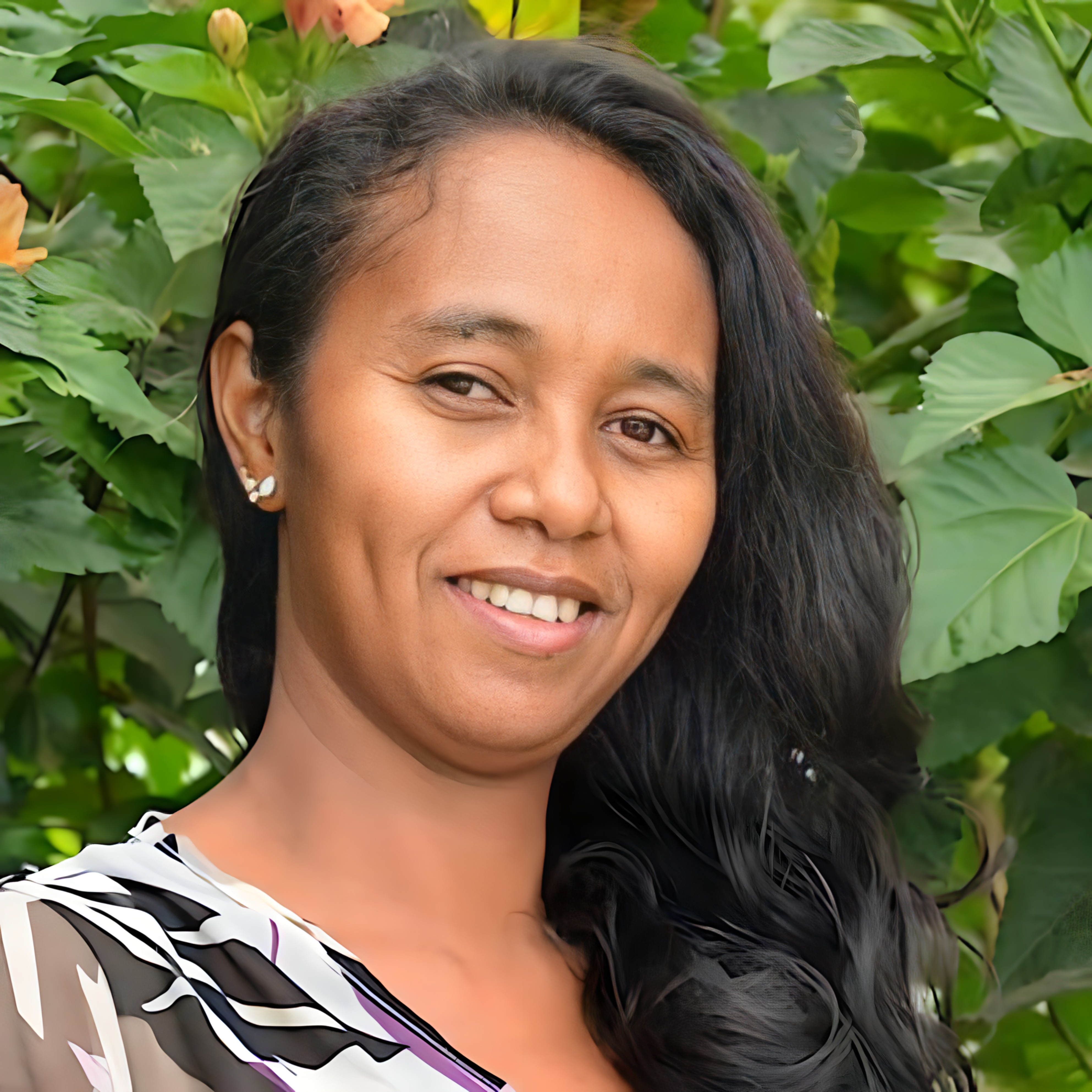
Let's talk about your adventure — Wild West
Ambassador of Malagasy fihavanana, based in Antananarivo
For me, traveling to Madagascar is stepping into the spirit of fihavanana: sharing, helping one another, meeting people, and taking time to understand what connects them to their land.
— Noro


