Avenue of the Baobabs
Avenue of the Baobabs
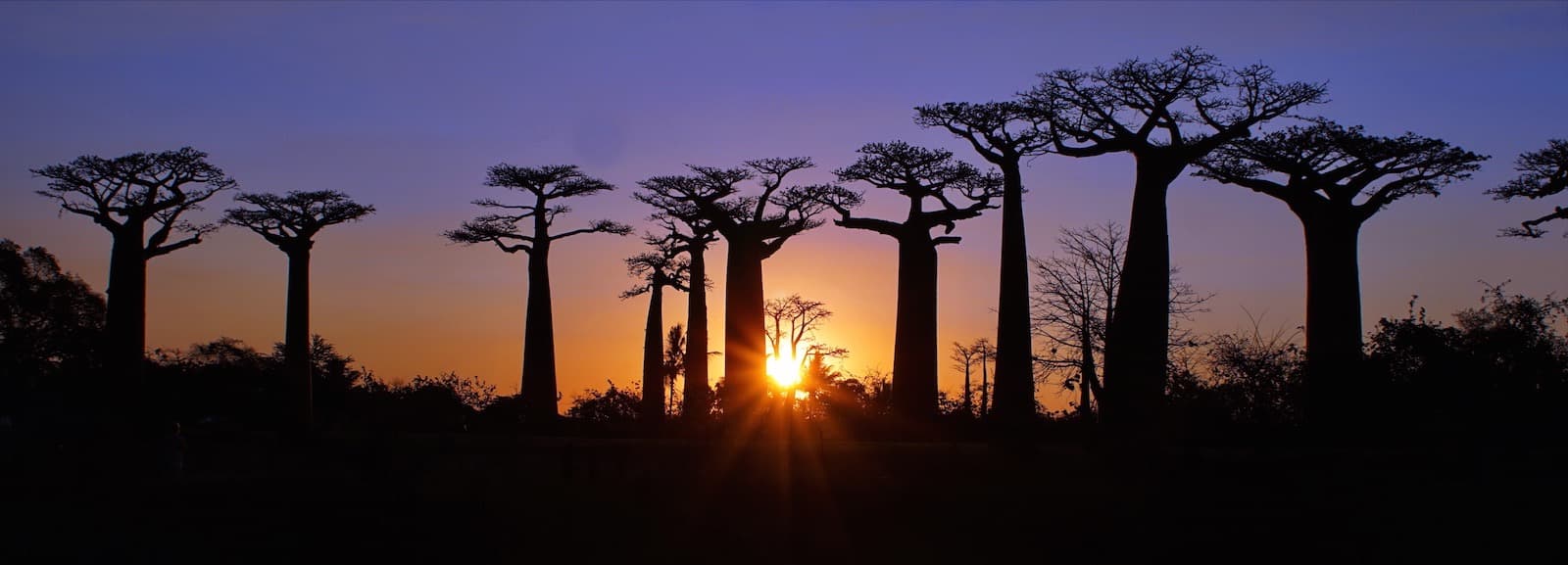
Alignment of Adansonia grandidieri baobabs located 20 km from Morondava, in western Madagascar. Protected site, observation at sunset, access during dry season.
The Avenue of the Baobabs is an alignment of centuries-old trees located approximately 20 km northeast of Morondava, on the track leading to Belo sur Tsiribihina (Belon'i Tsiribihina), in the Menabe region. The site, dominated by the endemic species Adansonia grandidieri, ranks among Madagascar's most recognizable landscapes. It has been protected since 2007 through an initiative by Conservation International.
Why visit the Avenue of the Baobabs
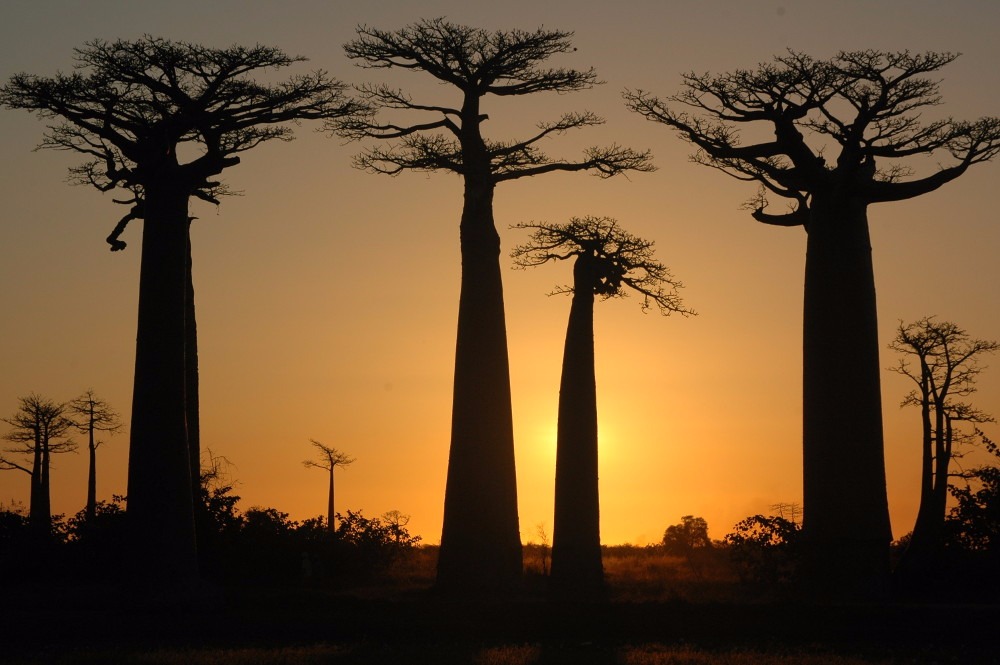
The site brings together a remarkable concentration of mature baobabs, some of which reach 25 to 30 meters in height and are estimated to be approximately 800 years old. The Adansonia grandidieri, endemic to Madagascar, is the dominant species here: its characteristic silhouette, with a cylindrical trunk topped by a dense crown, gives the landscape its singular appearance.
Beyond its botanical value, the place holds cultural significance: a sacred baobab receives offerings left by local inhabitants in honor of their ancestors. A Malagasy legend tells that the gods, annoyed by the baobabs' pride, planted them upside down, with their roots turned toward the sky — a poetic explanation for their atypical silhouette.
What to see on site
- The main avenue: an alignment of mature baobabs bordering the track, stretching several hundred meters, which forms the heart of the site and the most iconic photographic point.
- The sacred baobab: an isolated tree, distinct from the others, where inhabitants leave offerings intended for their ancestors. It is customary to show restraint in its proximity.
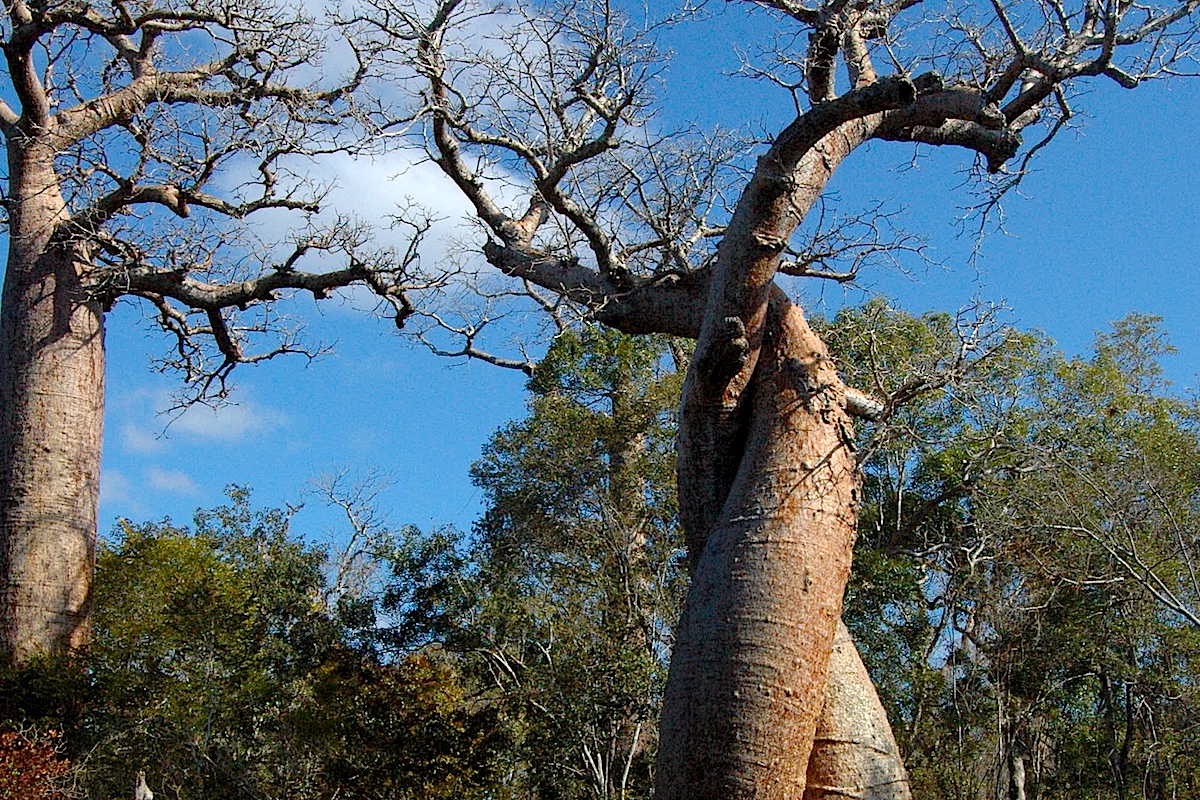
- The lover baobabs: located a few kilometers from the avenue, two intertwined trunks that local tradition associates with good fortune for couples.
- The surrounding landscape: open savanna and rice paddies, marked by deforestation and bush fires that have caused the original dry forests to disappear. The baobab has survived in part because its wood, fibrous and water-filled, is not used for construction.
When to visit
The dry season, from April to November, is the most favorable period. The track connecting Morondava to the avenue is made of laterite: it becomes difficult to traverse during the rainy season (December to March), when downpours can render certain stretches impassable even for 4x4 vehicles.
Sunset remains the most appreciated time for observation: the low-angle light makes the tree silhouettes stand out against the sky and gives the laterite soil its deep ochre hue. Sunrise offers comparable light, with fewer visitors. Allow approximately 1 to 2 hours on site to walk through the avenue.
Practical information
- Visit duration: 1 to 2 hours are sufficient to walk through the site. Many visitors arrive in late afternoon and stay until sunset.
- Access: the track crossing the avenue is open; a modest entrance fee may be requested for site maintenance and conservation.
- Guide: a local guide is not essential for simple observation, but provides useful insights into botany, traditional uses, and beliefs associated with the trees.
- Equipment: water, hat, and sunscreen; closed-toe shoes if you leave the track to approach isolated trees.
How to get there
The avenue can be reached from Morondava, approximately twenty kilometers northeast of the city. Several routes allow you to reach Morondava from other parts of the country.
By air via Morondava
The quickest option is to take a domestic flight from Antananarivo to Morondava: approximately 1 hour of travel. From Morondava, the track leading to the avenue can be driven in less than an hour.
By road from Antananarivo
The road journey covers approximately 680 km via Antsirabe, Miandrivazo, and Malaimbandy. Allow two days to reach Morondava comfortably.
By the Tsiribihina River
From Miandrivazo, it is possible to travel down the Tsiribihina River by barge or pirogue to Belo sur Tsiribihina. The journey generally takes two to three days and allows observation of river life. From Belo, the track reaches Morondava passing through the Avenue of the Baobabs.
Adventure route via the Manambolo
A more demanding alternative is to depart from Tsiroanomandidy, west of Antananarivo, to reach the banks of the Manambolo River. Three days of pirogue navigation lead to the Manambolo gorges and the Bemaraha Tsingy, before heading back toward Morondava.
Nearby attractions
- Morondava: coastal town on the Mozambique Channel, the usual starting point for the avenue and a restful stop with direct access to the sea.
- Kirindy Forest: dry forest located approximately 60 km to the north, renowned for its endemic fauna, including the fossa and several lemur species.
- Bemaraha Tsingy National Park: limestone formations inscribed on the UNESCO World Heritage List, accessible via Belo sur Tsiribihina.
- Cirque Rouge: another emblematic natural site in western Madagascar, to combine for an extended circuit.
Frequently asked questions
Frequently asked questions
The dry season, from April to November, is recommended. The track from Morondava is made of laterite and becomes difficult to traverse during the rainy season, from December to March.
Sunset is the most appreciated time, for the low-angle light that highlights the tree silhouettes. Sunrise offers a similar atmosphere with fewer visitors.
The dominant species is Adansonia grandidieri, endemic to Madagascar. The trees typically measure 25 to 30 meters tall and some are estimated to be approximately 800 years old.
Allow 1 to 2 hours to walk through the avenue, see the sacred baobab and the lover baobabs located nearby, and stay for sunset.
A guide is not mandatory for simple observation, but provides useful insights into botany, traditional uses, and beliefs associated with the trees.
Planning your trip
The Avenue of the Baobabs fits naturally into a circuit through western Madagascar, combined with Morondava, Kirindy Forest, or the Bemaraha Tsingy. To build a tailor-made itinerary, explore our Madagascar trips.
Interested in this visit?
We can include it in your personalised itinerary.