Ambatomanga
Ambatomanga
Located 50 km east of Antananarivo, Ambatomanga combines a granite rock formation, sacred lakes, Merina missionary heritage and artisanal cheese production.
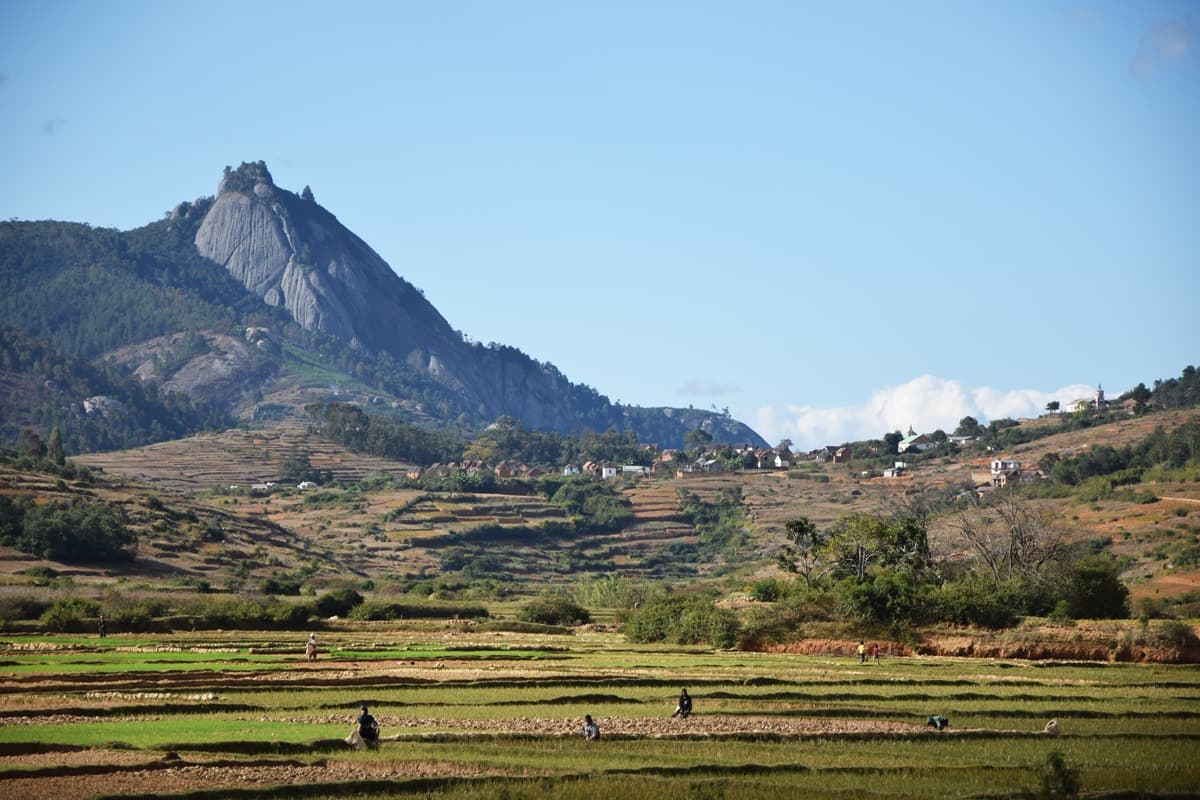
About fifty kilometers east of Antananarivo, Ambatomanga is a village in the Malagasy Highlands dominated by a granite outcrop nicknamed "the blue hill". A former frontier post of the Imerina that became a missionary center in the 19th century, it preserves Protestant architectural heritage, a renowned artisanal cheese dairy, and terrain ideal for hiking.
Why visit Ambatomanga
The village brings together several points of interest that justify a detour from the capital. Its past as a frontier post between the Imerina and the Bezanozano country gave it a unique historical role, reinforced in the 19th century by the establishment of British and then French Protestant missions. The monumental rock that overlooks the dwellings, the presence of sacred lakes, still-active craft workshops and local cheese production make up a cohesive whole that can be explored in a day or weekend.
For travelers based in Antananarivo, Ambatomanga is an accessible and distinctive excursion, away from major tourist routes.
History of Ambatomanga
A frontier post of the Merina kingdom
Before the unification of the country in the 19th century, Ambatomanga marked the eastern limit of the Imerina facing Bezanozano country. Foreign travelers and merchants had to wait for royal permission before proceeding further, making it an active commercial crossroads.
Missionary and educational center
In the 19th century, the village became a center of education thanks to British Protestant missionaries, then French ones. Schools, a college and a secondary school were established there. The Protestant temple, listed as a historic monument, still bears witness to this period today.
The royal tomb of the blue hill
At the summit of the granite rock that towers over the village, a tomb houses several members of Merina nobility. This funerary presence recalls the close link between Ambatomanga and the dynasty that unified the Highlands.
What to see and do in Ambatomanga
The Blue Rock
This granite outcrop, about fifty meters high, is the village's main landmark. You can hike, mountain bike, rock climb and paraglide here. A cave opens on the hillside, and the summit houses the royal tomb mentioned above.
Hiking in the surrounding area
Several marked trails extend between 10 and 25 km around the village. They cross terraced rice paddies, hills and hamlets, and are suitable for mountain bikers and quad enthusiasts as well.
Sacred and historic lakes
The sacred lake of Amparihibe is located at the foot of the Blue Rock and remains associated with local tales. The lakes of Ankadimanga and Ambakoana, nearby, complement walking itineraries.
Antamenaka and the jatropha plantation
About 1 km to the south, the hamlet of Antamenaka hosts an experimental plantation of Jatropha curcas, a plant intended for agro-fuel production. Local legend has it that King Andrianampoinimerina discovered voatamenaka, a medicinal plant that healed him, there.
Vazimba caves
The caves of Antampinimahalana and Antsahakely are presented locally as former refuges of the Vazimbas, considered to be the first inhabitants of Madagascar.
Crafts and cheese dairy
Ambatomanga is known for its cheeses made artisanally by village farmers. Visits to workshops are possible and allow you to observe the stages from milk to aging. Other trades are passed down: blacksmithing, manufacture of typical Highlands terra cotta bricks, weaving of raffia and cotton on manual looms.
Market and built heritage
The Wednesday market at Alarobia brings together producers and artisans from the surrounding area. The Protestant temple, listed as a historic monument, and traditional multi-story houses with tile roofs give the village its character.
Practical information
Allow half a day for a quick visit focused on the village and the Blue Rock, and a full day or even two to combine hiking, lakes and craft workshops. Bring sturdy shoes, water and warm clothing for cool mountain mornings. A local guide facilitates access to caves and lesser-known sites.
When to go
Like the entire Malagasy Highlands, Ambatomanga has a temperate climate, cooler than the coasts. The dry season, from April to October, offers the best conditions for hiking and outdoor activities, with sunny days and cool nights. The rainy season, from November to March, can complicate trails but remains feasible between showers, particularly in February and early November.
How to get there
From Antananarivo, follow National Route 2 eastward, then turn right at the 17 km marker toward Anjeva. The road then leads to Alarobia, then to Ambatomanga. Two alternative routes exist: via Manjakandriana (approximately 12 km) or via Carion (approximately 6 km). The journey from the capital takes about an hour and a half by car, depending on traffic.
What to see nearby
- Antananarivo and its historic hills, the natural starting point for the excursion.
- Independence Square, at the heart of the capital, to extend your urban exploration.
- Ranomafana National Park, further south, to combine Highlands and rainforest.
Frequently asked questions
Frequently asked questions
Half a day is enough for the village and the Blue Rock. Allow a full day or even two if you want to hike, visit the lakes, caves and craft workshops.
Take Route 2 eastward, turn right at the 17 km marker toward Anjeva, then continue toward Alarobia. Alternative routes are available via Manjakandriana or Carion.
Yes, some workshops welcome visitors and show the production stages from milk to aging. Inquire locally or with a local guide.
The dry season, from April to October, is most favorable for hiking. The shoulder seasons (February, November) remain pleasant between showers.
A local guide is not mandatory but strongly recommended to access the Vazimba caves, locate trails and understand the history of the royal tomb and the missionary site.
Prepare your trip
Ambatomanga fits easily into a circuit through the Highlands starting from Antananarivo. To build a custom itinerary including this village, its lakes and other sites on the island, consult our Madagascar trips.
Interested in this visit?
We can include it in your personalised itinerary.