Lokobe National Park
Lokobe National Park
Spanning 862 hectares of pristine Sambirano rainforest, Lokobe National Park shelters lemurs, chameleons and endemic palms southeast of Nosy Be.
Located southeast of Nosy Be, Lokobe National Park protects one of the last remaining pockets of tropical rainforest in the Sambirano region. Across 862 hectares, this primary forest is home to exceptional biodiversity, with numerous endemic species. It's a singular destination for travelers seeking immersion in unspoiled wilderness, blending local traditions with wildlife observation.
Lokobe Through History
Long before modern conservation efforts, Lokobe held sacred standing in local tradition. According to oral history, Queen Soanaomby initiated its protection, and upon her death, King Andriamaitso was buried in the forest's southwest, bestowing upon it a taboo status (Ala fady)—an early form of community-led conservation.
In 1913, colonial administration designated the site as a reserve. Then, in 1927, Lokobe became an Integral Nature Reserve, closed to the public. The 1966 decree strengthened this protection. Managed initially by the Direction of Waters and Forests, then entrusted to ANGAP in 1995, Lokobe became a pilot site for the National Environmental Programme.
Lokobe Today
Since 2013, Lokobe has officially become a national park (IUCN Category II), open to the public within a strictly regulated ecotourism framework. Its management is overseen by Madagascar National Parks, with support from the Foundation for Protected Areas of Madagascar. Today, Lokobe exemplifies participatory conservation, integrating local communities in its tourism and educational activities.
An Ancient Forest with Botanical Treasures
Lokobe is a true botanical sanctuary, quintessentially representative of the Sambirano ecoregion. Among remarkable plant species, you'll find:
- Giant trees: rosewood, teak, ramy (Canarium madagascariense), ravinala
- Rare endemic palms: Dypsis ampasindavae, Dypsis nossibensis
- Medicinal flora traditionally used by local communities
- Orchids, giant ferns, pandanus, epiphytic plants
- Species specific to different terrain:
- Uapaca louveli (ridges)
- Grangeria porosa, Parkia madagascariensis, Dyospiros clusiifolia (slopes)
Each forest trail unveils a living, thriving ecosystem.
Endemic Fauna to Observe Closely
Lokobe offers a rare observation experience, both day and night. Among flagship species:
Lemurs
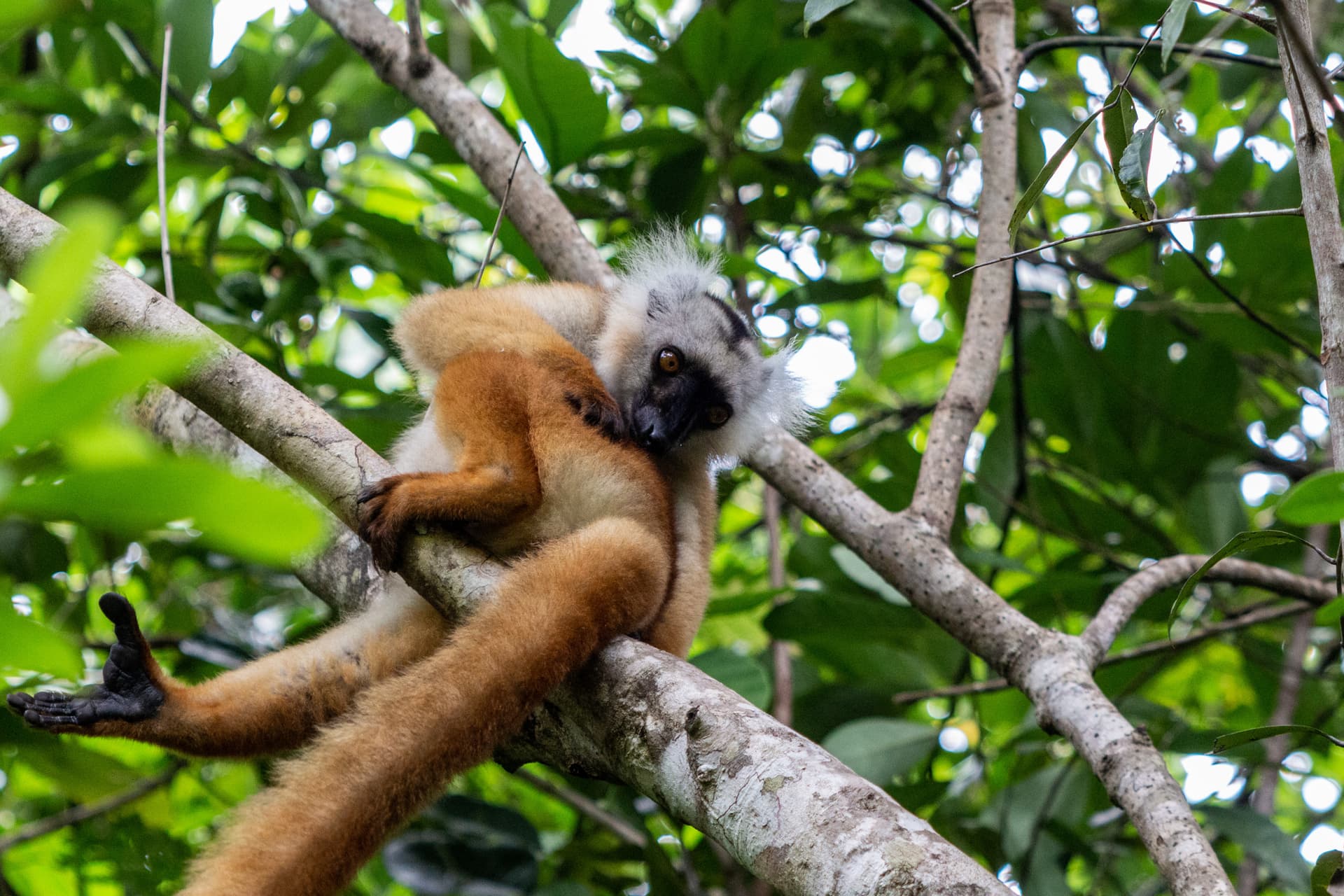
- Eulemur macaco: black or brown lemur depending on sex, visible during the day
- Lepilemur: discreet nocturnal lemur
- Other species within mangroves and humid forests
Reptiles and Amphibians
- Chameleons of all sizes (5 to 40 cm)
- Green tree lizards, brown terrestrial lizards (Antalabosy)
- Malagasy boa (Sanzinia madagascariensis) and Menarana, a more elusive serpent
Birds
Over 17 species, including:
- Madagascar owl
- Malagasy kingfisher
- Several endemic passerines
Insects
- Ants, butterflies, spiders, beetles…
- A microscopic fauna still little studied, fuel for ongoing scientific research
Activities in the Reserve
To explore Lokobe, three official circuits are offered by Madagascar National Parks, all led by accredited local guides:
Kindro Trail
- Distance: 2.25 km
- Duration: approximately 3 hours
- Level: Moderate
- Discovery of emblematic flora (palms, medicinal plants) and observation of lemurs, chameleons, frogs.
Mitsinjo Trail
- Distance: 1 km
- Duration: approximately 2 hours
- Level: Challenging
- Coastal route combining terrestrial biodiversity and marine reefs. Stunning vistas included.
Ramy Trail
- Distance: 2.25 km
- Duration: approximately 3 hours
- Level: Easy
- Ideal for families, combining forest, beach, observation and relaxation.
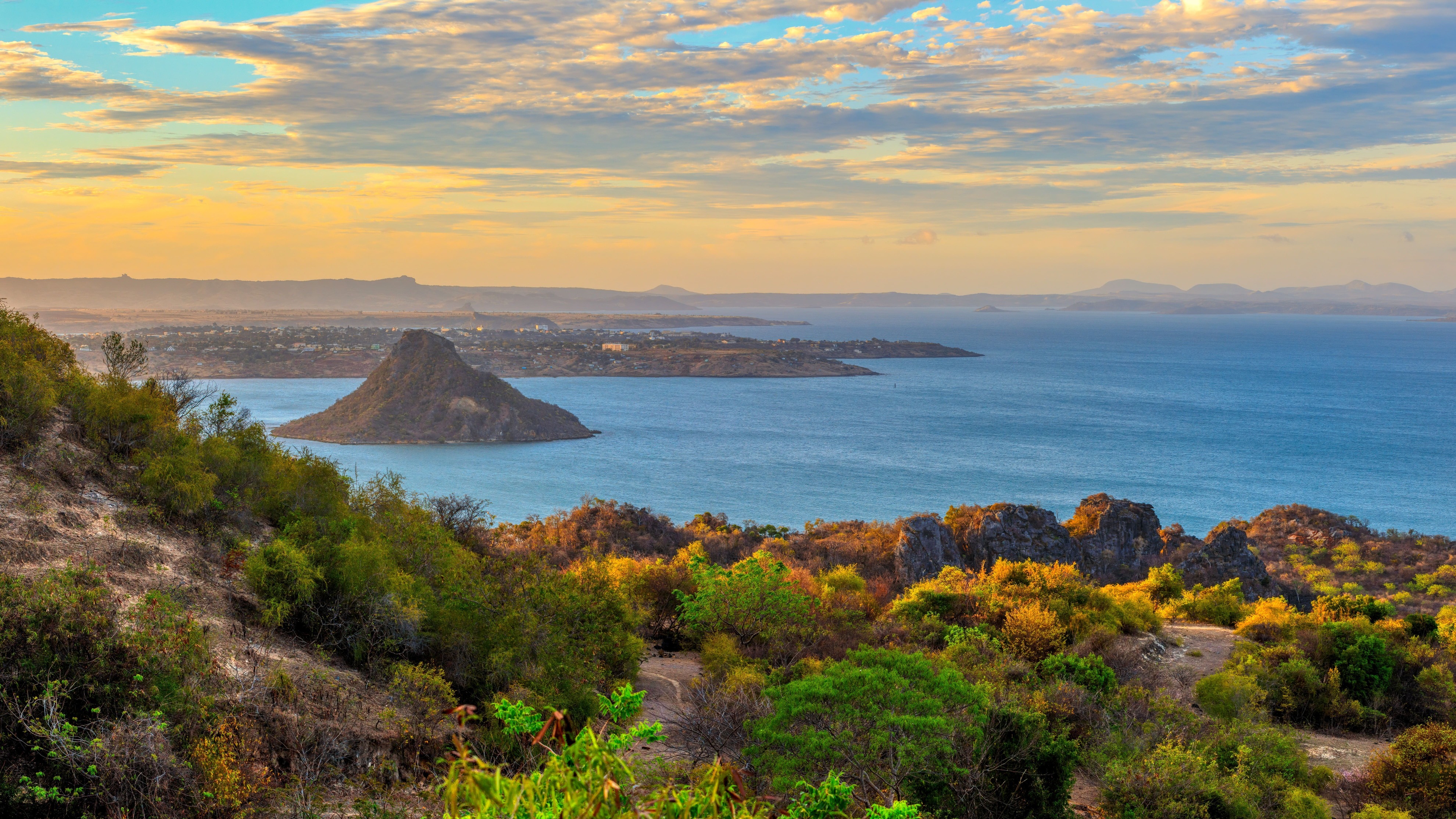
Must-see: the exceptional viewpoints over the reserve from Dzamandzar, Antanety or Nosy Faly.
When to Visit?
Lokobe National Park enjoys a tropical humid climate, marked by two distinct seasons:
- The warm and rainy season, from November to April, with particularly heavy precipitation in December and January. Average annual rainfall reaches nearly 2,250 mm.
- The dry season, from May to October, is more conducive to visiting, with milder weather and accessible trails.
Temperatures range between 21°C and 31°C, with an annual average around 26°C.
Travel Tip: the best period to visit Lokobe falls between June and September, during the dry season, to enjoy optimal conditions for exploration and wildlife observation.
The reserve is located on Nosy Be, northwest of Madagascar. Here are the recommended itineraries:
From Antananarivo
- RN4 to Ambondromamy (410 km)
- RN6 to Ambanja (510 km)
- Road to Ankify (23 km from Ambalavelona)
- Fast ferry to Hell-Ville (45 min)
- Road to park entrance (approximately 7 km)
From Antsiranana (Diego Suarez)
- RN6 to Ambalavelona (233 km)
- Road to Ankify (23 km)
- Fast ferry to Nosy Be + road to Lokobe
Local Access
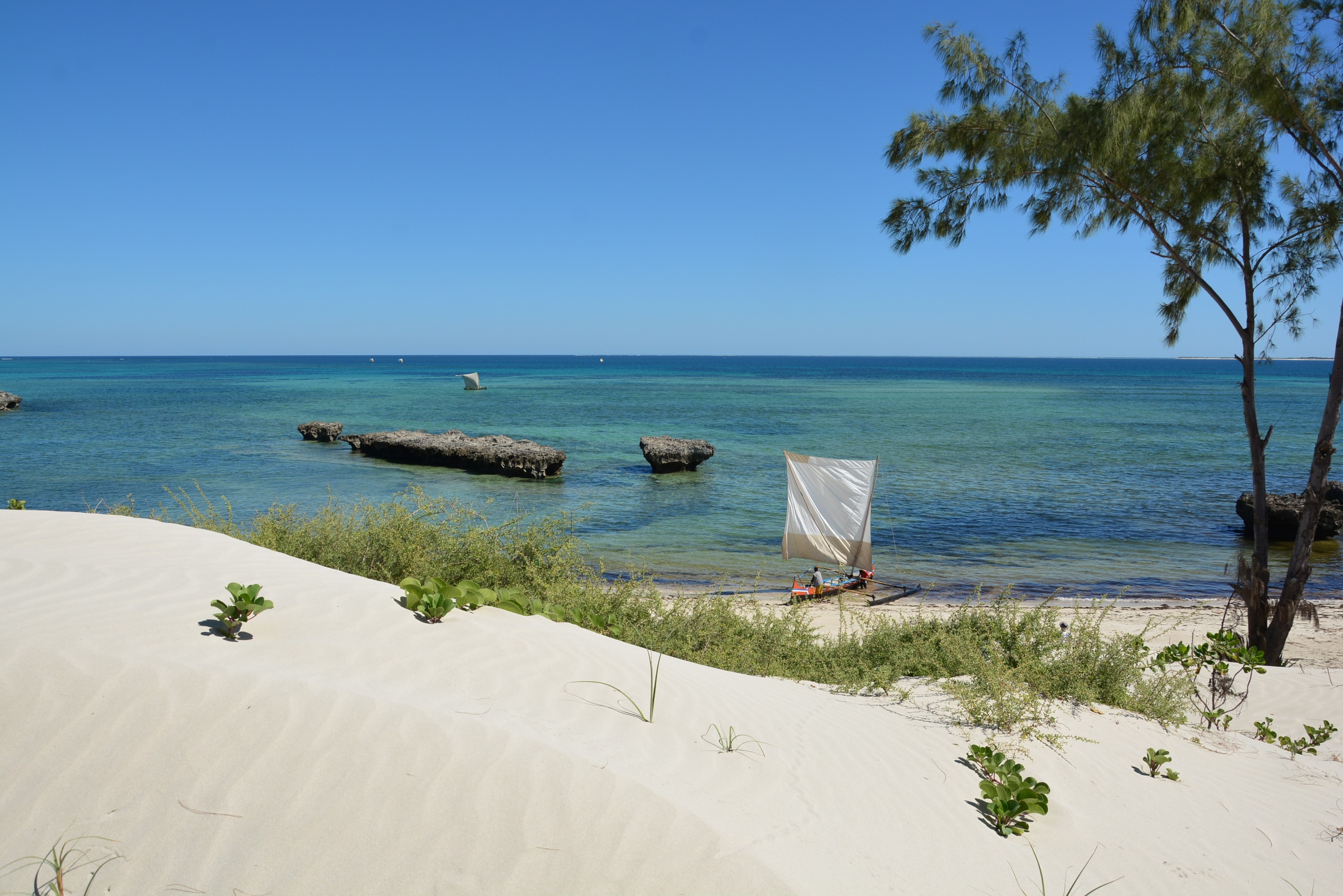
From Hell-Ville, you can reach Ambatozavavy by taxi. A traditional pirogue then takes you to Ampasipohy village, the park's main entry point. The crossing takes approximately 1 hour, through mangroves.
Rates and Tips for Visiting the Reserve
Entrance fees (MNP rates):
- Foreign adults: 55,000 Ar
- Foreign children: 25,000 Ar
- Malagasy adults: 2,000 Ar
- Malagasy children: 500 Ar
All visits must be accompanied by an accredited local guide (fee not included, variable by circuit).
Community Access
Departing from villages such as Ambatozavavy, a local contribution of approximately 3,000 Ar may be requested, particularly for circuits managed by communities.
Tip: prioritize purchasing tickets on-site, as rates may vary slightly between access points.
Want to discover this destination?
Our local advisors design your tailor-made trip.