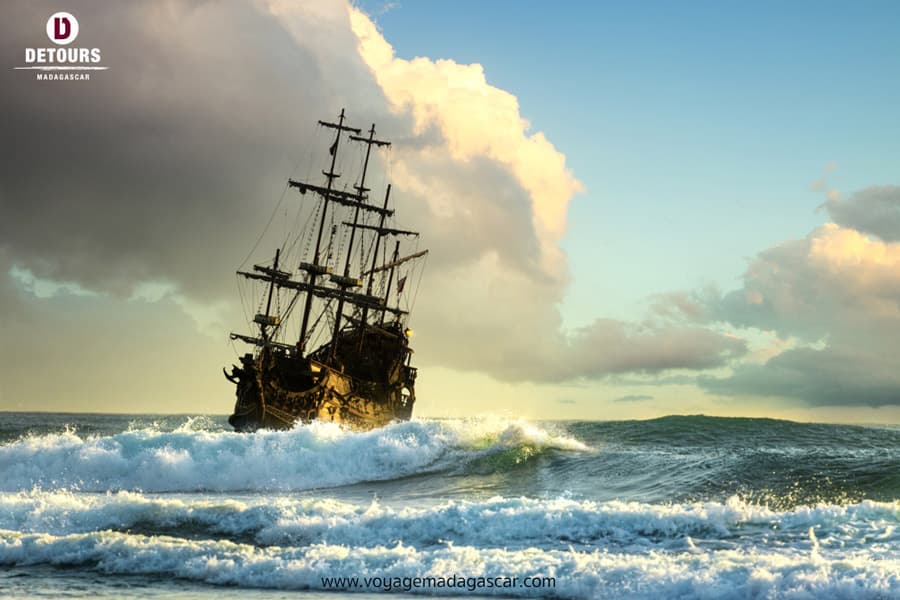
Madagascar's Sainte-Marie Island: Pirate Haven of the 17th and 18th Centuries
Sainte-Marie Island, off the east coast of Madagascar, is renowned as a tranquil destination for whale watching. Visitors lounge on pristine beaches, dive in crystal-clear waters, explore the island by bike, and visit the legendary pirate cemetery. Yes, the island was once the favored stronghold of pirates in the 17th and 18th centuries. Sainte-Marie remains forever linked to piracy!
October 12, 2018 — Sainte-Marie Island, off the east coast of Madagascar, is renowned as a tranquil destination for whale watching. Visitors lounge on pristine beaches, dive in crystal-clear waters, explore the island by bike, and visit the legendary pirate cemetery. Yes, the island was once the favored stronghold of pirates in the 17th and 18th centuries. Sainte-Marie remains forever linked to piracy!
Among the countless adventures, legends, and extraordinary histories recorded, certain names stand out: Thomas Tew, Christophe Condent, William Kidd, Dirk Chivers, Olivier Le Vasseur — known as "La Buse" — and John Avery.
Sainte-Marie: The Pirate Island
The island's name was bestowed by Portuguese navigators who anchored in the bay on the Feast of the Assumption in 1503. This marked the arrival of the first Europeans at Sainte-Marie. As maritime traffic intensified throughout the Indian Ocean, an increasing number of vessels arrived at Sainte-Marie, including privateers and buccaneers. History records the name of Thomas Tew, a celebrated and wealthy pirate who married a local princess. Their son, King Ratsimilaho, became one of the first métis, known as zanamalata, recorded on the East Madagascar coast. His daughter, Princess Betty, is credited with signing the official Act of Donation of Sainte-Marie Island to France on July 30, 1750. The period between 1685 and 1720 is recognized as the golden age of piracy at Sainte-Marie. Over a thousand pirates are documented as residents or making port at the island. The bay was the preferred haven of history's greatest pirates, their stronghold, where they brought their stolen vessels. Court records, ship logs, and maritime charts prove this extensively.
The Famous Pirates of Sainte-Marie
Dirk Chivers, a celebrated Dutch pirate, accomplished one of the most remarkable feats in piracy when he seized the Great Mohamet in 1698. This enormous Turkish vessel (40 x 14 m) carried 600 pilgrims bound for Mecca, along with gold, silver, and jewels estimated today to be worth approximately 350 million euros. William Condon, also known as Christopher Condent or "Billy One-Hand," was captain of the wealthiest pirate ship in history: the Fiery Dragon. However, he intentionally burned it in 1721 following an agreement with France that allowed him to take refuge in that country, beyond the reach of British law. He had retired from piracy in 1720 after capturing an Indian merchant vessel carrying gold coins, medicine, silk, and other valuables estimated today at approximately 375 million euros. Olivier Levasseur, called "La Buse," is celebrated for a cryptogram leading to hidden treasure. His plunder remains the most substantial, as in 1721, he and his crew succeeded in capturing the Virgin of the Cape, a Portuguese galleon transporting gold, silver, diamonds, rubies, and other precious objects worth today's equivalent of 400 million euros. Condemned to death after being captured by a French merchant vessel in 1730, he reportedly threw an encrypted parchment — a treasure map — to the crew, declaring: "My treasure for whoever can decipher it."
The Legacy of Piracy in Madagascar
Some residents of Sainte-Marie are descendants of pirates, and the tombs of these sea bandits remain visible in Ambodifotatra, the island's largest town. This is now one of the most visited tourist sites on the island. Near Pirate Bay, the wrecks of pirate vessels remain visible. The remains of the famous ship of Captain Condent and Captain Kidd's vessel lie at the ocean's floor. The waters surrounding Sainte-Marie are also ideal for scuba diving, featuring magnificent dive sites with wrecks. To view — and perhaps even touch — historical evidence of the pirates' presence at Sainte-Marie, visit the Pirates Museum in Antananarivo! This remarkably unique venue is located in the Tsaralàlana quarter, on the fourth floor of a building across from the Ballou Company. Piracy in Madagascar also spawned the legend of a utopian pirate republic: Libertalia! It was said to be hidden in the bay of Diego-Suarez and lasted from 1685 to 1697.
Culture and Tradition History Tourism — Charlène Nomadays — An SEO writer from Nomadays' earliest days, Charlène has evolved into content manager and head of communications, accompanying the adventure since its inception with unwavering passion and dedication. After living seven years across Asia — from China to Thailand, through Mongolia and South Korea — she has made travel a way of being in the world. Devoted to words, nature, and human connection, she endeavors to convey in her writing a perspective on tourism that is sensitive, engaged, and responsible. For her, each article is a bridge between curiosity, respect, and wonder.