From Diego Suarez to Nosy Be: misty forests, tsingy and the perfume island
From the misty forests of Amber Mountain to the tsingy of Ankarana and the perfume island, eight days in northern Madagascar.
Duration
8 days
From
€760/pers.
Ideal seasons
Apr, May, Jun, Jul, Aug, Sep, Oct
Style
Guided tour
Comfort
Charm & Character
Travelers
Couple, Solo, With friends
The spirit of travel
In eight days, this trip covers northern Madagascar, from the bay of Diego Suarez to the island of Nosy Be. After a first night in Antananarivo, a flight takes us to Diego Suarez, a former naval base situated on the edge of one of the world's largest natural harbors.
From there, a 4x4 with driver takes us through two contrasting worlds. Amber Mountain, a volcanic massif covered in humid forest, stops clouds above the dry plains: waterfalls, crater lakes, lemurs and chameleons. Further south, Ankarana is a limestone plateau riddled with caves and bristling with tsingy, which we explore on foot with park guides. Between the two, the red Tsingy of Irodo showcase a landscape of erosion with fiery colors.
The road then descends the Sambirano valley, with its cocoa and ylang-ylang plantations, down to Ankify. A speedboat takes us to Nosy Be, a volcanic island with crater lakes, where a free day lets us discover the island at your own pace before the return flight to Antananarivo.
This trip connects with our other regional journeys, the West, the South and the East. Each departs from Antananarivo and returns there: end to end, they compose a tailor-made trip of two, three or four weeks.
The stages of your journey
Highlights
Day-by-day itinerary

Arrival in Antananarivo
Upon arrival at Ivato International Airport, a member of the Détours Madagascar team welcomes us and takes us to our hotel in Antananarivo. The transfer takes approximately 45 minutes.
Depending on our flight time, we discover the first faces of the capital on the way. The city is built on a dozen hills, amid the rice paddies of the Betsimitatatra plain. Two-storey brick houses with wooden balconies crowd the slopes, and long staircases connect the upper districts to the markets of the lower city.
Antananarivo was born in the 17th century on the highest of these hills, around the palace of the Merina sovereigns. It is now a bustling capital, where life takes place largely in the streets: street vendors, bush taxis, pousse-pousse and carts share the road.
This first evening, we take time to settle in and rest from the journey. Our team answers our last questions about the course of the trip, which takes us from tomorrow onwards to the North, Diego Suarez bay, Amber Mountain and the tsingy of Ankarana. Dinner is not included.

Flight to Diego Suarez and city discovery
Antananarivo → Diégo Suarez I Antsiranana
According to the flight schedule, transfer from the hotel to Antananarivo airport and flight to Diego Suarez, approximately two hours of flight. The plane follows the backbone of the island, over the Highlands then the Tsaratanana massif, the highest point of Madagascar at 2,876 meters, before descending towards Diego Suarez.
Upon arrival at Arrachart airport, a member of the Détours Madagascar team welcomes us and takes us into town. Antsiranana, which everyone still calls Diego Suarez, occupies a peninsula on the edge of a huge bay, one of the largest natural harbors in the world, divided into several coves and closed by a narrow pass. In the middle of the bay stands the Sugarloaf, Nosy Lonja, an islet sacred to local populations.
A French naval base from the end of the 19th century, the city retains from this history its wide avenues, its arcaded houses and its colonial buildings, some worn away by time. The market brings together Antakarana, Sakalava, Comorians, Indians and Merina in a mix that defines the identity of the North.
The afternoon is free for a first walk through the center and along the waterfront. During the austral winter, the varatraza, the south-east trade wind, often blows strongly over the bay and sets the rhythm of city life.

Amber Mountain, the misty forest of the North
Diégo Suarez I Antsiranana → Amber Mountain
Amber Mountain → Amber Mountain
Early morning departure heading south, by 4x4 with our driver. After about thirty kilometers, the road climbs up the slopes of Amber Mountain to Joffreville, a former rest station of the colonial army, then to the entrance of the national park. In less than an hour, we leave the dry plains of Diego for a misty forest.
Amber Mountain is a volcanic massif that peaks at 1,475 meters. Its lava flows and cones rise above the dry plains of the North and intercept clouds coming from the ocean. More than three meters of rain falls there annually: the mountain forms an island of humid forest in the middle of a country of savannas, and it is the water supply for Diego Suarez.
Accompanied by a local park guide, we walk beneath tall trees covered with moss, tree ferns and orchids. The trails lead to waterfalls that plunge into basalt cirques and to crater lakes hidden in the forest. The ramy, an endemic tree, gives off a strong resin scent.
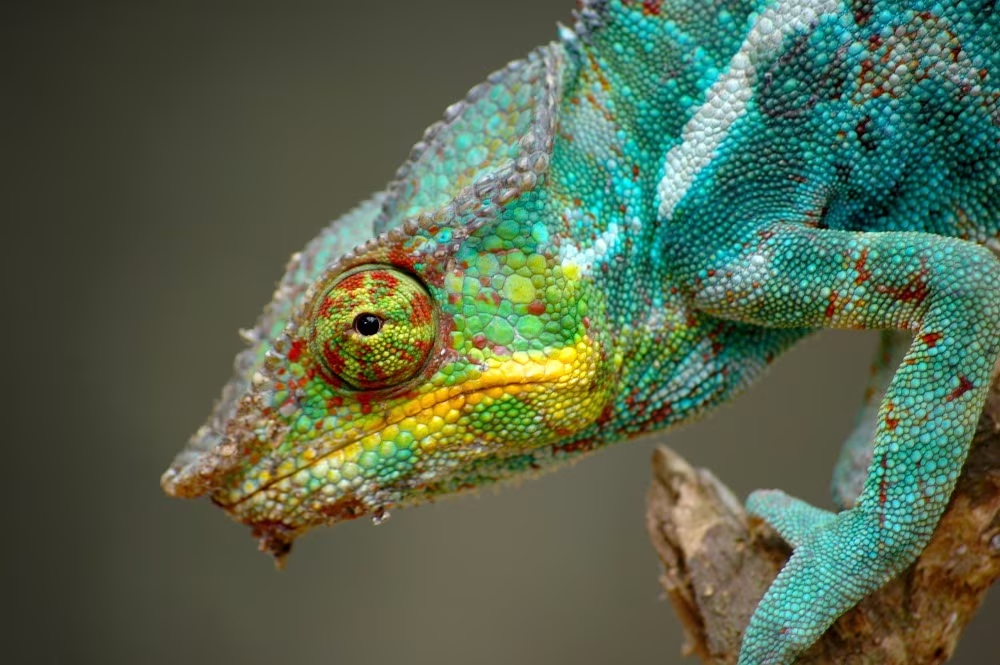
The forest is home to several species of lemurs, including the crowned lemur and Sanford's lemur, found only in the north of the island. It is also the domain of chameleons, from the largest to the tiny Brookesia measuring just a few centimeters, and Uroplatus, flat-tailed geckos that blend in with the bark. Observing them requires patience, silence and the trained eye of the guide.
Picnic lunch in the forest, then return to Diego Suarez in late afternoon.
Amber Mountain → Diégo Suarez I Antsiranana

From the Red Tsingy to the Ankarana Massif
Diégo Suarez I Antsiranana → Tsingy Rouge
We leave Diego Suarez heading south on national road 6. At Sadjoavato, a track leads us to the Irodo valley and the red Tsingy. Here, erosion has attacked a plateau made of sandstone, marl and laterite. Thunderstorms have gullied these soft soils and exposed a set of pinnacles and needles several meters high, colored red, ochre and pink by iron oxides. The site is discovered on foot, along the edge of the cirque, then at the foot of the needles.
This landscape is recent and fragile: it was born from the exposure of soils, and it changes with each rainy season.
We then rejoin National Road 6 heading south. To the west, the gray line of the Ankarana massif gradually appears on the horizon, a limestone plateau about twenty kilometers long, rising from the plain. We reach Mahamasina, at the foot of its eastern edge, the gateway to the national park that we will explore the next day. We check into the hotel in late afternoon.

On foot in the Ankarana tsingy
Ankarana is a plateau of Middle Jurassic limestone, deposited at the bottom of a warm sea approximately 160 million years ago, like those of Bemaraha in the West. Uplifted and then attacked by water, it is riddled with caves, underground rivers and canyons. Some canyons, born from the collapse of caves, shelter entire forests, isolated at the bottom of their walls.
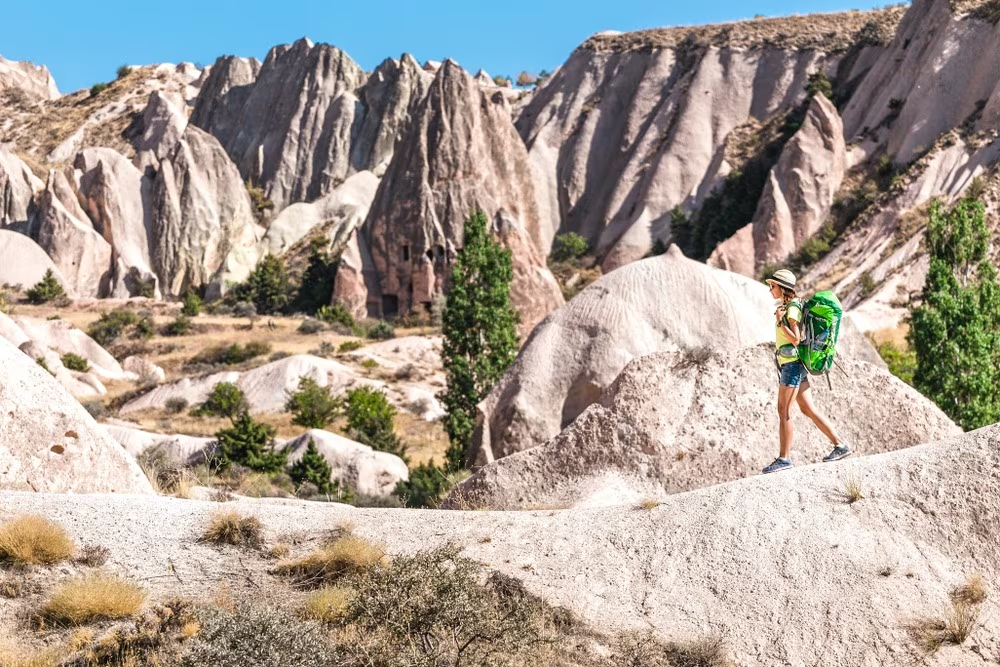
With a local park guide, we set off on foot from Mahamasina. The trail crosses dry forest, passes near cave entrances where bat colonies live, then reaches the tsingy. Limestone blades rise up in tight fields, cut by deep crevasses. A suspension bridge crosses one of them and opens up the view onto this mineral landscape. Further on, the Perte des Rivières shows the water disappearing under the plateau.
Ankarana's forest is home to the crowned lemur and Sanford's lemur, mongooses and many birds. The caves are also sacred places for the Antakarana, whose sovereigns found refuge in the massif in the 19th century.
Picnic lunch in the park, then return to the hotel in the afternoon.

The Sambirano Valley and the crossing to Nosy Be
Early morning departure heading south on National Road 6. After Ambilobe, the road enters the Sambirano valley. This river descends from the Tsaratanana massif, and its alluvium forms one of the most fertile lands on the island. In the shade of large trees grow cocoa, coffee, pepper and ylang-ylang. Sambirano cocoa is renowned throughout the world. After Ambanja, a coastal road takes us to Ankify, on the edge of the Mozambique Channel, facing Nosy Be.
The crossing to Nosy Be is by speedboat and lasts approximately 45 minutes. It takes place before noon, as the sea often gets rough in the afternoon. We disembark at Hell-Ville, today Andoany, the main town on the island, and head to our hotel. The rest of the day is free.
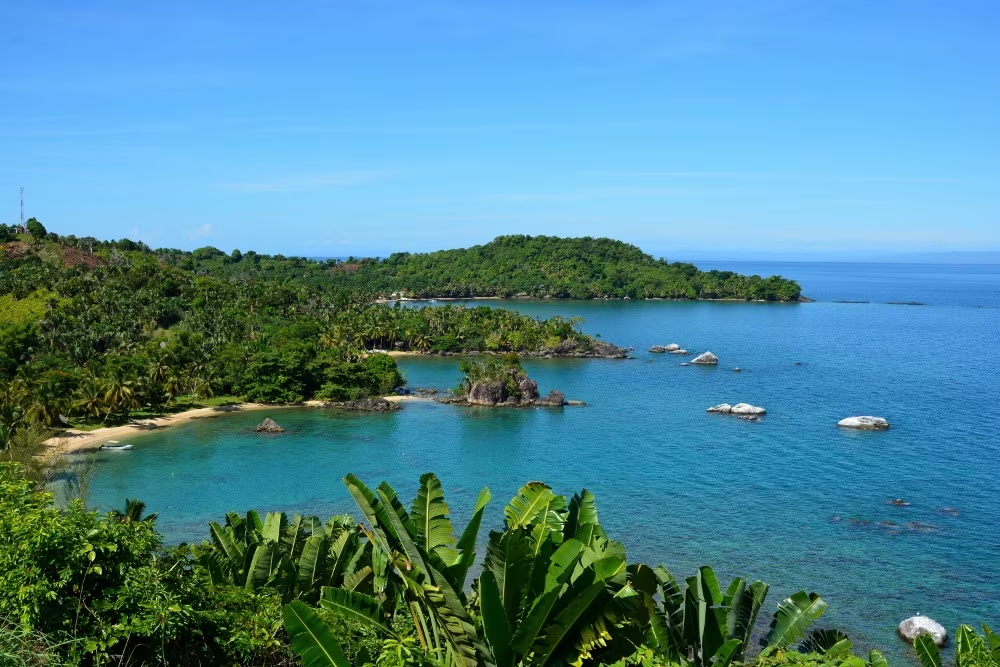
Nosy Be, "the big island", is a volcanic island: its hills feature around ten crater lakes, and its highest point, Mount Passot, overlooks the western coast. It is also known as the perfume island, for its plantations of ylang-ylang, vanilla, pepper and sugar cane.

Free Day at Nosy Be
Free day in Nosy Be. Discover the island at your own pace: beaches on the west coast, fishing villages, Hell-Ville market, ylang-ylang plantations and distilleries, Lokobe reserve in the southeast, the last remnant of the island's primary forest. At the end of the day, Mount Passot offers views of the crater lakes and the sunset.
Excursions and activities for this day are at your own expense. Our team can organize them upon request, in particular a boat trip to the neighboring islands.

Return to Antananarivo and Departure
According to the flight schedule, free time in Nosy Be, then transfer to Fascène airport and flight to Antananarivo (not included).
In Antananarivo, a member of the Détours Madagascar team welcomes us at Ivato airport and accompanies us until the return international flight.
This journey in the North ends here. It can be extended with one of our other regional trips, the West, the South or the East, which all depart from Antananarivo, or with a few days of sailing in a dhow and canoe in the Radama archipelago with our partners.
Price per person
Indicative price per person, based on double room. Each trip is customized according to your preferences.
This trip can be tailored to your preferences
This itinerary provides an excellent foundation for discovery, but it can be fully customized. Our local advisors build each trip tailored to your budget, dates and preferences.
Not included
- International flights
- The domestic flight Antananarivo - Diego Suarez (day 2)
- The domestic flight Nosy Be - Antananarivo (day 8)
- Lunches and dinners, excluding picnics on days 3, 4 and 5
- Free day activities in Nosy Be and activities not mentioned in the program
- The vehicle and the driver in Nosy Be
- The single room supplement (€430 per person)
- Beverages, tips and personal expenses
- Cancellation, repatriation and first aid insurance
- Visa fees
Included
- 4x4 transportation with driver, fuel included, from day 2 to day 6 (maximum 4 travelers per vehicle)
- Local guides and entrance fees for parks and sites (Amber Mountain, Red Tsingy, Ankarana)
- Accommodation in double or twin room in program hotels, with breakfast
- Picnic lunches on days 3, 4 and 5
- The speedboat crossing from Ankify to Nosy Be and the transfer from the port to the hotel
- Airport transfers in Antananarivo, Diego Suarez and Nosy Be
- The visits described in the program, excluding free day
Practical Information
Registration is considered firm and final after payment of a deposit of 40% of the total price and acceptance of the specific terms of sale.
The balance must be paid no later than 45 days before the departure date.
See our specific terms of sale for full details.
In the event of cancellation by the traveller, the following fees apply:
More than 60 days before departure: 40% of the total price (deposit retained)
Between 60 and 30 days before departure: 50% of the total price
Less than 30 days before departure: 100% of the total price
We strongly recommend taking out cancellation insurance. See our specific terms of sale for full details.
Your Passport:
Important: your passport must be valid. It must be absolutely and obligatorily valid for 6 months after the end of your stay in Madagascar.
Your travel documents
Your valid passport,
Your international and/or domestic flight tickets,
Your repatriation and emergency care insurance contract,
Your vaccination record if applicable,
Your blood type card if possible.
Obtaining a visa to enter Madagascar
Upon arrival in the territory:
Since February 16, 2026, the visa costs €30 for up to 15 days, €35 for 16 to 30 days, €40 for 31 to 60 days and €50 for 61 to 90 days. It can also be requested online before departure on the official e-visa portal (evisamada.gov.mg). An additional tourist tax of €10 is paid in cash upon arrival.
It is easily obtained upon your arrival in Madagascar.
This applies to all airports in Madagascar that handle international flights.
Upon arrival at the airport terminal, upon exiting the plane, a corridor for passengers is dedicated to issuing tourist visas.
This procedure is the simplest. We recommend it to you.
At the embassies and consulates of your home countries:
For information, download the document explaining the procedure and the file requirements for obtaining a visa from the Embassy of Madagascar.
To participate in our trips, it is strongly recommended to be insured for repatriation assistance and medical expenses abroad.
Your local agency encourages you to familiarize yourself with the specific contract developed with our partner CHAPKA ASSURANCES and AXA ASSISTANCE.
To subscribe to insurance, learn about coverage and rates, follow the link below.
CAP EXPLORER: The comprehensive insurance solution designed to enjoy your trip with peace of mind!
Choose the plan that best suits you:
Explorer'Multirisque
Explorer'Annulation
Explorer'Assistance
Specific to our trips, we strongly recommend subscribing to them.
If you choose to subscribe to one of these plans, the policy detailing all coverage and procedures for claiming any loss are available on the insurer's website.
Your local agency will be aware of it, but only the participant is responsible for complying with the procedures for declaring any loss. The participant must therefore keep this policy with them throughout their trip.
Chapka — Cap Explorer
Our insurance partnerTravel with peace of mind with our partner Chapka. Cancellation, repatriation, medical expenses, baggage… All the coverage for a worry-free trip.
Travel with peace of mind — I'll handle the insuranceFrequently asked questions
A tourist visa is required, issued upon arrival at Ivato Airport (Antananarivo) or online (e-visa). Your passport must be valid for at least 6 months from your date of entry. Before booking your trip, check with Madagascar's consular authorities for the conditions applicable to your nationality, including visa fees and authorized lengths of stay.
Go to the My Trips section to find all your projects.
You can send a message to your host directly from the Tea Lounge.
For a tailor-made quality trip, expect between 160 and 270 euros per day and per person, including accommodation, meals, internal transfers and English-speaking guide. International flights (900-1400 euros return) are additional. Long transfers and domestic flights represent a significant portion of the budget.
Your documents are accessible in the Documents tab of your trip.
Absolutely. We adapt each itinerary to suit your travel profile. For families, we prioritize relaxed pacing, family-friendly accommodations, fun and educational activities, and comfortable private transfers. Our local English-speaking guides know how to captivate children with age-appropriate anecdotes.
It's simple. You exchange with our local team to define your wishes, budget and dates. You receive a detailed itinerary proposal within 48 hours. You adjust every detail together until it's perfect. You confirm and travel with peace of mind. Your local agency remains available 7 days a week throughout your trip.
In case of emergency, contact your local agency immediately.
Payment is generally made in two installments.
Our agency is part of the Nomadays network, registered in France. You benefit from APST (Association Professionnelle de Solidarité du Tourisme) protection, which covers 100% of your funds. Secure payment, professional insurance, and English-speaking assistance 7 days a week on the ground throughout your stay. Travel insurance (assistance and repatriation, cancellation) is not included: we offer it through our insurance partner and strongly recommend it.
Let's talk about your adventure — Nosy Be and Islands
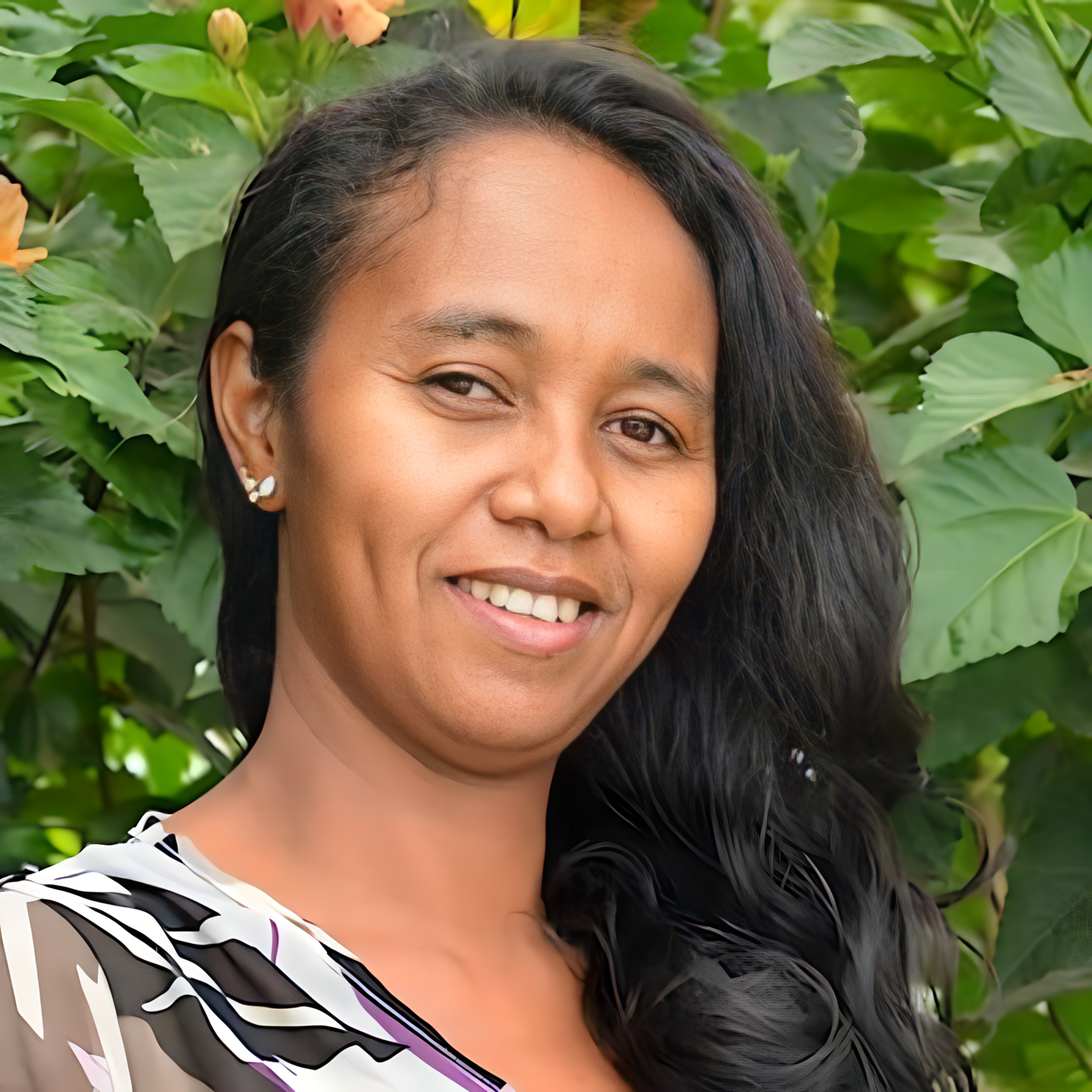
Ambassador of Malagasy fihavanana, based in Antananarivo
For me, traveling to Madagascar is stepping into the spirit of fihavanana: sharing, helping one another, meeting people, and taking time to understand what connects them to their land.
— Noro