Berenty Reserve
Berenty Reserve
Réserve de Berenty, Amboasary, Madagascar
Private reserve in southern Madagascar established in 1936, Berenty protects 1,000 hectares of dry forests where ring-tailed lemurs and Verreaux's sifakas can be observed.
In southern Madagascar, between Amboasary and Ambovombe, the private reserve of Berenty protects nearly 1,000 hectares of dry forests along the Mandrare River. Located approximately 90 km from Taolagnaro (Fort-Dauphin), it ranks among the finest sites for observing lemurs in their natural habitat and understanding the ecosystems of the Great South.
Why visit Berenty
The reserve offers a rare combination: endemic wildlife easily observable at close range, a recognized scientific setting, and contrasting vegetation between humid gallery forest and spiny forest. The trails are maintained for close-up observations, particularly of ring-tailed lemurs accustomed to human presence.
It is also a valuable cultural stop for understanding the Antandroy people, whose history and customs are presented on-site in the Arembelo museum.
History: the De Heaulme family and conservation
Berenty was established in 1936 by the De Heaulme family, initially involved in mica extraction and sisal cultivation in the region. Over the decades, the estate turned toward conservation: 1,000 hectares were dedicated to nature protection, alongside continued agricultural activity.
The reserve opened to the public in 1981. It became an internationally recognized research site, particularly through the scientific work of Allison Jolly on primates, which helped bring ring-tailed lemurs to the attention of the global scientific community.
What to see and observe at Berenty
Lemurs
- Ring-tailed lemurs (Lemur catta): sociable and accustomed to visitors, they are visible throughout the trails.
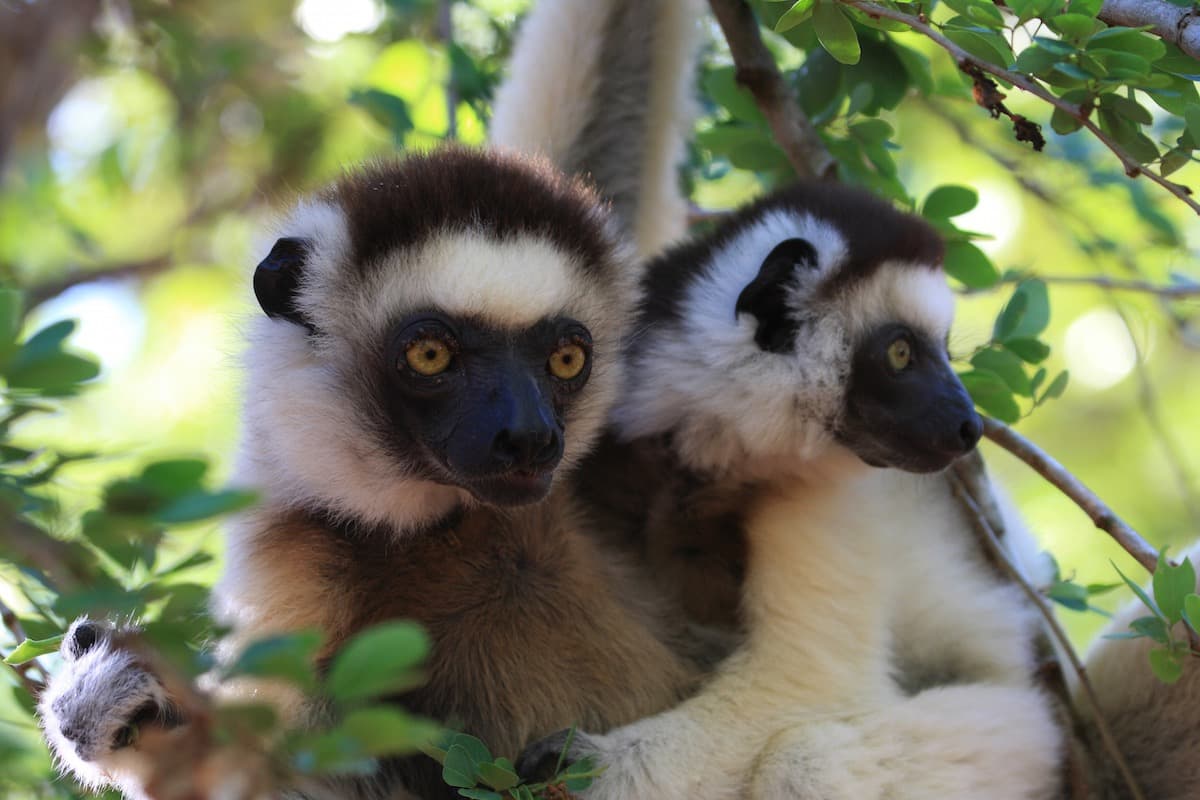
- Verreaux's sifakas (Propithecus verreauxi): recognizable by their characteristic bounding movements between spiny trunks.
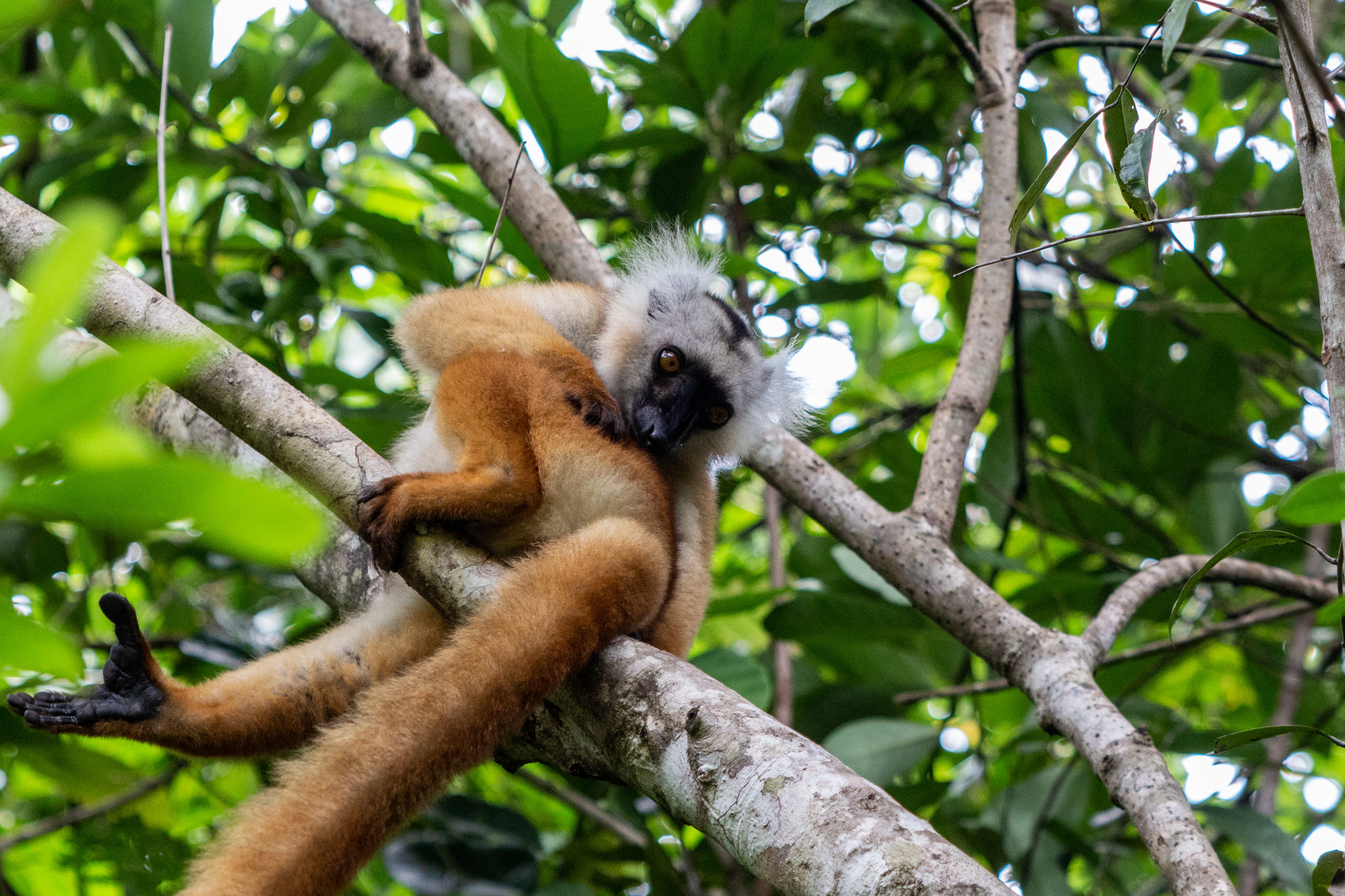
- Brown lemurs (Eulemur fulvus): present in wooded areas, often in small groups.
- Mouse lemurs and sportive lemurs: active at night, observable during guided night excursions.
Other animals
The reserve also harbors fruit bats, tenrecs, several chameleon species, land tortoises, and varied birdlife including endemic species from southern Madagascar.
Vegetation types
- Gallery forest lines the Mandrare River. More humid, it is dominated by tamarind trees (Tamarindus indica) that provide shade and food for lemurs.
- Spiny forest, typical of the arid south, is marked by Alluaudia procera (Didiereaceae family), with upright, spine-armed stems, along with various euphorbs and aloes adapted to dryness.
Arembelo Museum
Dedicated to Antandroy culture, this small museum features traditional objects, tools, and ritual elements that usefully complement the naturalistic visit with cultural perspective.
When to go
- May to October: dry season, most comfortable conditions for walking and wildlife observation.
- April: breeding period for ring-tailed lemurs, interesting for observing social behavior.
- December to March: warm and humid season, marked heat but visits are possible.
Early morning and late afternoon outings are most productive for observation. An overnight stay allows for a night excursion to follow.
Practical information
- Recommended duration: one to two nights on-site to fully enjoy daytime and night excursions.
- Guiding: provided by trained local guides, essential for wildlife identification.
- Accommodation: the reserve offers air-conditioned bungalows and lodges, in room-only, half-board, or full-board options. Rates to be confirmed with the reserve or your agency.
- Entrance fee: an access fee is charged per person, with an additional fee for vehicles. Budget extra for guiding services.
- What to bring: closed-toe shoes, light and covering clothing for the spiny forest, headlamp for night excursions, water and sun protection.
How to reach Berenty
- International flight: arrival in Antananarivo (Ivato airport, TNR).
- Domestic flight: connection to Taolagnaro (Fort-Dauphin).
- Road: approximately 90 km from Taolagnaro, roughly 3 hours of travel depending on track conditions. The reserve is located between Amboasary and Ambovombe.
- Organization: most agencies offer 4x4 transfer from Fort-Dauphin, often included in a Great South circuit.
Nearby
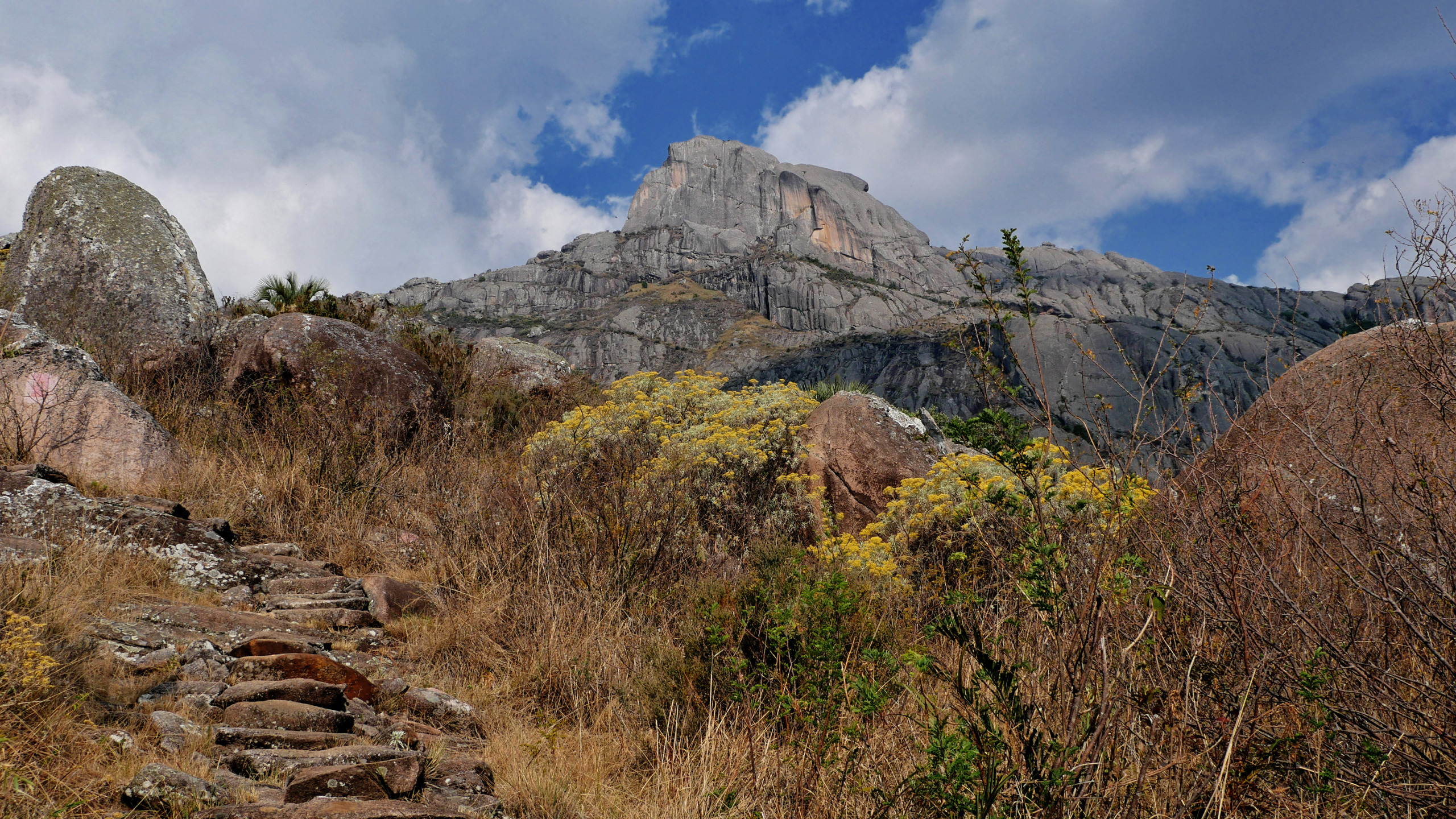
Berenty lends itself well to a circuit through the Great South. The Lavanono coast, further west, allows you to extend the experience with coastal landscapes. To combine with other wildlife sites, you may consider the Lemurs' Park near Antananarivo, more accessible. Travelers interested in hiking often direct their stay toward the Andringitra massif, while the north offers the Montagne d'Ambre National Park for humid forests.
Frequently asked questions
Frequently asked questions
One to two nights on-site are recommended. This allows for a morning outing, an afternoon walk, and a night excursion to observe mouse lemurs and sportive lemurs.
The dry season, from May to October, offers the best walking and observation conditions. April corresponds to the breeding period of ring-tailed lemurs, interesting for observing their behavior.
Yes. The trails are flat, well-marked, and short distances. Wildlife is observable in the immediate vicinity of accommodations, making the visit accessible to a wide audience.
It is technically possible but not recommended: 3 hours of driving each way, with no night excursion. An overnight stay is preferable to make the trip worthwhile.
Plan your trip
Berenty fits into a broader itinerary through the Great South. To build a coherent circuit integrating this reserve and other highlights of the island, consult our Madagascar trips.
Interested in this visit?
We can include it in your personalised itinerary.