Tsingy de Namoroka
Tsingy de Namoroka
In the heart of Boeny, Tsingy de Namoroka National Park reveals a preserved karst labyrinth, a rare terrain for trekking and ecotourism enthusiasts.
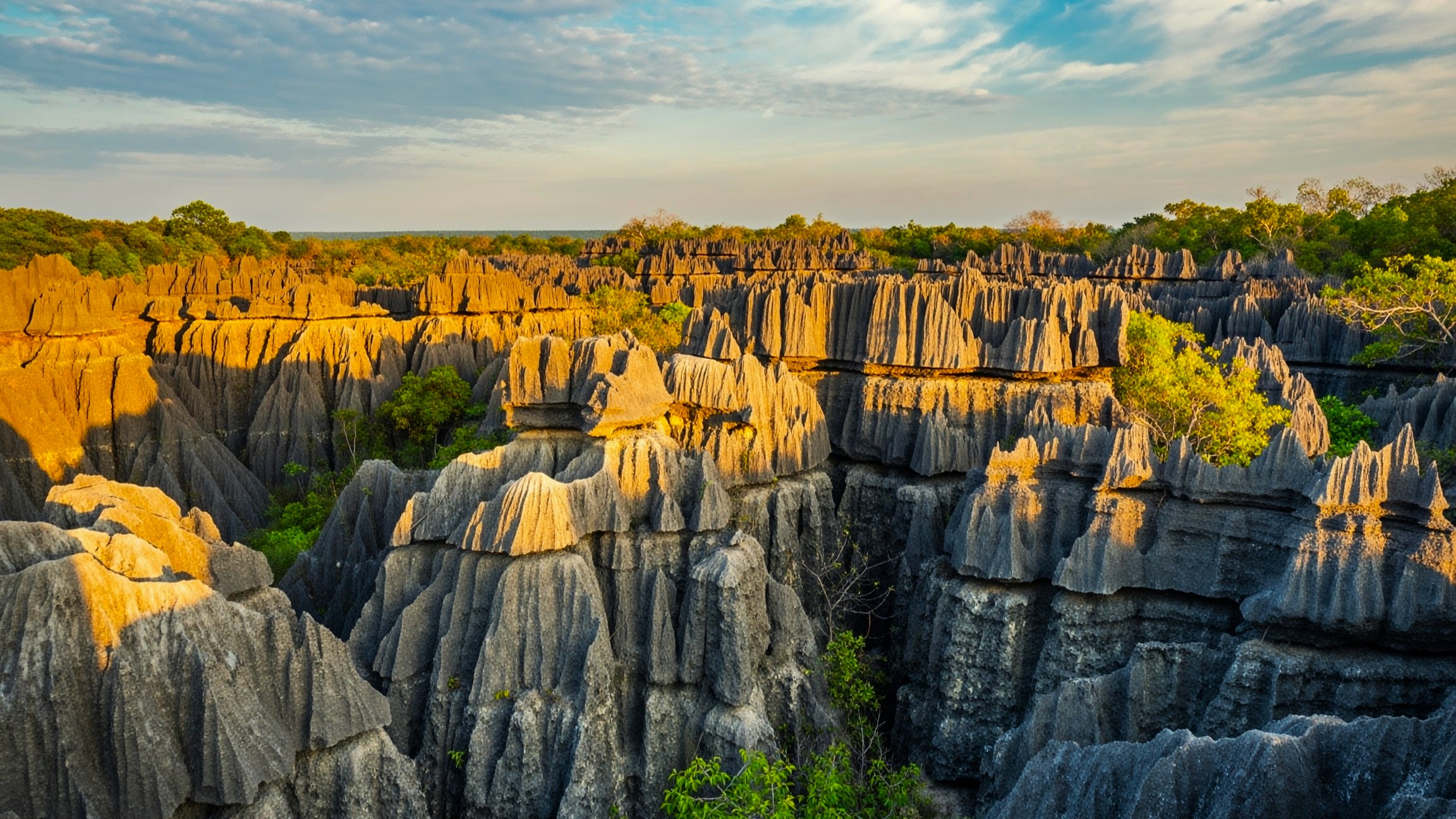
Tsingy de Namoroka National Park, located in northwestern Madagascar, is a unique natural site famous for its spectacular limestone formations known as "Tsingy". These impressive landscapes, sculpted by erosion, consist of narrow canyons, razor-sharp pinnacles, and dense forests, making this park a paradise for nature lovers and adventure seekers.
Geological History and Park Evolution
The term "Tsingy", meaning "needle" in Malagasy, refers to the region's sharp rock formations, shaped over millions of years by erosion of karst limestone. The park, formed 160 million years ago, was established in 1927, classified as a strict nature reserve in 1996, and gained national park status in 2002.
The Park Today
Today, the park stands as a model of coexistence between conservation and sustainable development. It harbors endemic fauna and flora, supported by local and international conservation efforts. Though challenging to reach, the park attracts travelers seeking pristine nature and plays an essential role in environmental protection while fostering development in local communities.
Fauna and Flora
- Mammals: The park is home to 18 species, including Eliurus sp., an endemic rodent that demonstrates minimal ecosystem disruption.
- Lemurs: 8 species, divided between diurnal and nocturnal species, essential to the park's ecological balance.
- Amphibians and Reptiles: 5 amphibian species and 30 reptile species, including chameleons and snakes adapted to the forest environment.
- Birds: 81 species, with the majority being endemic, contributing to the park's ornithological significance.
- Carnivores: Cryptoprocta ferox and Galidia elegans regulate animal populations within the park.
- Vegetation: The park supports two forest types (dense, dry, and subhumid), endemic plants (106 species), and grassy savannas. Managing invasive species is essential to preserve the park's ecological balance.
Unmissable Adventures in the Park
- The Little Tsingy: Explore these spectacular rock formations and be mesmerized by the beauty of these impressive natural structures, created by centuries of erosion.
- Grand Tsingy Caves: Venture into caves filled with ancient fossils and human traces, and perhaps enjoy a surprise picnic in the heart of nature.
- Tsingy from Above: Enjoy breathtaking vistas along trails cutting through giant baobabs and forests teeming with lemurs, then climb to the Tsingy summit for a unique panoramic experience.
- Nocturnal Walks: Observe nighttime wildlife with lemurs, geckos, and bats in full activity.
- Natural Pools: Relax in pristine natural pools with crystal-clear waters, perfect for escaping the heat and serving as refuge for lemurs and chameleons.
- Flying Fox Sanctuary: Witness the fascinating spectacle of flying foxes, an endemic and endangered species, gathered at their roosts for an impressive display.
- Birdwatching: With over 100 species, observe the magnificent colors of tropical birds that bring vibrant touches to the park's limestone landscape.
- Stroll Through a Sakalava Village: Immerse yourself in local culture by discovering the traditions and way of life of residents in Vilanandro or Analatelo villages.
Climate
The park enjoys a tropical dry climate, with a dry season lasting up to seven months, typically from April to October. The rainy season, from November to March, experiences maximum precipitation in January and February. The average annual temperature is 27.8°C, and annual rainfall reaches approximately 1160 mm.
The park is located 221 km southwest of Mahajanga and 22 km northwest of Andranomavo.
- By Road: From Mahajanga, take National Route N°T19 to cross Bombetoka Bay and reach Katsepy. A 150 km stretch connects Katsepy to Soalala, with a journey of approximately 8 hours. This route is passable from May to November.
- By Taxi-Brousse: Shared taxis operate daily to Katsepy, though departures depend on vehicle capacity.
- By Boat: From Mahajanga, the boat crossing takes between 6 and 12 hours, depending on vessel type. Departures depend on availability, and pistachios are forbidden aboard due to local taboo.
- By Air: An airstrip exists in Soalala, located just 5 km from the park. Transfer to the park is by car, negotiable with vehicle owners in Soalala.
Fees
Tsingy de Namoroka National Park applies the following entrance fees:
For National Visitors:
- Adults: 1,000 Ar per person per day
- Children: 200 Ar per person per day
- Researchers: 5,000 Ar per person for one month
For Foreign Visitors:
- Adults:
- 1 day: 10,000 Ar
- 2 days: 15,000 Ar
- 3 days: 20,000 Ar
- 4 days and more (but ≤ 10 days): 25,000 Ar
- Children: 200 Ar per person per day
- Student/Pupil Groups: 10,000 Ar per person per day
- Foreign Researchers: 100,000 Ar per person for one month
These fees apply to visitors wishing to discover the wonders of Tsingy de Namoroka and are payable at the park entrance.
Want to discover this destination?
Our local advisors design your tailor-made trip.