Jean Laborde, a Major Historical Figure in Madagascar
In the 1830s, Jean Laborde, a self-made French entrepreneur of Gascon origin, won the trust of Queen Ranavalona I and was entrusted with manufacturing rifles and cannons for the Malagasy army, as well as industrializing the country.
In the 1830s, Jean Laborde, a self-made French entrepreneur of Gascon origin, succeeded in winning the confidence of Queen Ranavalona I and was entrusted with manufacturing rifles and cannons for the Malagasy army as well as industrializing the country. He is even said to have become the lover of the sovereign. His accomplishments are today part of Malagasy heritage, including the artificial lake of Mantasoa.
Jean Laborde: An Ambitious Young Man and an Adventurer
Jean Laborde was born in Auch on October 16, 1805 under a star that in no way predestined him to become a major figure in Madagascar's history. In his studies, he was far from standing out, and his future seemed dull. His father had taught him the trade of blacksmith, but the ambitious young Laborde knew he would not take over the family enterprise since he was not the eldest son. He then decided to enlist in a regiment of dragoons (soldiers who traveled on horseback) and left with the rank of sergeant-major at age 22.
In July 1827, he announced to his father that he had decided to seek his fortune in the Indies. It was for him a way to change his destiny since Restoration France offered him no prospects worthy of his ambition. Upon arrival, he successfully sold his bundle of small goods (given as a gift by his father) and managed to establish his own trading post. Three years passed and he proved to be talented in business: cunning, confident, and industrious. His biggest market was the manufacture of 300 trumpets for a Maharajah.
In 1831, however, he decided to abandon everything and wager his fortune on a treasure hunt in the Mozambique Channel by purchasing the Saint Roch from a penniless Savoyard captain without resources or command. At age 26 and hungry for fortune, he found himself on the open sea searching in vain for treasure for seven long months before running aground on the east coast of Madagascar, on the cape of Sainte-Marie Island. Struck by a storm, the ship lost its lifeboats and nearly killed the crew, who were saved by a courageous Laborde who jumped into the sea at the end of a long rope to show the others the way.
Jean Laborde: An Industrialist and an Influential Man
Stranded at the mouth of Matitanana (opposite Vohipeno), he lost everything, including the ship that had been smashed on the rocks. The locals found him and his crew and, instead of killing them, took them to a vazaha (a white foreigner) 180 km away on foot. The vazaha was Napoléon De Lastelle, a wealthy French businessman, a sugar cane operator and trader in cattle and slaves with the islands of Bourbon and Mauritius, with the permission of Queen Ranavalona I. It must be understood that at this time, Europeans were not welcome at all.
The Frenchman offered Jean Laborde a job in his sugar mill and quickly recognized his worth. Laborde proved to be hardworking and ingenious, capable of repairing any machine and talented in metalworking. He was then tasked with approaching the queen to convince her to entrust him with manufacturing rifles for the Malagasy army. The sovereign already had an agreement with a certain Jolycœur, but he seemed unable to fulfill it.
After a long wait and complex protocol, Jean Laborde arrived in Antananarivo and finally met the woman the French would nickname "the female Caligula." She is said to have been charmed by the young man, 17 years her junior, and granted him the contract for manufacturing rifles, and later, much more. Forge, foundry, paper mill, pottery works, glassworks... the industrialization of the country was entrusted to this young Gascon who seemed to have finally found his El Dorado. He became a powerful industrialist and a highly influential man, very close to the Malagasy royalty. 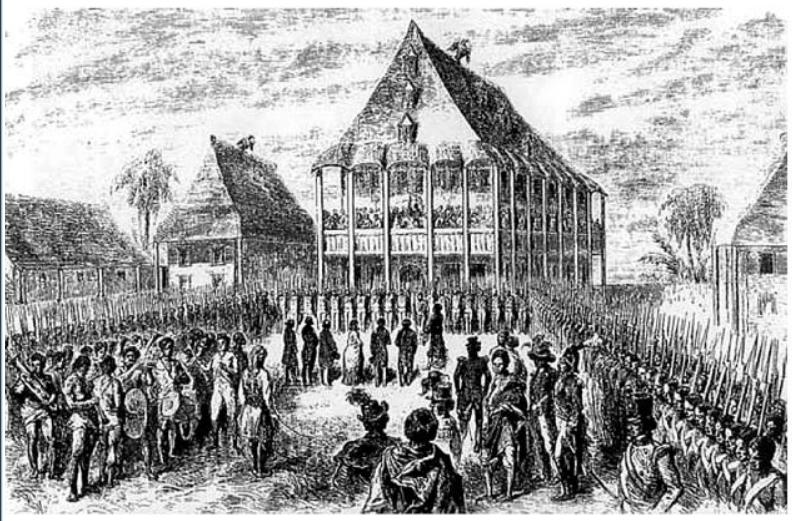
Jean Laborde: A Husband and a Lover
De Lastelle had found a wife for Jean Laborde in the person of Émilie Roux, a woman of mixed race. He could then easily learn the language and integrate into Malagasy culture. His benefactor gifted him the Roret Encyclopedia in 32 volumes for the occasion. He would later use it to master complex and modern techniques in mechanics, industry, chemistry, and more. He spent his life away from his wife and son (Clément Laborde, born in 1833) and remained at the queen's side. However, he divorced his wife for adultery in 1856, leaving her to manage the Lohasaha agricultural estate.
In the book Jean Laborde, for the Love of a Queen, author Pierre Sogno portrays two characters who were both business partners and lovers. Ranavalona I is known for expelling English missionaries, for pursuing and executing Malagasy Christians, and for successfully repelling the advances of French and English invasion. She was reputed to be cruel, ruthless, and authoritarian, but in the arms of her lover, she was kind and sensual. Their separation seemed unlikely, until the English denounced a royal plot, accusing the French, including Jean Laborde, of participating in it. He was forced to exile himself to Réunion in 1857.
Jean Laborde: A Consul and a Symbol
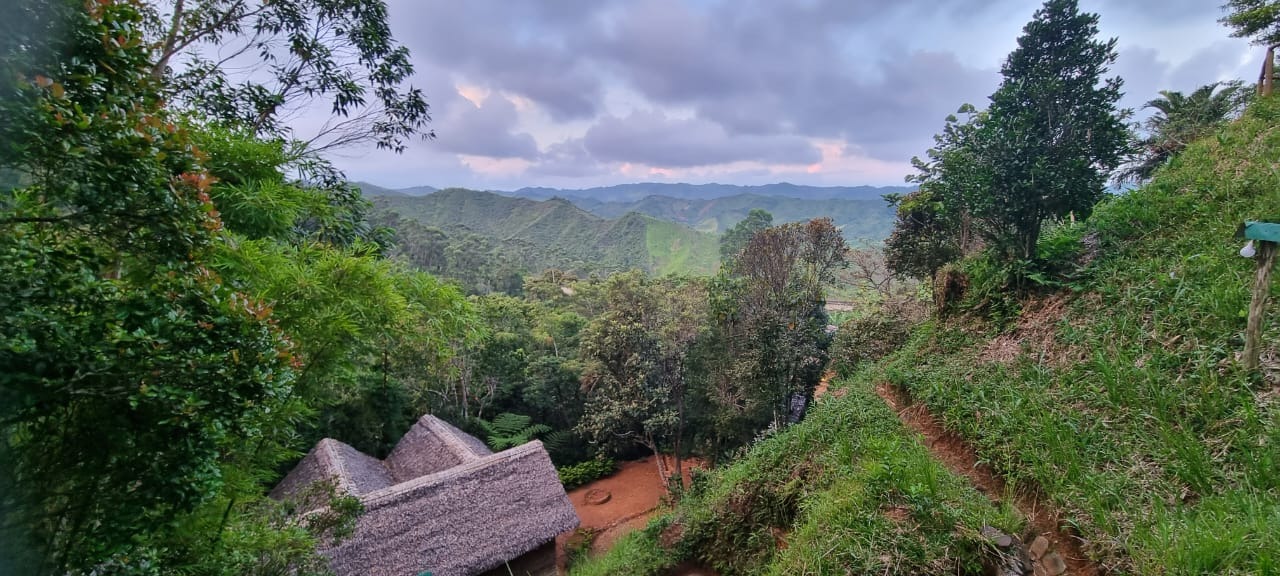
During his time of glory, Jean Laborde had an industrial city built in 1837: Mantasoa, originally "Soatsimanampiovana," meaning "eternal beauty." He conceived and created an artificial lake to regulate the course of the Ikopa River. The dams served, among other purposes, to protect the Betsimisaraka plains and their rice paddies from flooding. This immense water reservoir of 20 km² allowed workshops specializing in carpentry, foundry work, metalworking, pottery, papermaking, soap-making, and more to flourish. He also built an immense wooden palace on the site of Andrianampionimerina's palace: the rova of Manjakamiadana. It would later be covered in stone by James Cameron under the reign of Ranavalona II.
After the death of Ranavalona I in 1861, he returned to Madagascar and became the representative of French diplomacy. He was appointed the first Consul of France to Madagascar by Napoleon III. King Radama II, son of Ranavalona, was a friend of the French and peacefully opened the country's doors to France. However, he was assassinated in his palace with his sash on May 11, 1863. The English then regained the advantage, and Jean Laborde withdrew disillusioned. He fell ill and died on December 27, 1878. His body rests in a tomb in Mantasoa that he had built for himself. The queen of that time, Ranavalona III, honored him by organizing a grand funeral. Today, all Malagasy people who have been to school know this figure!