The Lemurs of Madagascar
Lemurs are Madagascar's iconic animals alongside the zebu. A hapalémur even appears on the new 2,000 Ariary banknote. There are around a hundred species, and all are endemic to Madagascar.
Lemurs are Madagascar's iconic animals alongside the zebu. A hapalémur even appears on the new 2,000 Ariary banknote. There are around a hundred species, and all are endemic to Madagascar. The public probably knows these remarkable little creatures through the film Madagascar and the documentary Island of Lemurs: Madagascar. The ring-tailed lemur is undoubtedly the best-known species, easily bred in captivity and present in many zoos around the world. Planning a trip to Madagascar soon? What do you really know about these small primates?
Get to know the lemurs!
Rarity and distinctive features. According to scientists, lemurs arrived on the island from Africa approximately 25 million years ago, clinging to debris from tree branches. The near absence of predators allowed them to evolve freely, forming both diurnal and nocturnal species, with and without tails, ranging in size from that of a small mouse to an adult gorilla! However, these giants were nearly wiped out around 2,000 years ago with the arrival of the first humans. Today, the largest lemur measures just 70 cm!
Appearance and habitat. Most lemurs have elongated snouts, large eyes, and small ears. Their fur is dense and sometimes even woolly, and ranges in color from golden to black, gray, white, and more. Some have long tails, while others have almost none. The most common species resemble a striking blend of dog, cat, and monkey—with beautiful, harmonious results! These small arboreal primates thrive equally well in the dense forests of the East, the spiny forests of the South, the dry forests of the West, and the Tsingy de Bemaraha.
The most famous lemurs
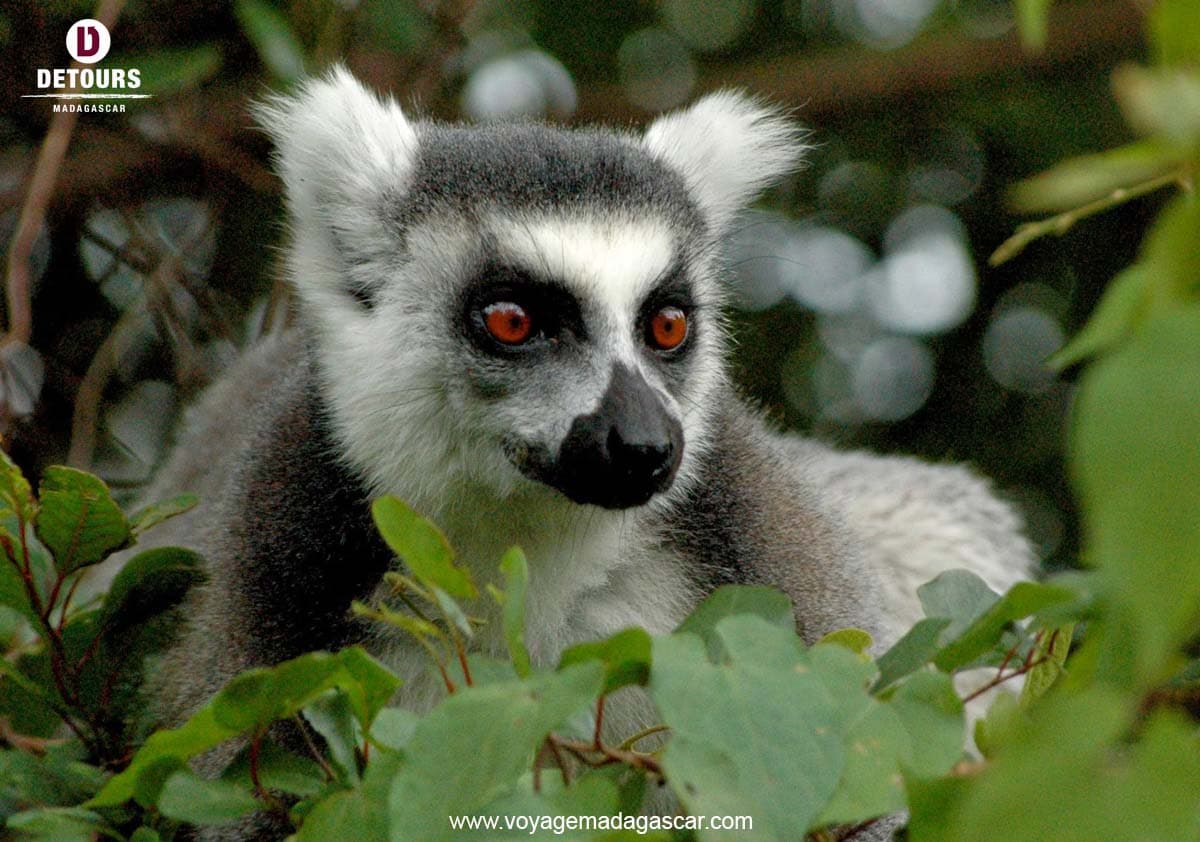
The ring-tailed lemur: the undisputed star. This is the most well-known species and the most present in zoos and reserves throughout the world. Some private owners also possess them (usually illegally), as they are easy to breed in captivity. The ring-tailed lemur (or Maki to locals) enjoys sunbathing in a "yoga posture"! You'll encounter them in almost every Malagasy national park!
Indri Indri: the shy giant. The largest lemur measures 70 cm and weighs up to 9 kg. It's a shy creature that doesn't easily allow itself to be observed. You'll need a skilled tour guide in the Andasibe reserve to spot them in groups of 2 to 6 individuals perched high in the trees. It's distinctive for having virtually no tail.
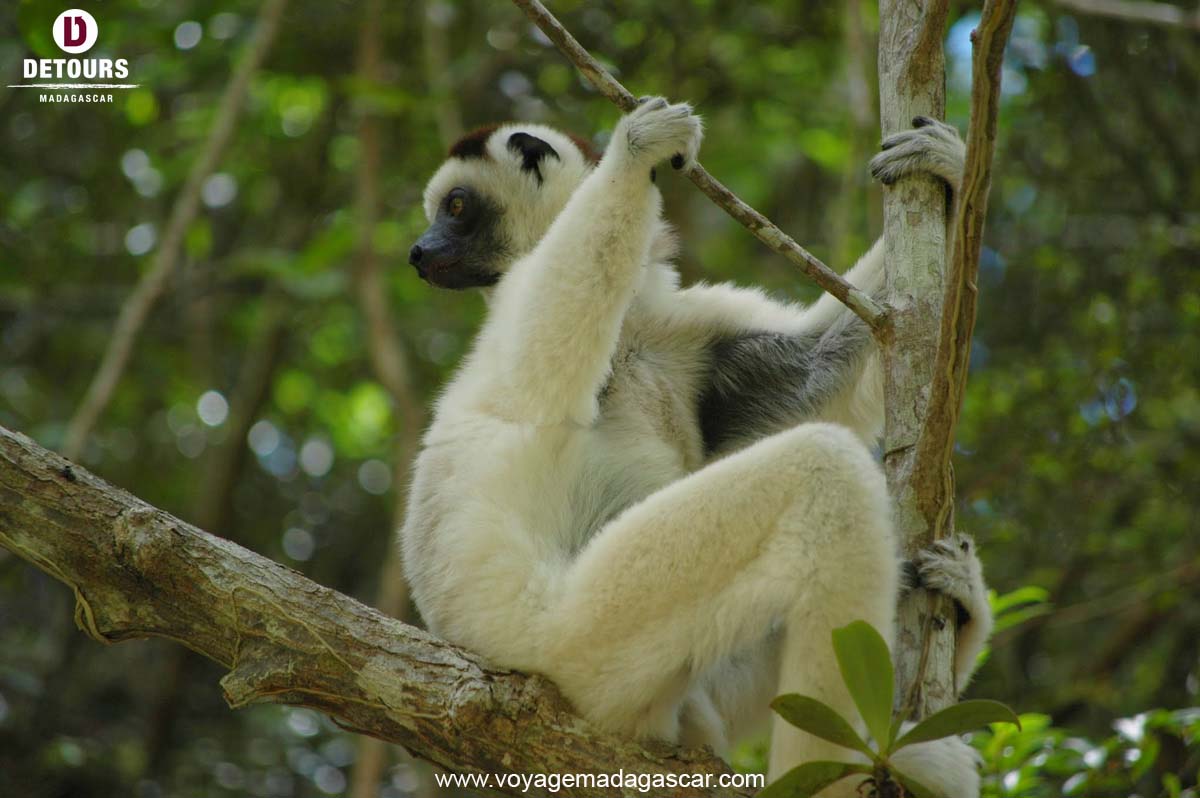
The sifaka: the handsome one of the family. There are several sifaka species, varying in color and fur density. The diademed sifaka is particularly the most colorful! Calls, grunts, and yelps are how these mammals of Madagascar's forests, locally called Sifaka, communicate. Their leaps are spectacular, and on solid ground, they move in an upright posture, galloping in a most distinctive manner.
Madagascar's fantastic creatures. During your stay in Madagascar, don't miss the opportunity to visit the national parks to observe fantastic animals like the Aye-Aye. This nocturnal species has large ears and powerful incisors. It hears larvae inside tree trunks and retrieves them with its unusually long third finger. It resembles a gremlin! The mouse lemur is another exceptional species, being the smallest: less than 10 cm long and weighing just 30 g. Kirindy Forest National Park Mitea (western Madagascar) is its primary habitat. There is still so much to discover!