The Women Who Shaped Madagascar's History
The place of women in society? Should we even question whether she should be equal to men or not? Doesn't she deserve to be better valued? In Madagascar's history, few names of
The place of women in society? Should we even question whether she should be equal to men or not? Doesn't she deserve to be better valued? In Madagascar's history, few names of Malagasy women have been recorded, yet they have forever changed the face of the country! Let us get to know them a little better!
The Women Who Shaped the Great Island's Tourist Sites
Ravolahanta
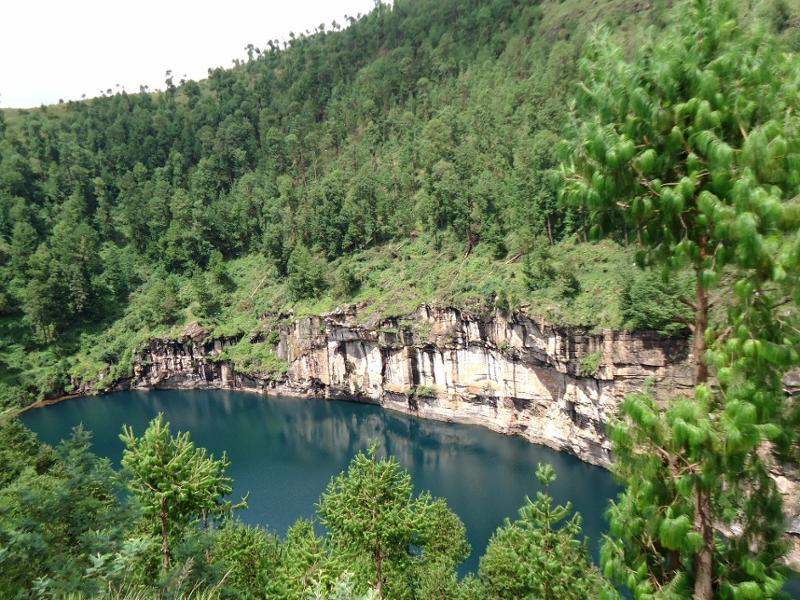
It is not easy to renounce fortune and a privileged social position, but Ravolahanta did so in the name of love. Her name, associated with that of her cursed lover Rabeniomby, will forever be remembered, as long as Lake Tritriva (Antsirabe) exists. The tragic story of the two lovers is classic, but is among those we love to perpetuate: a nobleman's daughter and a zebu herder boy who commit suicide because of an impossible love!
Rangorivao and Andrenikina
Another tragic love story, but of a completely different kind: that of Rangorivao! Her destiny is also linked to a lake, Lake Andraikiba. As one would expect, she perished there, but alone, during a race against her rival, the winner of which would leave with the husband. Since she drowned, the lake was named "Andrenikina." The story is sad and reductive, but reminds us that all women (especially mothers) deserve to live good fortune and be happy.
Rasoabe and Rasoamasay
Yet another story involving a lake and two women: that of Rasoabe and Rasoamasay, the wives of the giant Darafify. According to legend, the location of these bodies of water was a gift from the giant to his wives and was intended for rice cultivation. He drowned his two spouses when he discovered their infidelity during his absence. Their souls are said to have built villages with their slaves at the bottom of the lakes. The shores of Lake Rasoabe now welcome a charming seaside village, Manambato 11 kilometers from Brickaville, in the journey to the East, Andasibe, the Pangalanes Canal and the island of Sainte Marie.
The Queens Who Shaped the Collective Consciousness
Ranavalona I
Ranavalona I is considered the greatest queen of the Madagascar kingdom because of her strong character, authority, and accomplishments. Upon the death of her husband in 1828, the great unifier king of the kingdom, Radama I, she ascended to power and retained it until her death in 1861. She was an austere, even cruel queen who had no mercy for those who defied her laws. She was highly hostile to foreign influences and very conservative regarding Malagasy tradition. She prohibited religious propagation and favored education. She modernized the country greatly, particularly the capital, through various industries (armaments, foundry, metalwork, carpentry, pottery, papermaking, soap making...). She accomplished all this with the help of Frenchman Jean-Laborde, also her lover.
Rasoherina
After the death of Ranavalona Manjaka, her son Radama II ascended to the throne, but he did the opposite of his mother, giving much freedom and favors to foreigners (especially the French), while indulging in heavy drinking. He ended up being assassinated by nobles and hova (commoners). They approached Princess Rabodo (niece of Ranavalona I) and offered her the throne under certain conditions. She then became Rasoherina and married the hova Rainivoninahitriniony. The hova then had much influence, pulling the strings of power. In a short time, Rainilaiarivony displaced his older brother and took his place as Prime Minister and husband of the queen. He actually married the next two and last queens of the kingdom. For some, Rasoherina was merely a puppet, and for others, a wise and determined queen. In any case, her name is today associated with strong-willed women whom others consider mean, almost synonymous with a shrew. People may have confused her with Ranavalona I.
Ranavalona II
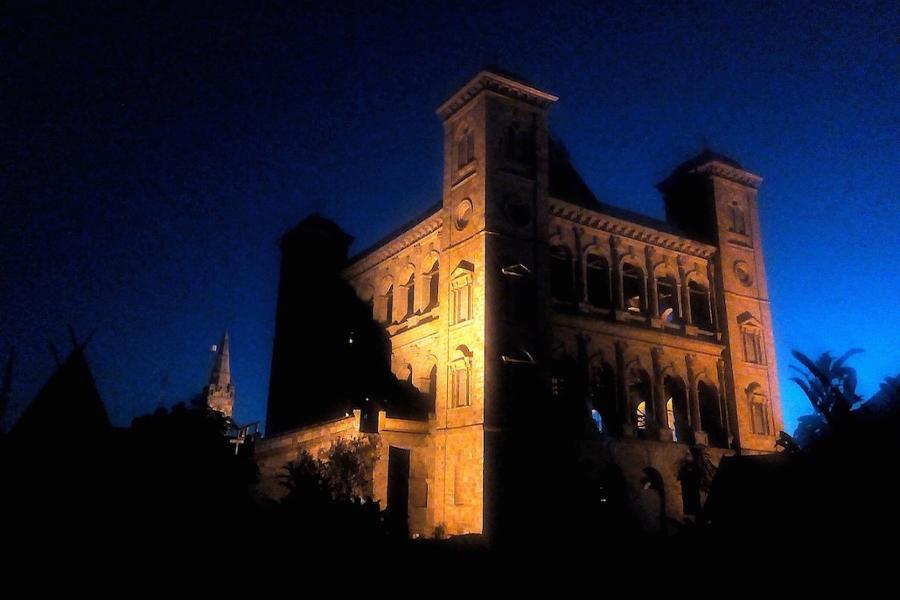
Upon Rasoherina's death in 1868, her cousin, Ranavalona II, became queen and in turn disrupted customs, abandoning among other things the ancestral religious beliefs that had once been the foundation of political power. She authorized the use of brick and stone in the construction of houses and buildings, whereas these materials considered dead were fady (taboos, forbidden) and were only meant for tombs! It was during her era that the Manjakamiadana rova was rebuilt in stone. This fervent Christian (Protestant denomination) did everything in her power for the evangelization and education of the country. She indeed published a decree making education mandatory for young people, including girls, until the age of fourteen. Education extended to regions where L.M.S. missionaries could reach, particularly in the Fianarantsoa region of the Betsileo people.
Ranavalona III
The last queen of the Malagasy kingdom (1883-1896) witnessed the country's progressive colonization and the abolition of the monarchy. After Ranavalona I, the policy of moderate Europeanization gave France the momentum it needed to invade the country. Rainilaiarivony was exiled to Algiers in 1896 and died the following year, the same year the queen was herself exiled to the island of Réunion. She eventually left for Algiers, but she could never return to her homeland except in a coffin, 21 years after her death on October 31, 1938.
Queen Rasalimo
Let us not forget Queen Rasalimo, daughter of King Ramitraho and descendant of the founders of the Sakalava kingdoms. During his quest to unify the kingdom in 1822, Radama I encountered Princess Rasalimo, who impressed the sovereign and proposed to marry him to end the war. She is a true heroine for her people, becoming almost the sovereign of the country. It is said that Radama and Rasalimo truly loved each other. They had a daughter, Raketaka (1824-1866), who was to ascend to the throne but was prevented by palace intrigues. Today, a hotel in Miandrivazo has been named in honor of this queen. A stop is made there during a voyage on the Tsiribihina River and immersion in the kingdom of the Baobabs, from Morondava to Tuléar.
The Women Who Shaped Politics and Society
Gisèle Rabesahala
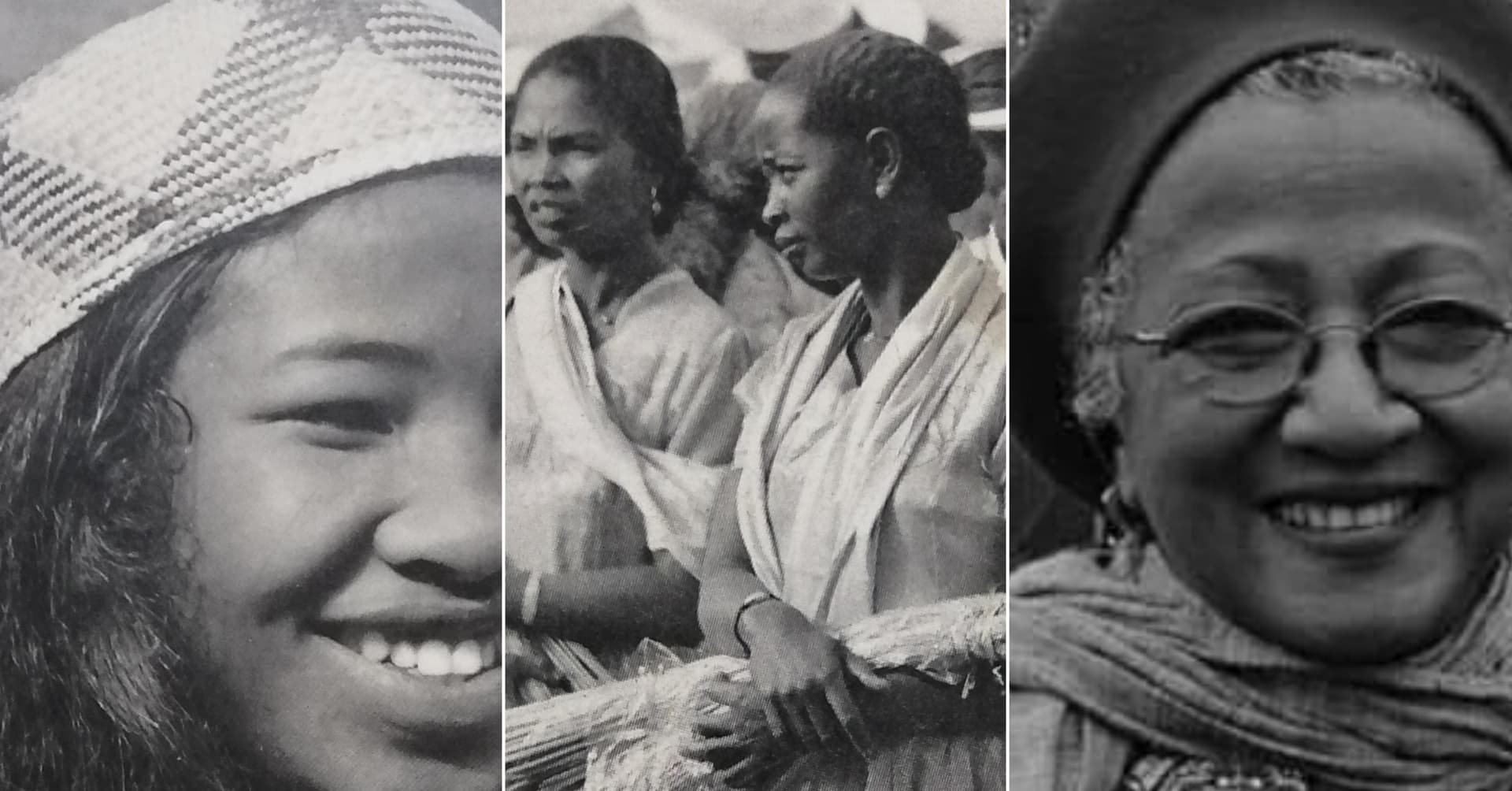
Some Malagasy women may not know Gisèle Rabesahala (1929-2011), yet she is a major political figure, notably the country's first female minister, in 1977, under the mandate of President Didier Ratsiraka. She devoted her life to her country's independence, human rights, freedom of peoples, and human progress. Since her father was a non-commissioned officer in the French army, she grew up in France, Tunisia, and French Sudan (now Mali) according to his military assignments. Upon his death in 1942, she returned to the country to fulfill an exceptional destiny: stenographer-secretary for the MDRM in 1946, founder of the political party Union of the Malagasy People and municipal councilor in 1956, minister of Revolutionary Art and Culture in 1977, vice-president of the Senate in 1997. All these positions were firsts for a woman. She died on June 27, 2011.
Michèle Rakotoson
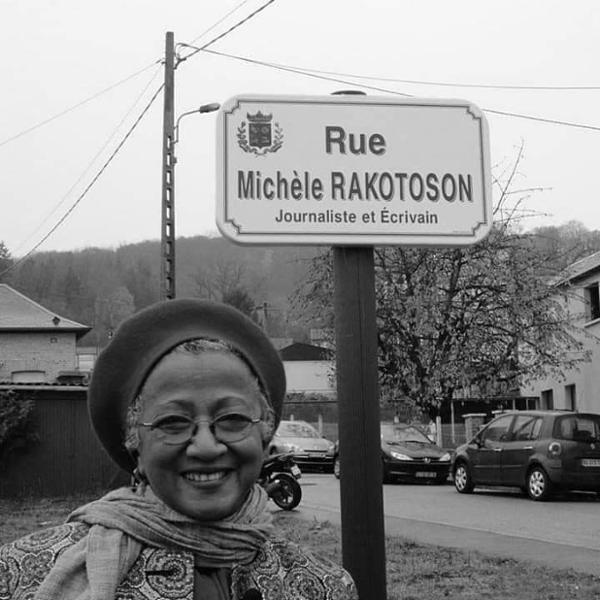
If we must name an ambassador of Malagasy culture, we would likely name Michèle Rakotoson. This Malagasy writer, playwright, and journalist has been able to introduce to the English-speaking world Malagasy traditions, culture, and nature through her works: the tradition of Famadihana and fitampoha (turning of the bones) in The Bath of Relics (1988), the landscapes of the country in Lalana (2002)... Her career is exceptional: professor of Malagasy literature, journalist on radio (RFI and France Culture) and television (RFO), director of literary events at Radio France International, recipient of the Grand Medal of Francophony (2012). A street even bears her name in the Grand Clos neighborhood of Caudebec-lès-Elbeuf in Upper Normandy. She is also co-founder of "Slam Jazz Projekt" (Slamjazz Projekt), a new art form combining improvised poetry (Slam) with improvised music (Jazz).
The public can discover Madagascar Rediscovered by Michèle RAKOTOSON in the program Invitation to Travel, an ARTE documentary about her. We had the privilege of accompanying the filming in 2019.
Women of Today
Out of more than twenty government positions, only 8 are held by women, and these are of course positions that men consider suitable. It would be unthinkable for them to appoint a woman as Minister of the Interior, for example, or Minister of Public Security, etc.
– Minister of Labor, Employment, Civil Service and Social Laws: Gisèle Ranampy
– Minister of National Education, Technical and Vocational Training: Rijasoa Josoalasisambatra Andriamanana
– Minister of Higher Education and Scientific Research: Élia Béatrice Assoumacou
– Minister of Industry, Commerce and Crafts: Lantosoa Rakotomalala
– Minister of Environment and Sustainable Development: Baomiavotse Vahinala Raharinirina
– Minister of Communication and Culture: Lalatiana Andriatongarivo Rakotondrazafy
– Minister of Water, Sanitation and Hygiene: Voahary Rakotovelomanantsoa
– Minister of Population, Social Protection and Women's Advancement: Irmah Lucien Naharimamy
Malagasy women are already acting to stand out, accomplish exceptional things to bring about change, participate in the country's development, and prove themselves indispensable, proving their necessity and improving their status! Thanks to the efforts and accomplishments of young politicians, journalists, scientists, and entrepreneurs, etc., history will remember many more names of women!
© Détours Madagascar - March 7, 2020