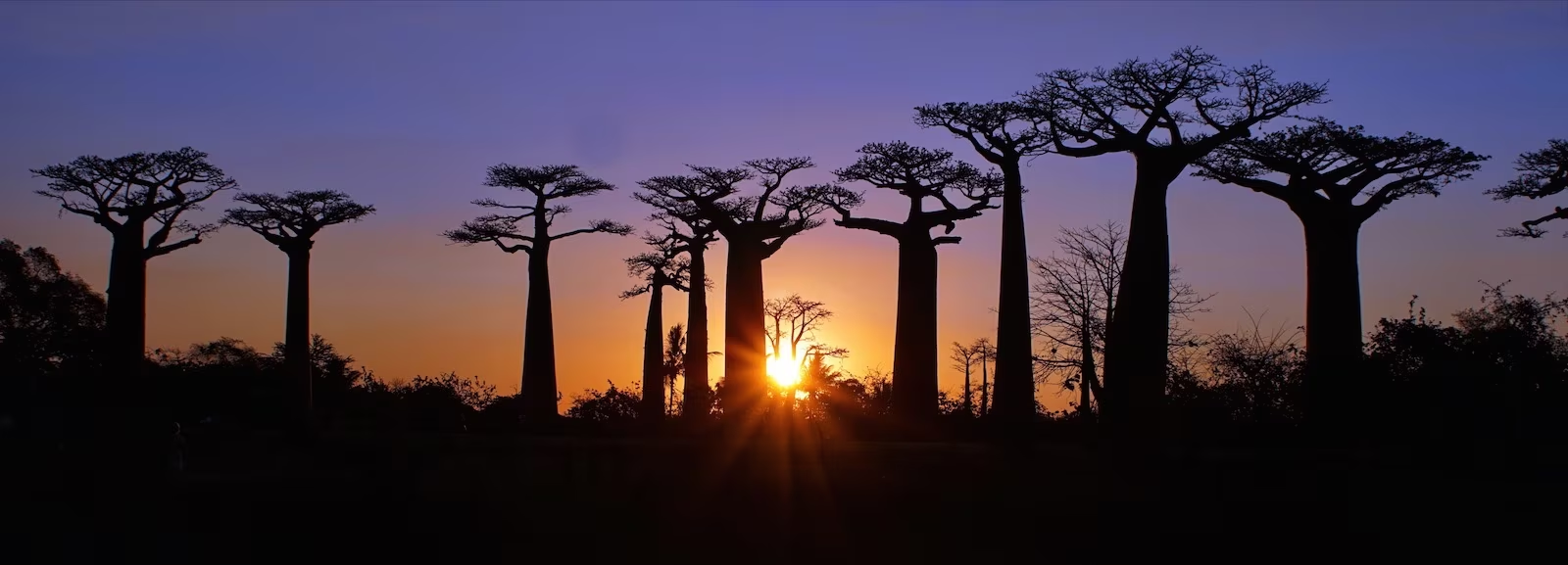
Madagascar from West to East: From the Tsingy and baobabs of Menabe to the lagoons of Sainte-Marie Island
The Tsingy de Bemaraha and the trails of Menabe, then the forest of indris, the Pangalanes Canal and three nights on Sainte-Marie Island.
Duration
17 days
From
€1,785/pers.
Ideal seasons
Apr, May, Jun, Jul, Aug, Sep
Style
Guided tour
Comfort
Charm & Character
Travelers
Couple, Solo, With friends
The spirit of travel
This journey crosses Madagascar from coast to coast. In sixteen days, it brings together the two faces of the island: the dry West of the Tsingy, savannas and baobabs, then the humid East of forests, lakes and coconut trees, as far as Sainte-Marie island.
From Antananarivo, the road crosses the Highlands via Antsirabe, then descends towards the plains of the West and the Sakalava country. After a night's stopover in the dry forest of Kirindy, the trails and ferries of Menabe lead us to Bekopaka, at the foot of the Tsingy of Bemaraha. A long day's walk takes us through the Grand Tsingy, a labyrinth of limestone needles unique in the world. We then descend towards Morondava and the coast of the Mozambique Channel.
A flight brings us back to Antananarivo, and the journey heads East. Two nights in Andasibe, home of the indri, the largest of lemurs, leave time to explore the national park at dawn, then the Vakona reserve. At Manambato, we board the Pangalanes Canal for two nights on the shore of Lake Ampitabe, far from any road, then the boat takes us to Tamatave through fishing villages.
Along the coast of clove trees, we reach Mahambo, then Soanierana-Ivongo and Sainte-Marie island, where three nights allow time to rest, walk and discover its history of pirates and missionaries.
This journey is tailor-made, at the date of your choice. In the West as in the East, we travel with a driver-guide from Détours Madagascar, in a 4x4 on the trails of the West. From Tamatave to Soanierana-Ivongo, a vehicle with driver takes over, then a speedboat takes us to Sainte-Marie. In the parks and reserves, local guides accompany us. Internal flights, from Morondava and Sainte-Marie to Antananarivo, are booked separately.
Détours Madagascar is committed to the Travelife certification process. On this journey, this translates concretely as: we call upon local guides from parks and reserves, boatmen of the canal and villages that welcome us; we observe wildlife without feeding or touching it; and we prefer to stay several nights in the same place, at Bekopaka, at Andasibe, on the shore of Lake Ampitabe and at Sainte-Marie, rather than changing hotels every evening.
The stages of your journey
Highlights
Day-by-day itinerary

Arrival in Antananarivo
Flight
Upon arrival at Ivato International Airport, a member of the Détours Madagascar team welcomes us and drives us to our hotel, in the city.
Antananarivo is built across about a dozen hills, amid the rice paddies of the Betsimitatatra plain. Brick houses with upper floors and wooden balconies cluster on the slopes, and long staircases connect the upper neighborhoods to the markets of the lower city. The city was born in the 17th century on the highest of these hills, around the palace of the Merina sovereigns.
If our flight arrives in the afternoon, we have time for a first walk: Independence Square, the lively Analakely Avenue, or a viewpoint from which we can see the entire city at sunset. Life takes place largely in the street, among street vendors, minibuses and rickshaws, in a joyful disorder that sets the tone for the trip.
If our flight arrives in the evening, we go directly to the hotel to rest.
At the end of the day, our team answers our questions about how the trip will unfold. We also meet our driver-guide, who will accompany us in the West. Dinner is free, and it's an opportunity to taste the cuisine of the Highlands, based on rice, leafy greens and zebu meat.
Airport transfer: approximately 45 minutes.

From the Highlands to Miandrivazo
Early in the morning, we leave Antananarivo via National Road 7, heading south. It's a long day of driving, but a day of discovery: in just a few hours, we pass from the Highlands to the plains of the West.
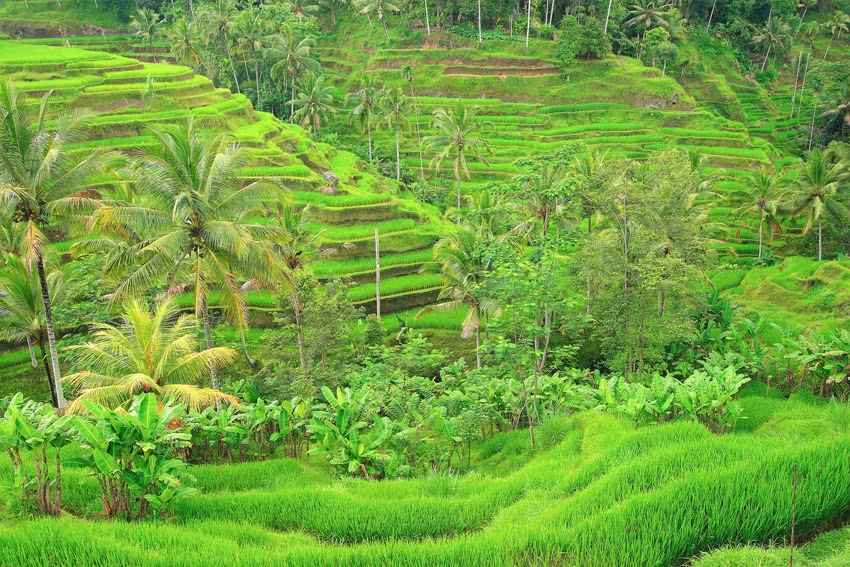
The road first crosses a mosaic of terraced rice paddies, cassava fields and hills crowned with villages of red brick houses. We make a few stops along the way at markets and scenic spots, then we arrive in Antsirabe late morning. A spa town founded at the end of the 19th century around its thermal springs, surrounded by volcanic massifs, it retains an air of a mountain resort, with its avenues lined with jacarandas. We stop there for lunch.
In the afternoon, the road heads west. The altitude drops, the air becomes drier and hotter, and the green hills give way to large expanses of savanna and mountains ravaged by erosion. Zebu cattle become more numerous, led by herders along the road, and the first mango trees announce the plains. We enter Sakalava country.
We arrive at the end of the day in Miandrivazo, a small town situated on the banks of the Tsiribihina, renowned as one of the hottest places in Madagascar. Night in Miandrivazo.
Driving: approximately 8 hours 30 minutes with stops, 395 km.

Towards Menabe and Kirindy Forest
We continue westward, across the great plains of Menabe. The road crosses a savanna dotted with palm trees, small Sakalava villages and rice fields, along rivers that flow down toward the Mozambique Channel. The first baobabs appear at the roadside, isolated in the middle of fields, then increasingly numerous as we approach Morondava.
Just before the town, we turn north onto the Belo-sur-Tsiribihina track. It crosses a landscape of rice fields and dry forest, where baobabs tower above the crops.
In late afternoon, we arrive at Kirindy, a dry forest about sixty kilometers north of Morondava. For us, it is a stopover night, which breaks up the long journey to the Tsingy. With a local guide, we take a short walk on the trails, at the hour when the forest comes alive at nightfall. Nocturnal lemurs, small chameleons and insects can sometimes be spotted by lamplight, without guarantee.
Menabe is the country of the Sakalava, zebu herders, whose ancient kingdoms once dominated the west of the island. Our driver-guide tells us about their history and customs along the way.
The evening is calm, far from any town, under a starlit sky. Night at Kirindy.
Road then track: approximately 7 hours, 345 km.

The ferries of the Tsiribihina and Manambolo
We resume the trail heading north. It first takes us to Belo-sur-Tsiribihina, a small Sakalava town on the banks of the river. Here, there is no bridge: the Tsiribihina is crossed by ferry, among pirogues and barges loaded with merchandise. Waiting is part of the journey, and it's an opportunity to observe the activity along the waterside.
On the other bank, the trail continues through savanna, rice paddies and villages. It is often bumpy, sometimes sandy, and our driver-guide knows it well. The landscape opens onto vast spaces, where herds of zebu cattle graze, the wealth and pride of Sakalava families.
In the afternoon, we reach the Manambolo, which we cross by ferry, at the foot of the first limestone cliffs. On the other bank, Bekopaka is a large village on the riverbank, the gateway to Tsingy de Bemaraha National Park.
We arrive at our hotel at the end of the day, where we spend two nights. Depending on the time, a short walk through the village allows you to discover life on the banks of the Manambolo, the pirogues, the gardens and Sakalava tombs. The evening is free for us to rest after this day on the trail. Night in Bekopaka.
Trail: approximately 6 hours, 150 km, with two ferry crossings.

The Tsingy de Bemaraha
Tsingy de Bemaraha → Tsingy de Bemaraha
We set off early for the Grand Tsingy, the most spectacular part of the Tsingy de Bemaraha national park. The Tsingy are a limestone plateau cut by rainwater into a labyrinth of blades and needles, sometimes tens of meters high. Their name evokes the idea of walking on tiptoes.
A 17-kilometer track takes us by 4x4 to the start of the trail. With a local guide, we enter a mineral world: gigantic limestone cathedrals, networks of deep faults, blocks sculpted into sharp points. The route alternates between passages through canyons with humid vegetation, climbs via ladders and walkways, and crossings of slabs covered with dry vegetation. Cables and harnesses secure the most exposed passages.
After several hours of hiking, we arrive at the roof of the Tsingy, a viewpoint suspended above a forest of stone that extends to the horizon. Decken's sifakas, with their white fur, are sometimes observed along the way, without guarantee.
This hike requires good physical fitness and no fear of heights. Lunch is taken along the way.
Return to Bekopaka at the end of the day. Second night in Bekopaka.
Track: approximately 45 minutes. Hike: approximately 5 to 6 hours.

Return to the south, until Morondava
Bekopaka → Tsangajoly
We leave Bekopaka very early, heading south, by the same track as on the way there. It is the longest day of the journey, and the raking morning light gives the cliffs and savanna colors that we had not seen on arrival.
We cross the Manambolo again by ferry, then the track takes us back through the savanna and villages to Belo-sur-Tsiribihina, where we cross the Tsiribihina again by ferry. It is these passages, more than the distance, that make the day so long, and it is wise not to count the hours. Lunch is taken on the road.
In the afternoon, the track continues south, through rice paddies and dry forest. Baobabs become increasingly numerous as we approach Morondava. Grandidier's baobab, the largest of Madagascar's baobabs, is the emblematic tree of Menabe, and the track passes at the foot of several of these giants.
We arrive at Morondava at the end of the day. Situated on the delta of the Morondava, facing the Mozambique Channel, the town is also that of the Sakalava of Menabe, whose tombs, adorned with wooden sculptures, testify to the importance of ancestors.
It is our last evening in the West, by the sea. Night in Morondava.
Track: approximately 8 to 9 hours, 200 km, with two ferry crossings.

Flight to Antananarivo
Depending on our flight schedule, the morning may be free for a last stroll on Morondava beach or in the market district.
Our driver-guide then takes us to the small Morondava airport, and leaves us here to head back towards Antananarivo. The domestic flight takes us back to the capital. Seen from the plane, the journey unfolds in reverse: the plains and baobabs of Menabe, the ravaged mountains of the West, then the rice paddies and hills of the Highlands.
Upon our arrival at Ivato airport, a member of the Détours Madagascar team welcomes us and takes us to our hotel, in the city.
The rest of the day is free. Depending on arrival time, we can wander around the Analakely district, around the covered market, or visit the photography museum, which houses old images of Madagascar.
Flight schedules to Morondava change frequently, and some days are not served: our team adjusts the program for these two days depending on available flights at the time of booking.
In the late afternoon, our team reviews the rest of the journey with us, towards the East. Night in Antananarivo.
Transfer to Morondava airport: approximately 15 minutes. Flight to Antananarivo: approximately 1 hour. Transfer to hotel: approximately 45 minutes.

Towards the East and Andasibe Forest
Our driver-guide picks us up at the hotel. We leave Antananarivo towards the east on national road 2, which connects the capital to Tamatave, the island's major port.
Gradually, the hills of the Highlands give way to more rugged terrain. The road descends in switchbacks towards the forest, through wooden house villages, terraced rice paddies and hills where charcoal dries. The climate becomes more humid, vegetation denser, and waterfalls appear along the roadside.
We make a few stops along the way, depending on the landscapes and village markets, where fruits, vegetables and woven baskets are piled high. Shortly before Andasibe, we stop at the butterfly farm, where butterflies, chameleons, geckos and other reptiles of the region are presented: to observe closely, without handling them. Lunch is taken on the road, and we arrive in Andasibe in the afternoon.
Andasibe is a former forest village, located in the heart of one of the great humid forests of the East. The end of the day is free for us to settle in and walk through the village, on the outskirts of the park that we will visit tomorrow morning.
At nightfall, private or village reserves offer headlamp visits to discover chameleons, frogs and small nocturnal lemurs. These outings are not included, and our driver-guide can help us organize them on site.
Route: approximately 3 hours 30 minutes, 150 km.

The indris of Andasibe and the Vakona reserve
Departure for Andasibe, due East, on National Road 2 which connects the capital to Tamatave, Madagascar's main port. Several stops are possible along the way to stroll around, visit villages or discover the local fauna and flora, lush and exuberant in this region of the Great Island.
Arrival in early afternoon at Andasibe and hotel check-in. Walks around the village are possible, on the edges of the National Park which we will visit tomorrow morning. Night visits to the private or village reserves in the surrounding area are also possible (not included).

Towards the Pangalanes Canal
Visit to Andasibe National Park, a conservation site for the Indri-Indri, the largest of the lemurs. We explore Andasibe's primary forest through the Analamazaotra Special Reserve crossed by the Amboasary river. This reserve is the natural habitat of a large population of lemurs including 11 other lemur species besides the Indri Indri such as bamboo lemurs, sifakas…Other animal species can be seen: chameleons, birds… The flora is equally impressive with several varieties of orchids such as eulophiella, rosewood, palms and medicinal plants.
After breakfast, we resume the national road 2 heading east. The road continues to descend through the forest, then crosses banana, lychee and clove plantations that announce the coast. The air becomes hotter and more humid.
Shortly after the small town of Brickaville, we leave the asphalt for a red earth track, sometimes mixed with white sand. It crosses countryside with forests and villages until Manambato, on the edge of Lake Rasoabe, surrounded by hills. We have lunch there, facing the lake.
Here begins the Pangalanes Canal. This string of lakes, rivers and lagoons, connected to each other by channels dug by hand at the beginning of the 20th century, runs along the East coast for hundreds of kilometers. For coastal villages, it remains an essential circulation route, used by pirogues and transport boats.
It is also at Manambato that our driver-guide leaves us to return to Antananarivo. We board a motorboat for a short navigation to the shores of Lake Ampitabe, at Ankanin'ny Nofy, whose name means "the nest of dreams".
The village is only accessible by water, and the calm there is total. We settle for two nights on the edge of the lake, between the forest and the Indian Ocean, which we hear roaring on the other side of the sand spit.
Road: approximately 3 h 30, 120 km, including a portion of track. Boat: approximately 45 minutes.
Manambato → Ankanin'ny Nofy

Lake Ampitabe and Palmarium Reserve
A short crossing of Lake Ampitabe takes us to the Palmarium reserve, which we explore with a guide from the reserve.
Over about fifty hectares of coastal forest, the reserve is home to around ten species of lemurs, which we observe in the trees without feeding or touching them. The flora there is remarkable: many species of palms, some of which are very rare, orchids, and pitcher plants, these carnivorous plants whose leaves form urns where insects are trapped. The guide also teaches us to recognize chameleons, often motionless on the lower branches.
The rest of the day is free. Many walks are possible, on foot or by canoe. A path crosses the strip of sand that separates the lake from the Indian Ocean, where long wild beaches stretch out. Be careful, swimming there is dangerous, due to currents and waves. In the lake, however, the water is calm.
We can also visit the neighboring fishing village, its canoes pulled up on the shore and its wooden huts with traveler's palm leaves, the traveler's tree. In the late afternoon, the light on the lake and the passage of canoes returning to the village is one of the beautiful moments of the trip.
At nightfall, a night-time visit in search of the aye-aye, the most strange of lemurs, can be arranged as an option.
Second night by Lake Ampitabe.
Boat to the reserve: approximately 10 minutes.

Through the canal to Tamatave, then Mahambo
Ankanin'ny Nofy → Tamatave
Early in the morning, we take the boat again to travel down the Pangalanes Canal to Tamatave. It is one of the most beautiful days of the journey.
The canal passes from one lake to another through narrow channels, bordered by traveler's palms, pandanus trees and coconut palms. On this aquatic boulevard, we encounter pirogues laden with cassava or charcoal, barges and bush boats, the river taxis. Fishermen are hauling in their fish traps, women are washing clothes on the riverbank, and children wave at the boat shouting. All the life of the villages is along the water's edge.
We arrive in Tamatave at late morning. Madagascar's first port, the city lives to the rhythm of ships and commerce, and its wide avenues lined with palm trees retain memories of the colonial era. Lunch is taken on site.
A vehicle with driver awaits us there, and we head north along the coastal road, bordered by coconut palms, clove trees and fishing villages. At Foulpointe, we can stop to see the circular ramparts of Fort Manda, built in the early nineteenth century by the Merina kingdom to control the coast.
We arrive in Mahambo in late afternoon. This fishing village stretches between dense forest and a lagoon closed off by a coral barrier, where swimming is possible. Night in Mahambo.
Boat: approximately 3 h 30, 60 km. Road: approximately 2 h 30 to 3 h, 90 km.

The Clove Coast and the Crossing to Sainte-Marie
Early in the morning, at the time set the previous day by the shipping company according to the tide, our vehicle picks us up in Mahambo, and we continue north along the coastal road. This region, the Analanjirofo, whose name means "the forest of clove trees," produces a large part of Madagascar's cloves. Depending on the season, the cloves dry in the sun on mats in front of houses, and their aroma floats over all the villages.
We cross Fénérive-Est, the regional capital, then a countryside of rice paddies, coconut trees and rivers that the road crosses over small bridges. The road is narrow and sometimes damaged, and it takes time to cover these eighty kilometers.
We arrive in Soanierana-Ivongo, a small port town at the mouth of a river. This is where boats depart for Sainte-Marie Island. Our driver drops us off at the landing and leaves us here.
The crossing is made in a speedboat. It depends on the state of the sea, calmer in the morning, and can be rough. The schedules are therefore set by the companies day by day, and we follow their instructions. Soon, the green coast of the island appears, fringed with beaches and coconut trees.
At Sainte-Marie, we are welcomed and taken to our hotel, by the sea. The rest of the day is free for us to settle in and enjoy the beach. First of three nights on the island.
Road: approximately 3 h 30, 80 km. Boat: approximately 1 h 30 to 2 h, depending on the state of the sea.

Sainte-Marie, Island of Pirates and Missionaries
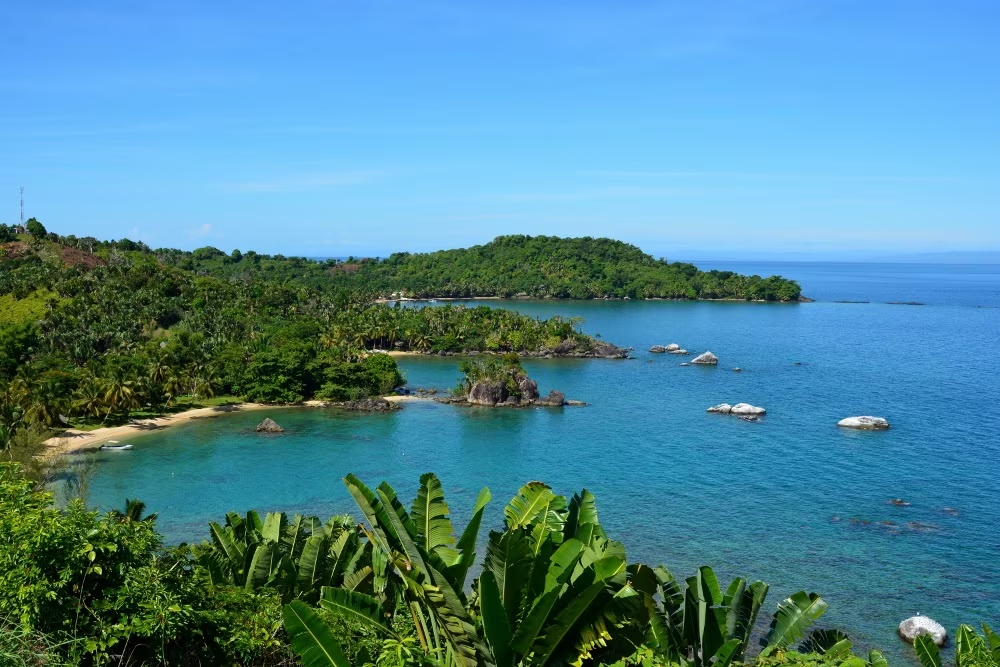
Sainte-Marie, Nosy Boraha in Malagasy, is a narrow island about sixty kilometers long, covered with forests and coconut trees, and bordered by beaches and lagoons. We now have two full days ahead of us to discover it at our own pace.
This first day can be devoted to its history. In the 17th and 18th centuries, Ambodifotatra Bay served as a refuge for pirates of the Indian Ocean, who found water, supplies and sheltered anchorage there. On a hill overlooking the bay, the Pirates' Cemetery preserves ancient tombs, facing Île aux Forbans. It can be reached on foot, via a path that crosses the mangrove.
Ambodifotatra, the island's capital, is a large quiet village, with its market, port and wooden houses. A Catholic church built in the 19th century, among the oldest in Madagascar, recalls the arrival of missionaries.
For those who prefer the water, outings in a pirogue in the mangrove, sea kayaking or snorkeling around coral reefs can easily be arranged from the hotel or in the village. The corals remain fragile: we do not touch them and do not walk on them.
These activities are not included, which gives everyone the freedom to choose. Our team can help us organize them. Second night in Sainte-Marie.
Flight to Antananarivo and then return flight to Paris
Ile Sainte Marie → Antananarivo
More time on the island Sainte Marie depending on flight schedules.
A transfer to the airport is provided. You will fly over the sky of the big island with Tsaradia, the national airline heading to the Capital.
Upon your arrival, we welcome you at Ivato Antananarivo airport. Transfer to your hotel in the city center.
The rest of the day is free
test
Antananarivo → Paris Roissy CDG
If time permits, we will visit the city and the craft market.
Evening transfer to the airport, check-in assistance for the flight to Paris, overnight flight.
Price per person
Indicative price per person, based on double room. Each trip is customized according to your preferences.
This trip can be tailored to your preferences
This itinerary provides an excellent foundation for discovery, but it can be fully customized. Our local advisors build each trip tailored to your budget, dates and preferences.
Not included
- International flights
- Domestic flights Morondava to Antananarivo and Sainte-Marie to Antananarivo (fluctuating rates, booked separately)
- Visa fees
- Lunches, dinners not mentioned and beverages
- Nocturnal visits to Andasibe and the aye-aye night visit at Palmarium
- Activities in Sainte-Marie (excursions, boat trips, diving)
- The single room supplement
- Insurance assistance, repatriation and cancellation
- Tips and Personal Expenses
Included
- Airport reception and transfers in Antananarivo and Morondava
- The 4x4 with driver-guide, fuel included, in the West, and the vehicle with driver-guide from Antananarivo to Manambato
- The passages by ferry on the Tsiribihina and the Manambolo
- Collective boat trips on the Pangalanes Canal, from Manambato to Lake Ampitabe and then to Tamatave
- Vehicle transfers with driver from Toliara to Soanierana-Ivongo and the fast boat crossing to Sainte-Marie
- Transfers between the port, hotel and airport in Sainte-Marie
- Accommodation in a double or twin room for 15 nights
- Breakfasts, the Grand Tsingy picnic, and Andasibe to Sainte-Marie dinners
- The entrance fees and local guides for Kirindy, the Tsingy de Bemaraha, Andasibe National Park, Vakona Reserve and Palmarium Reserve, and the butterfly farm visit
- The assistance of our team in Antananarivo throughout the entire trip
Practical Information
Registration is considered firm and final after payment of a deposit of 40% of the total price and acceptance of the specific terms of sale.
The balance must be paid no later than 45 days before the departure date.
See our specific terms of sale for full details.
In the event of cancellation by the traveller, the following fees apply:
More than 60 days before departure: 40% of the total price (deposit retained)
Between 60 and 30 days before departure: 50% of the total price
Less than 30 days before departure: 100% of the total price
We strongly recommend taking out cancellation insurance. See our specific terms of sale for full details.
Your Passport:
Important: your passport must be valid. It must be absolutely and obligatorily valid for 6 months after the end of your stay in Madagascar.
Your travel documents
Your valid passport,
Your international and/or domestic flight tickets,
Your repatriation and emergency care insurance contract,
Your vaccination record if applicable,
Your blood type card if possible.
Obtaining a visa to enter Madagascar
Upon arrival in the territory:
Since February 16, 2026, the visa costs €30 for up to 15 days, €35 for 16 to 30 days, €40 for 31 to 60 days and €50 for 61 to 90 days. It can also be requested online before departure on the official e-visa portal (evisamada.gov.mg). An additional tourist tax of €10 is paid in cash upon arrival.
It is easily obtained upon your arrival in Madagascar.
This applies to all airports in Madagascar that handle international flights.
Upon arrival at the airport terminal, upon exiting the plane, a corridor for passengers is dedicated to issuing tourist visas.
This procedure is the simplest. We recommend it to you.
At the embassies and consulates of your home countries:
For information, download the document explaining the procedure and the file requirements for obtaining a visa from the Embassy of Madagascar.
To participate in our trips, it is strongly recommended to be insured for repatriation assistance and medical expenses abroad.
Your local agency encourages you to familiarize yourself with the specific contract developed with our partner CHAPKA ASSURANCES and AXA ASSISTANCE.
To subscribe to insurance, learn about coverage and rates, follow the link below.
CAP EXPLORER: The comprehensive insurance solution designed to enjoy your trip with peace of mind!
Choose the plan that best suits you:
Explorer'Multirisque
Explorer'Annulation
Explorer'Assistance
Specific to our trips, we strongly recommend subscribing to them.
If you choose to subscribe to one of these plans, the policy detailing all coverage and procedures for claiming any loss are available on the insurer's website.
Your local agency will be aware of it, but only the participant is responsible for complying with the procedures for declaring any loss. The participant must therefore keep this policy with them throughout their trip.
Chapka — Cap Explorer
Our insurance partnerTravel with peace of mind with our partner Chapka. Cancellation, repatriation, medical expenses, baggage… All the coverage for a worry-free trip.
Travel with peace of mind — I'll handle the insuranceFrequently asked questions
A tourist visa is required, issued upon arrival at Ivato Airport (Antananarivo) or online (e-visa). Your passport must be valid for at least 6 months from your date of entry. Before booking your trip, check with Madagascar's consular authorities for the conditions applicable to your nationality, including visa fees and authorized lengths of stay.
Go to the My Trips section to find all your projects.
You can send a message to your host directly from the Tea Lounge.
For a tailor-made quality trip, expect between 160 and 270 euros per day and per person, including accommodation, meals, internal transfers and English-speaking guide. International flights (900-1400 euros return) are additional. Long transfers and domestic flights represent a significant portion of the budget.
Your documents are accessible in the Documents tab of your trip.
Absolutely. We adapt each itinerary to suit your travel profile. For families, we prioritize relaxed pacing, family-friendly accommodations, fun and educational activities, and comfortable private transfers. Our local English-speaking guides know how to captivate children with age-appropriate anecdotes.
It's simple. You exchange with our local team to define your wishes, budget and dates. You receive a detailed itinerary proposal within 48 hours. You adjust every detail together until it's perfect. You confirm and travel with peace of mind. Your local agency remains available 7 days a week throughout your trip.
In case of emergency, contact your local agency immediately.
Payment is generally made in two installments.
Our agency is part of the Nomadays network, registered in France. You benefit from APST (Association Professionnelle de Solidarité du Tourisme) protection, which covers 100% of your funds. Secure payment, professional insurance, and English-speaking assistance 7 days a week on the ground throughout your stay. Travel insurance (assistance and repatriation, cancellation) is not included: we offer it through our insurance partner and strongly recommend it.

Let's talk about your adventure — Wild West
Ambassador of Malagasy fihavanana, based in Antananarivo
For me, traveling to Madagascar is stepping into the spirit of fihavanana: sharing, helping one another, meeting people, and taking time to understand what connects them to their land.
— Noro