From the Ifaty lagoon to the Highlands, through the canyons of Isalo
From the Ifaty lagoon to the sandstone canyons of Isalo, then via RN7 to the rice fields of the Highlands, eight days in southern Madagascar.
Duration
8 days
From
€640/pers.
Ideal seasons
Apr, May, Jun, Jul, Aug, Sep
Style
Guided tour
Comfort
classique
Travelers
Couple, Solo, With friends, senior
The spirit of travel
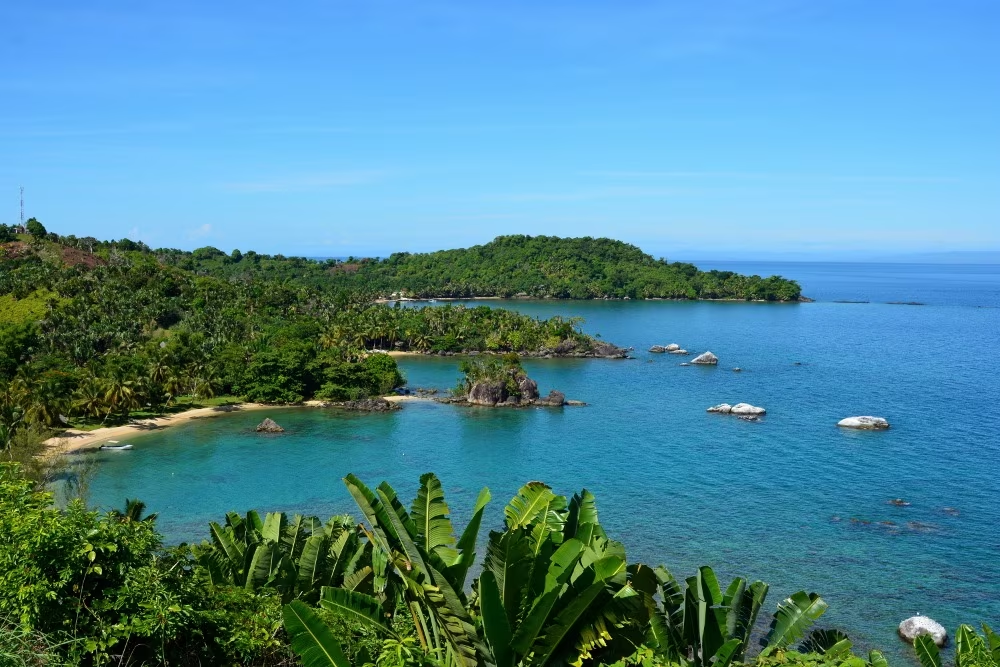
Over eight days, this trip explores southern Madagascar, from the Mozambique Channel to the Highlands. After a first night in Antananarivo, a flight takes us to Tuléar, the major city of the Southwest, and the road north leads us to the Ifaty lagoon, enclosed by a long coral reef and bordered by Vezo fishing villages.
Behind the beach extends the spiny forest, a plant formation found nowhere else in the world, where didieraceae, euphorbias and baobabs have learned to thrive with almost no water. Our driver-guide then takes us on the RN7, through sandstone plateaus and savanna, to the Isalo massif: a ruin-like landscape of sandstone, carved into canyons, which we explore on foot for an entire day with the park guides.
The road then climbs toward the Highlands. The Horombe plateau, the granite domes of Anja, the terraced rice paddies of the Betsileo region, Fianarantsoa and Ambositra lead us to Antsirabe, a spa town in the heart of a volcanic region. On the last day, the crater lake of Tritriva precedes our return to Antananarivo and the international flight.
This trip connects with our other regional journeys, the West, the North and the East. Each departs from Antananarivo and returns there: end to end, they compose a tailor-made trip of two, three or four weeks.
The stages of your journey
Highlights
Day-by-day itinerary

Arrival in Antananarivo
Upon arrival at Ivato International Airport, a member of the Détours Madagascar team welcomes us and takes us to our hotel in Antananarivo. The transfer takes about 45 minutes.
Depending on our flight time, we discover the first faces of the capital on the way. The city is built on about a dozen hills, in the middle of rice fields on the Betsimitatatra plain. Multi-storey brick houses with wooden balconies, cluster on the slopes, and long staircases connect the upper districts to the markets of the lower city.
Antananarivo was born in the 17th century on the highest of these hills, around the palace of the Merina sovereigns. It is today a lively capital, where life takes place largely in the street: street vendors, taxi-brousses, pousse-pousse and carts share the road.
This first evening, we take time to settle in and rest from the journey. Our team answers our last questions about the course of the trip, which takes us the next day to the South, the Ifaty lagoon and the canyons of Isalo. Dinner is not included.
Flight to Tuléar and Ifaty Lagoon
According to flight schedule, transfer from the hotel to Antananarivo airport and departure to Tuléar, just over an hour's flight. The plane leaves the Highlands, their hills of red laterite and rice paddies, to fly over increasingly dry plateaus, cut through by rivers with sandy beds. Gradually, the color of the soil changes, vegetation becomes sparse, and the Mozambique Channel appears, bordered by a line of reefs.
Upon arrival in Tuléar, we are welcomed at the airport and taken to our hotel. Toliara, which everyone still calls Tuléar, is the major city of the Southwest, situated on the edge of a shallow bay, near the mouth of the Fiherenana River. The Southwest is Madagascar's driest region: it receives less than 400 millimeters of rain per year, and the sun shines there almost every day.
We take the road north, about thirty kilometers along the coast, to reach Ifaty. The road crosses a landscape of white sand and thorny bushes, dotted with squat baobabs and spurges with bare branches. Here begins the spiny forest, a vegetation formation unique in the world, adapted to months without rain.
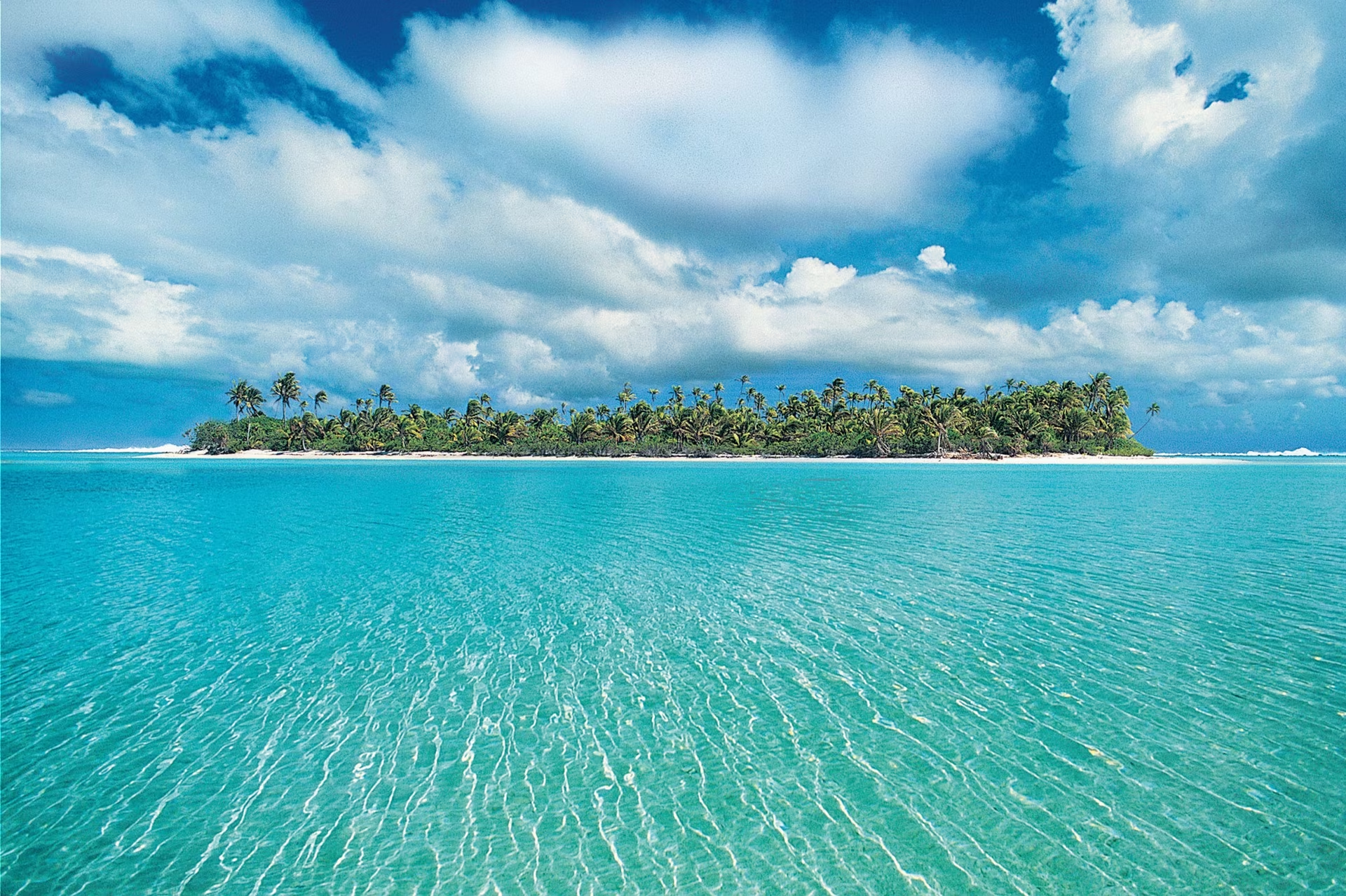
Ifaty, Mangily and Madiorano form a string of Vezo fishing villages, lined up facing the Ranobe lagoon. This lagoon is closed seaward by a long coral barrier, on which the ocean swell breaks. Inside, the water remains calm and turquoise, and its color changes with the tides, from the pale green of sandy shallows to the deep blue of the passes.
The Vezo are a seafaring people. Their name designates less an origin than a way of life: a Vezo is someone who lives from the sea and knows how to sail. Each morning, their outrigger canoes, carved from a single trunk and rigged with a square sail, set out toward the barrier and return at the end of the day loaded with fish and octopuses.
Hotel check-in, overlooking the lagoon, and free time on the beach for the rest of the day.
Ifaty, Between Lagoon and Spiny Forest
Free day in Ifaty, to take time to discover the two faces of this coastline: the sea on one side, the thorny forest on the other.
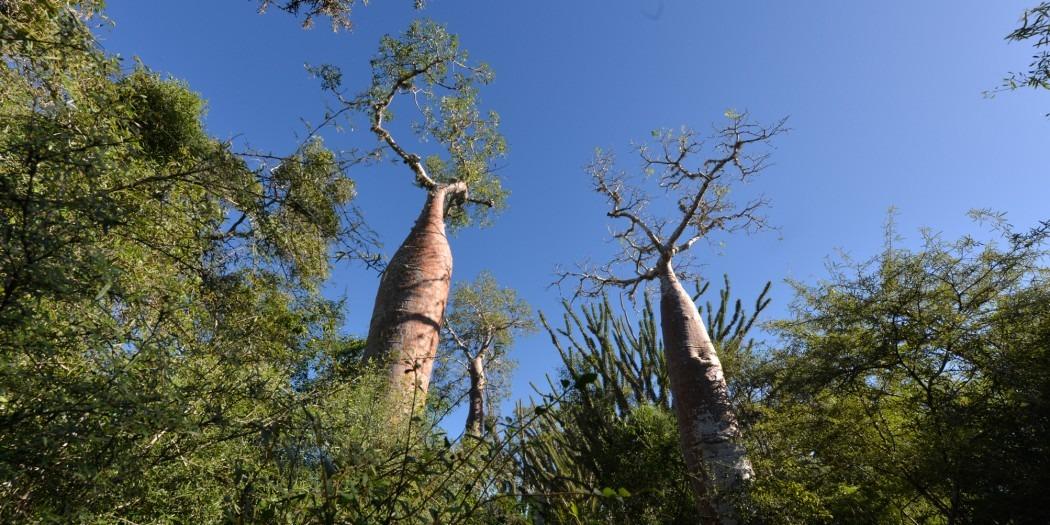
Behind the villages, the ground is made of ancient sands and limestone, into which water seeps as soon as it falls. Plants had to adapt to this permanent dryness, and the result is a landscape unlike any other. The didiereaceae, a plant family that exists only in Madagascar, raise their stems covered with spines and small leaves that fall during the dry season. The euphorbias form leafless candelabras, the pachypodiums swell their trunks to store water, and the baobabs, here squat and bottle-shaped, stand like sentinels above the bushes. This forest can be explored on foot, preferably early in the morning or late afternoon, when the light is soft and the heat bearable. It can also be crossed by zebu cart.
On the sea side, the lagoon is suitable for swimming and, at high tide, for snorkeling over coral bommies. A trip in an outrigger canoe with a Vezo fisherman is probably the best way to understand this lagoon: gliding over the water without a motor, at the rhythm of sail and pole, all the way to sandbanks that emerge at low tide.
The rest of the time belongs to the beach and villages. When the canoes return, late afternoon, the shore comes alive: women sort the fish, children help pull boats onto the sand, and nets dry between the coconut trees. This is an opportunity to share a little of the daily life of these fishing communities, discreetly, always asking before photographing.
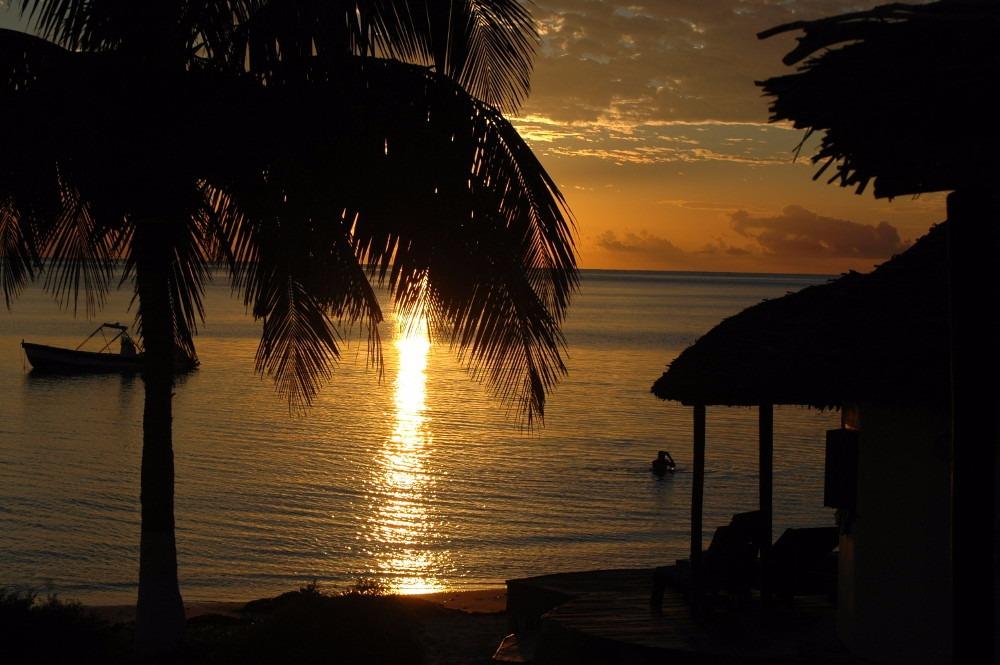
At sunset, the horizon blazes above the Mozambique Channel. Night at the hotel, facing the lagoon.
From Ifaty to Ranohira via the South Road
In the morning, our driver-guide from Détours Madagascar meets us at the hotel. We head back down to Tuléar, then leave the city via RN7, the main road connecting the Southwest to the Highlands and Antananarivo.
About twelve kilometers from the city, we stop at the Antsokay arboretum. Spread over forty hectares, this botanical garden brings together several hundred plant species from the Southwest flora, the vast majority of which are endemic to the region. It's the best place to identify plants we encountered in Ifaty: didiereacea, pachypodiums, aloes, kalanchoe, spurges, and many species used by traditional healers. The visit lasts about an hour.
The road then gradually climbs toward the interior. The limestone plains of the coast give way to plateaus of sandstone and red sand, covered with grassy savanna where isolated satrana palms stand tall. Near Sakaraha, the road crosses Zombitse forest, one of the last pockets of dry transitional forest between the west and south of the island.
Along the road, the tombs of the South catch the eye. Families honor their dead with large stone or cement monuments, sometimes painted with scenes from the deceased's life and crowned with zebu horns, witnesses to the herds sacrificed during funerals. These tombs are sacred places: we observe them from the road, with respect.
We then pass through Ilakaka. Thirty years ago, it was just a hamlet of a few houses. The discovery of sapphire deposits in the late 1990s attracted tens of thousands of prospectors from across the island within a few months, and the town was built in wood and corrugated iron along the road. The sapphires come from alluvial deposits torn from nearby reliefs and deposited by rivers: miners dig wells in these gravels, then wash the soil searching for stones.
Late in the afternoon, just before Ranohira, we stop at the Window of Isalo, a natural arch sculpted by erosion in the sandstone, through which the sun sets over the savanna. We check in at the hotel, at the foot of the massif.
Ifaty → Ranohira
A day hiking in the Isalo canyons
Day hike in Isalo National Park, accompanied by a local park guide.
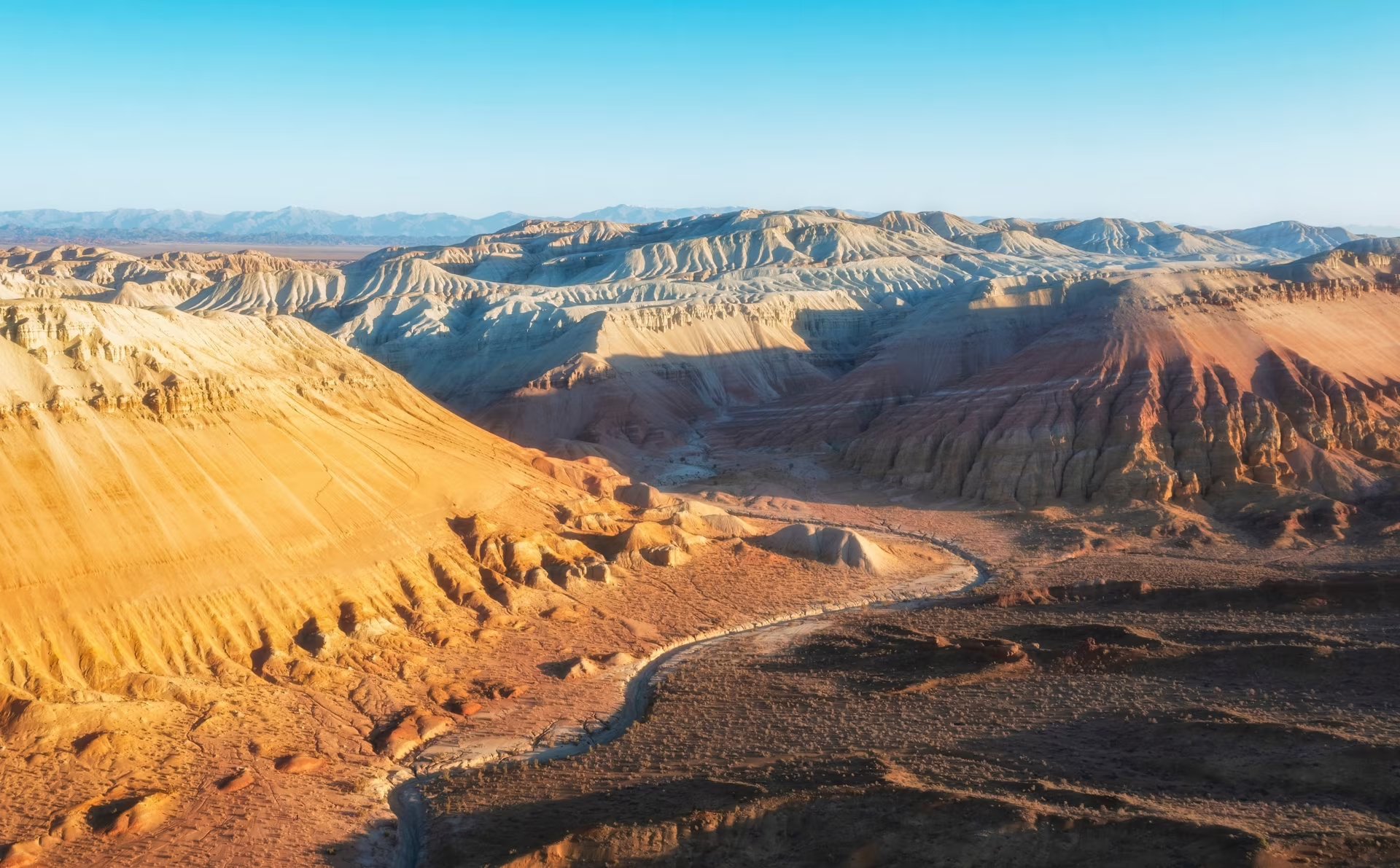
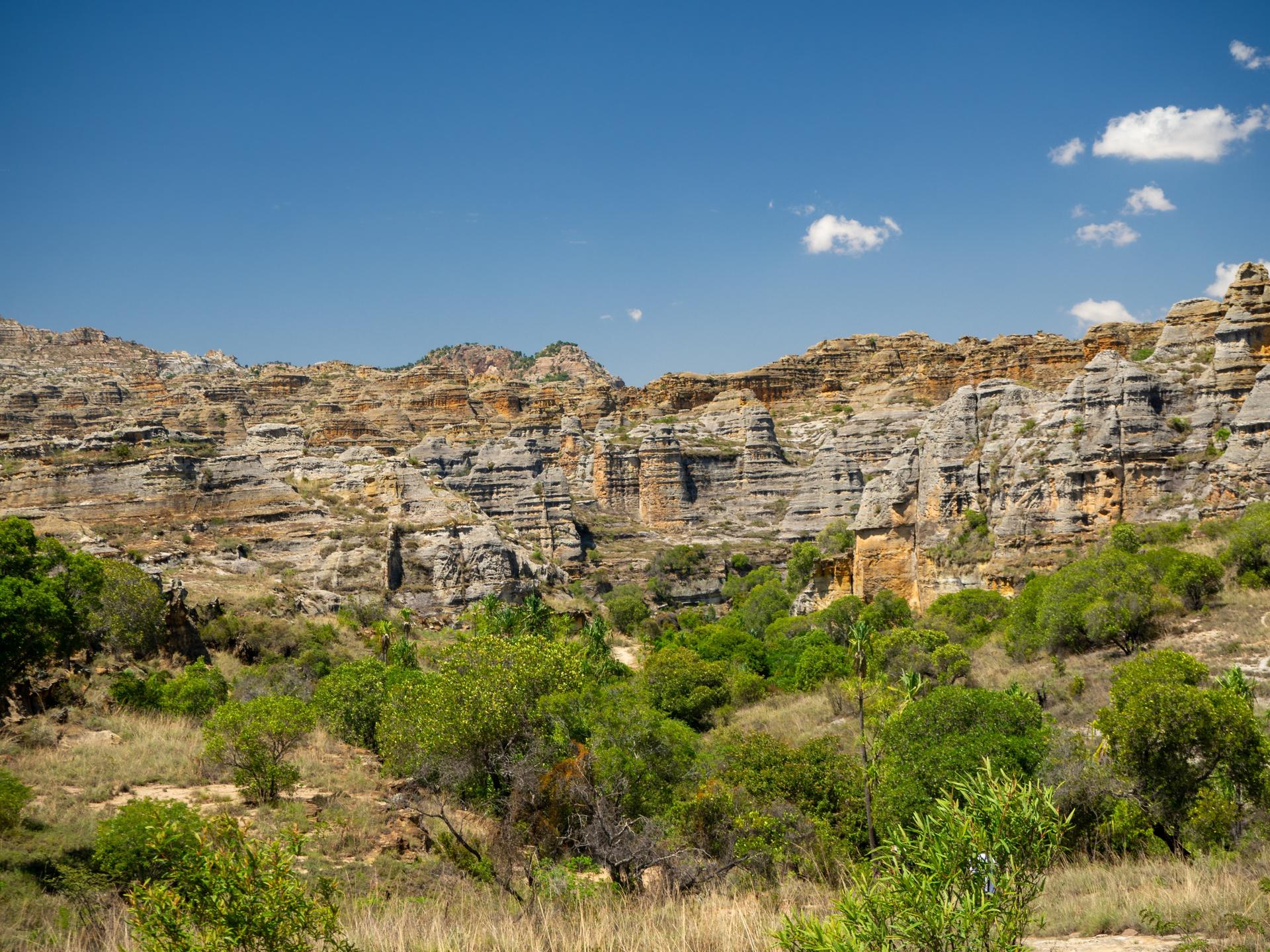
The Isalo massif is made of continental sandstone, deposited by ancient rivers between the Triassic and Jurassic periods, more than 160 million years ago, when Madagascar was still attached to Africa. Uplifted and then eroded by rain and wind, these layers have been carved into a ruiniform relief: towers, needles, arches and walls, separated by narrow canyons where water flows year-round. The park, created in 1962, covers more than 80,000 hectares and stretches nearly 100 kilometers from north to south.
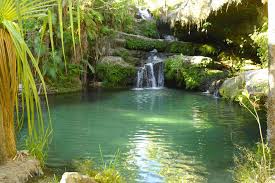
The day's itinerary is chosen with the guide, depending on the group's fitness level and the season. The classic loop first leads to the summit plateau, an expanse of bare sandstone, smoothed by erosion, from where the gaze extends over the entire surrounding savanna. The trail then descends toward a natural pool, a basin of clear water fed by a waterfall and bordered by tree ferns and pandanus plants, where swimming is possible. In the afternoon, the hike can continue along the bottom of a canyon, where the contrast is striking between the sun-scorched rock wall and the coolness of the gallery forest that runs alongside the stream.
On the rocks grow plants adapted to aridity: aloe, euphorbias, and especially Isalo's pachypodium, nicknamed elephant's foot for its swollen trunk, which is covered with yellow flowers in the austral spring. The canyons, being more humid, shelter several species of lemurs and numerous reptiles, which with luck we sometimes spot.
This region is the land of the Bara, a people of herders for whom the zebu is central to social life: it is wealth, dowry and offering to ancestors. The Isalo cliffs shelter Bara burials, installed in rock crevices, and the massif remains for them a sacred place, subject to taboos that the guide will explain to us along the way.
Return to the hotel in late afternoon.
From Isalo to the Highlands, via Anja and Ambalavao
We leave Ranohira by RN7 towards the north-east. The road crosses the Horombe plateau, a vast expanse of grassy savanna, almost without trees, where the eye can see all the way to the horizon. It is one of Madagascar's most expansive landscapes, traversed by herds of zebus and their herders. After Ihosy, the crossroads of the South, the road begins to climb: we leave the dry South behind to ascend the foothills of the Highlands.
The landscape then changes in nature. Sandstone gives way to the island's ancient crystalline basement, and great granite domes emerge from the plain, smooth and grey, polished by erosion. One of them forms a cliff that the inhabitants call the Gate of the South: it marks the boundary between Betsileo country and Bara country.
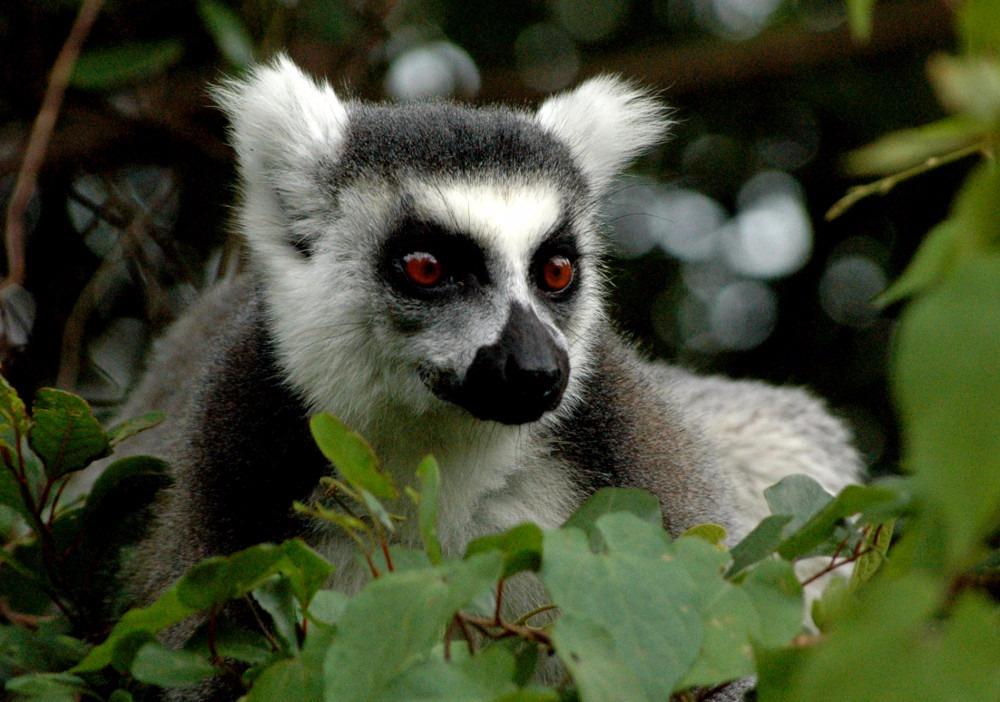
At the foot of one of these domes, we stop at the Anja community reserve. Between the collapsed granite blocks, a forest of fig trees, lianas and succulent plants has developed, and the rocky chaos forms shelters and caves. This small forest is home to a population of ring-tailed lemurs, which spend a large part of their time on the ground and on rocks. We walk through it with a village guide for about an hour. The reserve is managed by an association of neighbouring villages, and entrance fees fund agricultural, health and school projects for their inhabitants.
We then continue to Ambalavao, a small Betsileo town known for its craftsmanship. Antemoro paper is made by hand here, from the bark of a shrub, reduced to pulp and then dried in the sun with embedded flowers. Depending on the weather, our driver-guide will be able to introduce us to this craft.
The road climbs further to Fianarantsoa, capital of Betsileo country, built on several hills at approximately 1,200 metres altitude. Its upper town, with brick houses with wooden balconies, churches and cobbled streets, overlooks the lower town and its markets. Hotel check-in at the end of the day.
From Fianarantsoa to Antsirabe, in the Heart of the Highlands
The day follows National Road 7 northward, for approximately 240 kilometers, through the heart of the Highlands. It is a winding mountain road, which generally stays above 1,200 meters in altitude, on the island's ancient crystalline bedrock: a landscape of rounded hills, deep valleys and granite ridges, with red laterite soils.
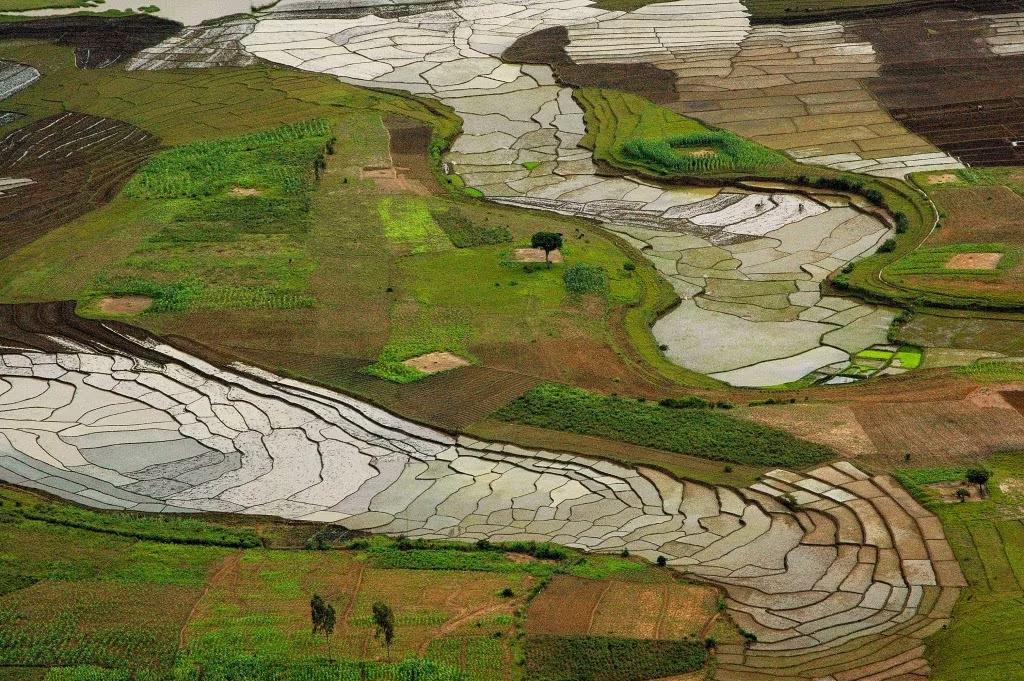
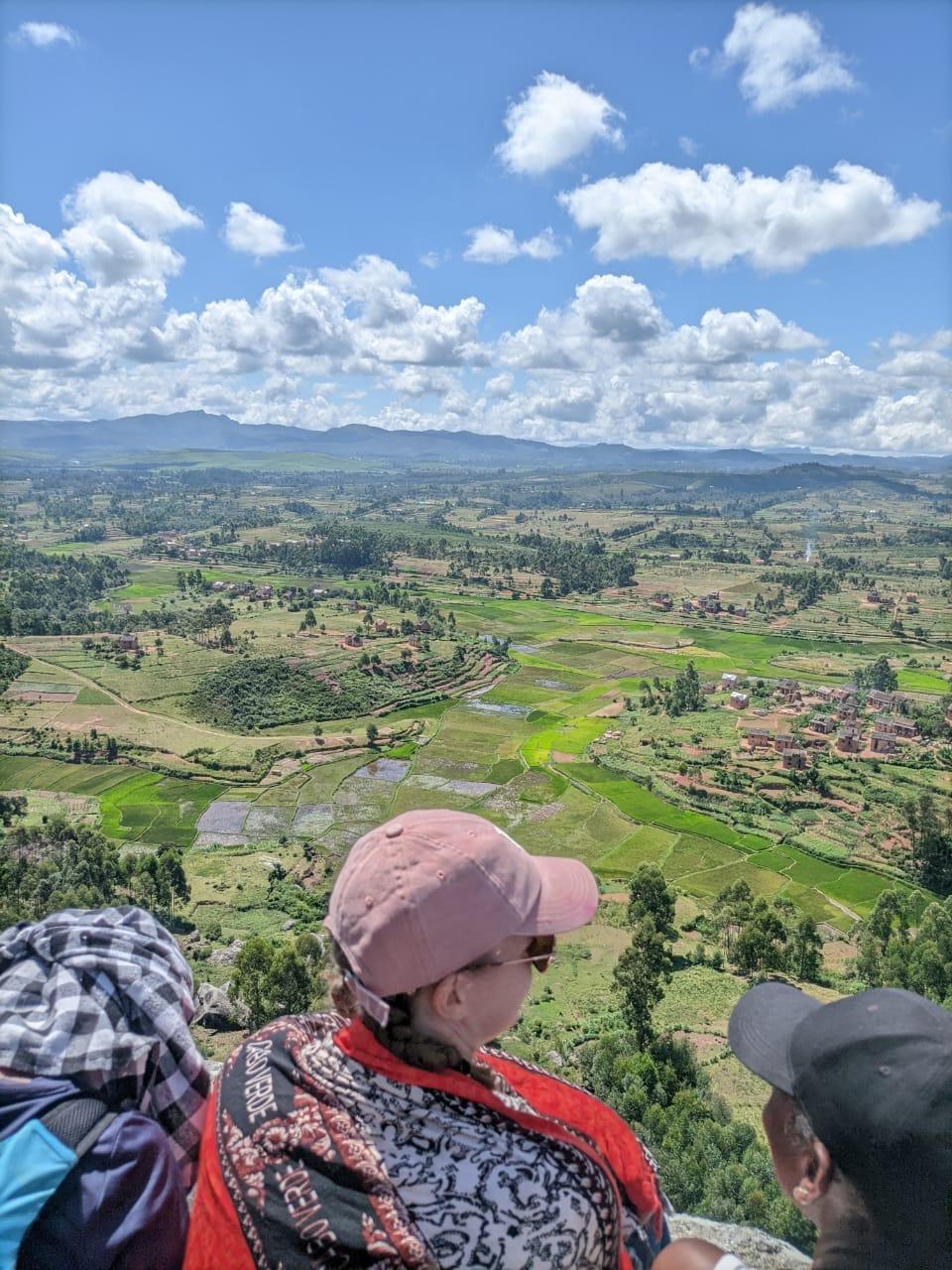
This landscape was shaped by the Betsileo, renowned as among Madagascar's finest rice farmers. They have arranged the slopes into terraces, fed by a network of canals that conducts water from one plot to another down to the valley bottoms. Depending on the season, the rice paddies are flooded, tender green or golden before harvest. Between the fields stand villages, with red earth two-story houses, topped with thatch or tiles.
After Ambohimahasoa, the road crosses forests of pines and eucalyptus, then reaches Ambositra, the capital of wood craftsmanship. Here work sculptors and marquetry craftsmen heirs to Zafimaniry expertise, a forest people from nearby areas whose wood art is inscribed by UNESCO in the intangible cultural heritage of humanity. Depending on the weather, our driver-guide will be able to show us a few workshops.
The road then crosses several passes before descending again toward the Vakinankaratra basin. The landscape changes once more: we enter a volcanic region, with dark and fertile soils, from which comes a large part of the Highlands' vegetables and fruits.
Late in the afternoon, we arrive at Antsirabe, at 1,500 meters altitude. The city owes its name, "where there is much salt," to thermal springs laden with minerals that spring from its subsoil. Having become a spa town in the late 19th century, it has retained from that era wide avenues, colonial buildings and the atmosphere of a spa town. Its streets are traveled by hundreds of pousse-pousse, small carts pulled on foot or by bicycle. Check-in at the hotel.
Lake Tritriva, then return to Antananarivo
After breakfast, we head west towards Betafo, through a landscape of extinct volcanoes, cones and craters. The Vakinankaratra is one of Madagascar's youngest volcanic regions, and the hot springs that spring up around Antsirabe are its legacy. Rice fields occupy the bottom of the valleys, at the foot of the ancient cones, and the fields climb up their slopes.
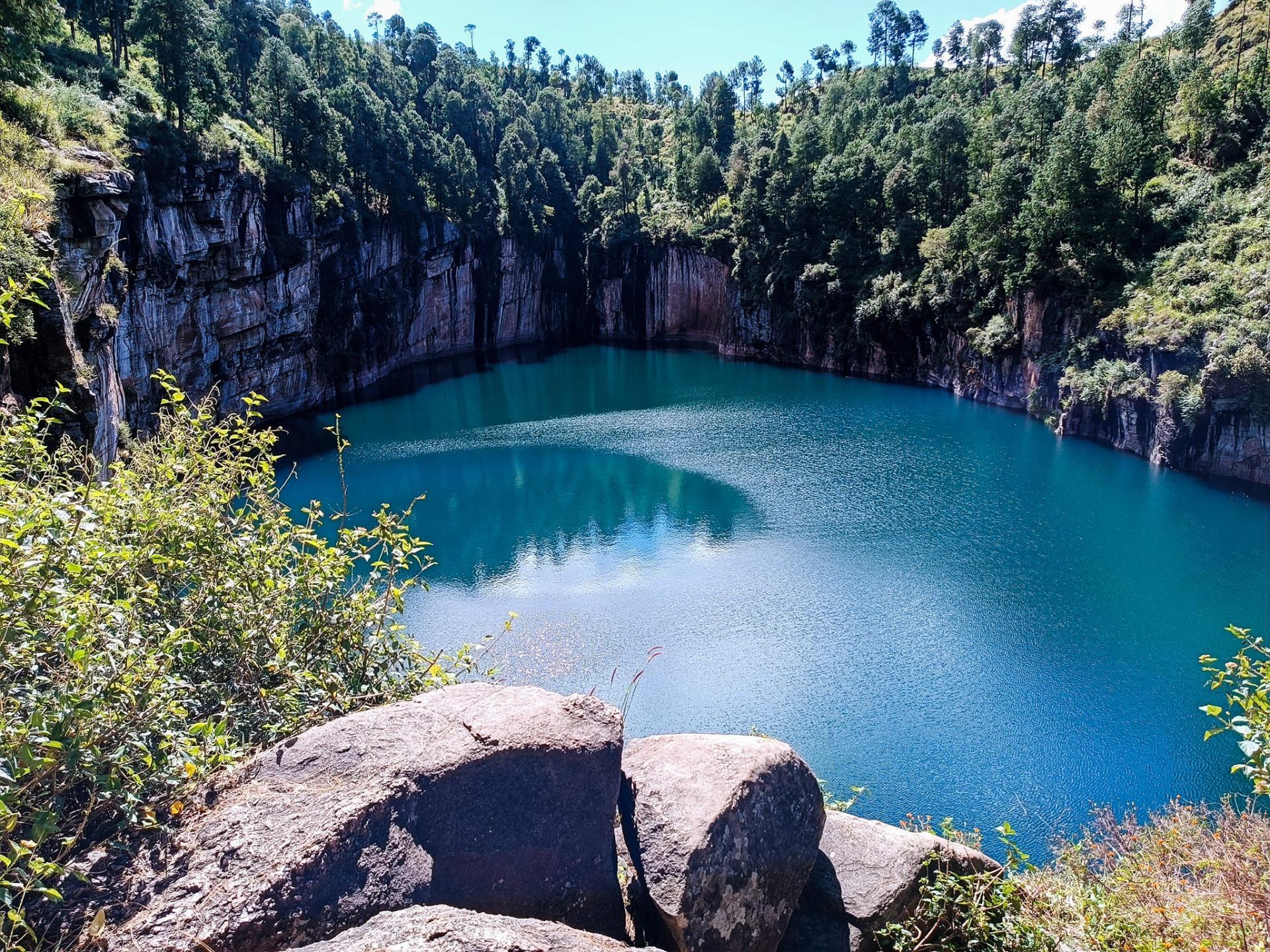
A small track then leads to Lake Tritriva. It occupies the bottom of a volcanic crater with steep walls, covered with pines, and its dark green waters reach considerable depth. The lake is sacred to the inhabitants of the neighbouring villages and surrounded by numerous fady, traditional taboos, as well as legends that a local guide tells us along the way. The trail circles the lake along the top of the walls, then descends to the shore, for a walk of about an hour.
We then resume the RN7 towards Antananarivo, approximately 170 kilometres away. The road crosses the highlands of the Vakinankaratra and runs along the Ankaratra massif, the island's third highest peak, before reaching the capital through the rice fields that surround it.
Depending on the international flight schedule, transfer to Ivato airport.
This journey through the South ends here. It can be extended by one of our other regional journeys, the West, North or East, which all depart from Antananarivo.
Price per person
Indicative price per person, based on double room. Each trip is customized according to your preferences.
This trip can be tailored to your preferences
This itinerary provides an excellent foundation for discovery, but it can be fully customized. Our local advisors build each trip tailored to your budget, dates and preferences.
Not included
- International flights
- The domestic flight Antananarivo - Tuléar (day 2)
- Lunches and dinners
- Activities on the free day at Ifaty and activities not mentioned in the program
- Single room supplement (€240 per person)
- Beverages, tips and personal expenses
- Cancellation insurance, repatriation and emergency medical expenses
- Visa fees
Included
- Ground transportation in a vehicle with an English-speaking driver-guide, fuel included, from day 4 to day 8
- Airport transfer from Tuléar to Ifaty (day 2)
- Airport transfers in Antananarivo
- Double or twin room accommodation in the program hotels, with breakfast
- Local guides and entrance fees for parks and sites (Antsokay, Isalo, Anja, Tritriva)
- The visits described in the program, excluding the free day
Practical Information
Registration is considered firm and final after payment of a deposit of 40% of the total price and acceptance of the specific terms of sale.
The balance must be paid no later than 45 days before the departure date.
See our specific terms of sale for full details.
In the event of cancellation by the traveller, the following fees apply:
More than 60 days before departure: 40% of the total price (deposit retained)
Between 60 and 30 days before departure: 50% of the total price
Less than 30 days before departure: 100% of the total price
We strongly recommend taking out cancellation insurance. See our specific terms of sale for full details.
Your Passport:
Important: your passport must be valid. It must be absolutely and obligatorily valid for 6 months after the end of your stay in Madagascar.
Your travel documents
Your valid passport,
Your international and/or domestic flight tickets,
Your repatriation and emergency care insurance contract,
Your vaccination record if applicable,
Your blood type card if possible.
Obtaining a visa to enter Madagascar
Upon arrival in the territory:
Since February 16, 2026, the visa costs €30 for up to 15 days, €35 for 16 to 30 days, €40 for 31 to 60 days and €50 for 61 to 90 days. It can also be requested online before departure on the official e-visa portal (evisamada.gov.mg). An additional tourist tax of €10 is paid in cash upon arrival.
It is easily obtained upon your arrival in Madagascar.
This applies to all airports in Madagascar that handle international flights.
Upon arrival at the airport terminal, upon exiting the plane, a corridor for passengers is dedicated to issuing tourist visas.
This procedure is the simplest. We recommend it to you.
At the embassies and consulates of your home countries:
For information, download the document explaining the procedure and the file requirements for obtaining a visa from the Embassy of Madagascar.
To participate in our trips, it is strongly recommended to be insured for repatriation assistance and medical expenses abroad.
Your local agency encourages you to familiarize yourself with the specific contract developed with our partner CHAPKA ASSURANCES and AXA ASSISTANCE.
To subscribe to insurance, learn about coverage and rates, follow the link below.
CAP EXPLORER: The comprehensive insurance solution designed to enjoy your trip with peace of mind!
Choose the plan that best suits you:
Explorer'Multirisque
Explorer'Annulation
Explorer'Assistance
Specific to our trips, we strongly recommend subscribing to them.
If you choose to subscribe to one of these plans, the policy detailing all coverage and procedures for claiming any loss are available on the insurer's website.
Your local agency will be aware of it, but only the participant is responsible for complying with the procedures for declaring any loss. The participant must therefore keep this policy with them throughout their trip.
Chapka — Cap Explorer
Our insurance partnerTravel with peace of mind with our partner Chapka. Cancellation, repatriation, medical expenses, baggage… All the coverage for a worry-free trip.
Travel with peace of mind — I'll handle the insuranceFrequently asked questions
A tourist visa is required, issued upon arrival at Ivato Airport (Antananarivo) or online (e-visa). Your passport must be valid for at least 6 months from your date of entry. Before booking your trip, check with Madagascar's consular authorities for the conditions applicable to your nationality, including visa fees and authorized lengths of stay.
Go to the My Trips section to find all your projects.
You can send a message to your host directly from the Tea Lounge.
For a tailor-made quality trip, expect between 160 and 270 euros per day and per person, including accommodation, meals, internal transfers and English-speaking guide. International flights (900-1400 euros return) are additional. Long transfers and domestic flights represent a significant portion of the budget.
Your documents are accessible in the Documents tab of your trip.
Absolutely. We adapt each itinerary to suit your travel profile. For families, we prioritize relaxed pacing, family-friendly accommodations, fun and educational activities, and comfortable private transfers. Our local English-speaking guides know how to captivate children with age-appropriate anecdotes.
It's simple. You exchange with our local team to define your wishes, budget and dates. You receive a detailed itinerary proposal within 48 hours. You adjust every detail together until it's perfect. You confirm and travel with peace of mind. Your local agency remains available 7 days a week throughout your trip.
In case of emergency, contact your local agency immediately.
Payment is generally made in two installments.
Our agency is part of the Nomadays network, registered in France. You benefit from APST (Association Professionnelle de Solidarité du Tourisme) protection, which covers 100% of your funds. Secure payment, professional insurance, and English-speaking assistance 7 days a week on the ground throughout your stay. Travel insurance (assistance and repatriation, cancellation) is not included: we offer it through our insurance partner and strongly recommend it.

Let's talk about your adventure — Deep South
Ambassador of Malagasy fihavanana, based in Antananarivo
For me, traveling to Madagascar is stepping into the spirit of fihavanana: sharing, helping one another, meeting people, and taking time to understand what connects them to their land.
— Noro