In the heart of Zafimaniry country: nine days of trekking from Antoetra to Ranomafana forest
Nine days of trekking from Antoetra to Ranomafana, village to village, through the Zafimaniry country and its woodcraft art listed on UNESCO's World Heritage. A journey designed by Marc, who accompanies you from start to finish.
Duration
15 days
From
€1,520/pers.
Ideal seasons
Apr, May, Jun, Jul, Aug, Sep
Style
Guided tour
Comfort
classique
Travelers
With friends, groupe
The spirit of travel
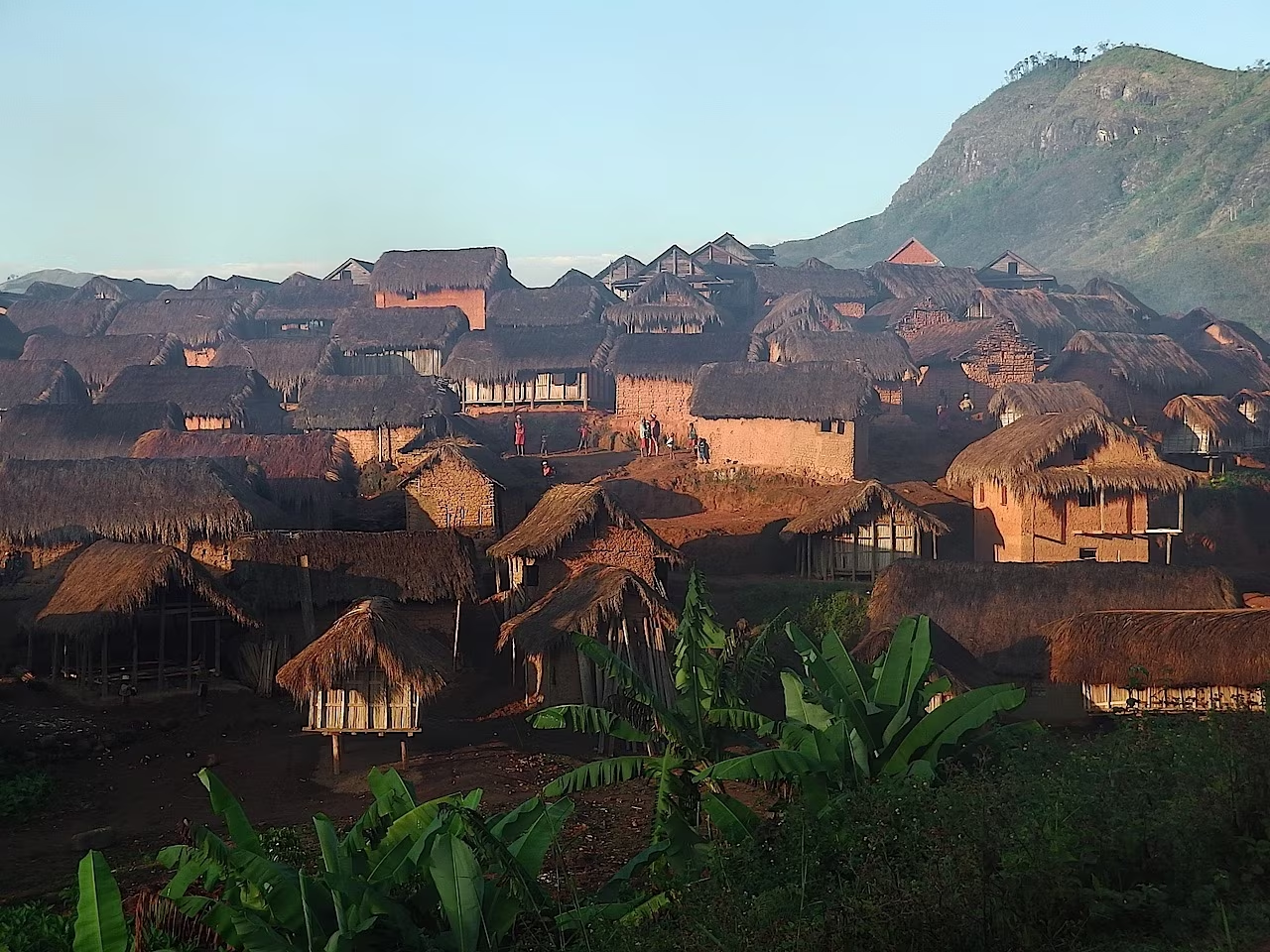
The Zafimaniry country occupies the wooded highlands that separate the High Plateaus from the eastern slope of Madagascar, between Ambositra and Ranomafana. Its villages, perched on granite domes, can only be reached on foot. The Zafimaniry maintain an art of carved wood inscribed in UNESCO's intangible cultural heritage: doors, shutters and lintels covered with geometric patterns transmitted from generation to generation.
This journey is a creation of Marc Rakotomamonjy, Détours Madagascar guide, who has drawn its route village by village, in agreement with the hamlet chiefs. From Antoetra, the only Zafimaniry village accessible by vehicle, we walk nine days towards the east: Sakaivo and the Fanandrana waterfall, then little-traveled trails to Ifanadiana and Ranomafana.
The landscape changes every day: eucalyptus and mimosa plateaus, terraced rice fields, granite peaks, steep valleys, then the humid forest of the eastern escarpment. We sleep at local homes and under tents, share cooking over wood fires and village evenings. Ranomafana National Park and its hot springs close the crossing.
The trek is practiced from April to November. We prefer May, June and September: dry trails, cool nights at altitude, sometimes close to 0 °C around 1,800 meters, bearable heat on the eastern slope.
This trek is for good walkers: nine days of walking from 2 to 7 hours, with elevation gains up to 700 meters on certain stages. The trail is well marked, with no technical or exposed passages, but it becomes slippery after rain. Regular hiking practice is sufficient.
Marc accompanies the group throughout the journey. On the trek, he is supported by a local Zafimaniry guide, a trail scout, a cook and his assistant, and porters whose number follows the size of the group. 4x4 vehicles drop us at Antoetra and meet us at Ranomafana at the end of the walk. The journey is made in a small group, from 4 to 12 travelers.
The stages of your journey
Highlights
Day-by-day itinerary
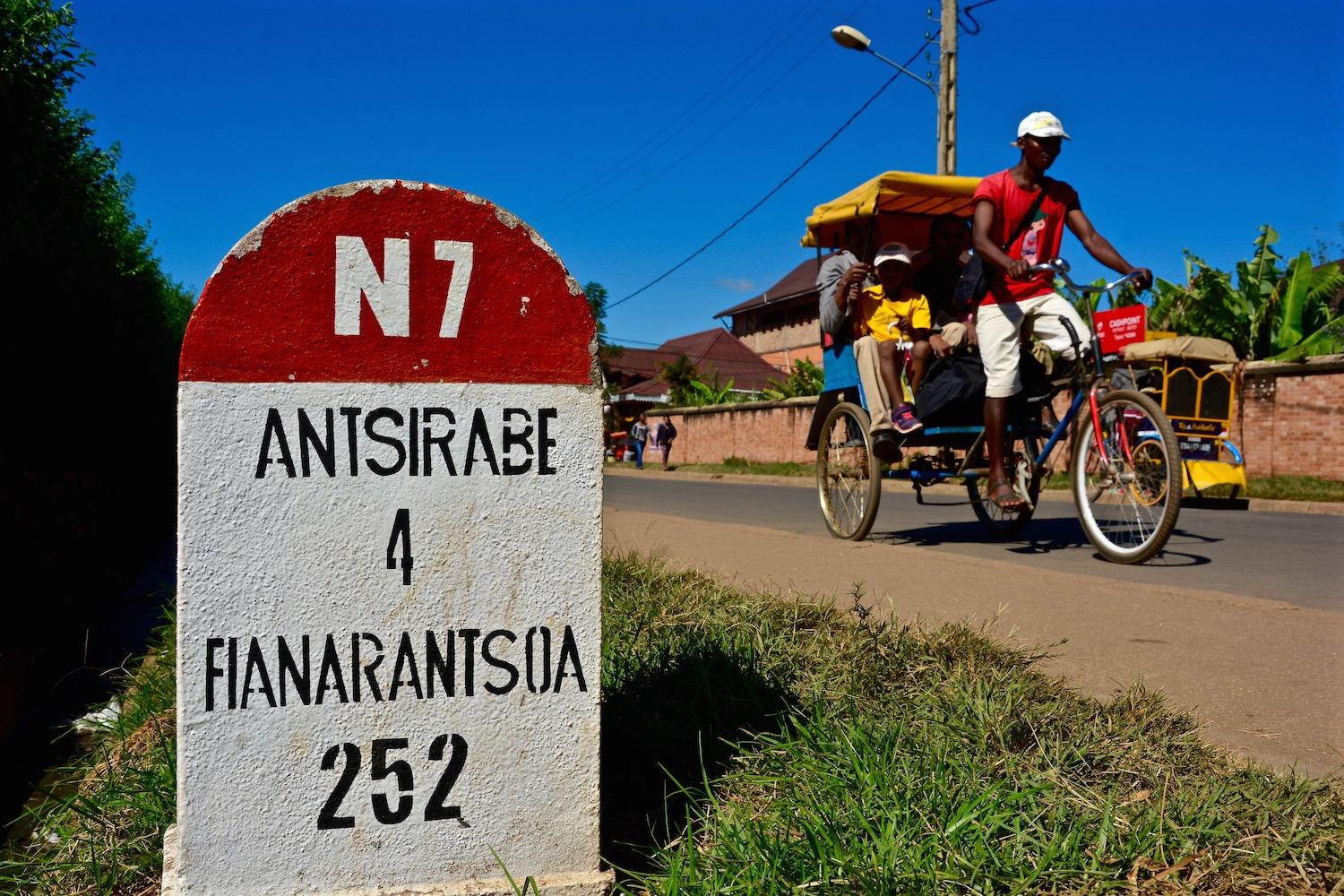
By the RN7, from Antananarivo to Antsirabe
We leave Antananarivo by National Road 7, heading south. The Highlands unfold their hills of red laterite, their terraced rice paddies and their villages of brick houses with upper stories. The peaks of the Ankaratra, an old volcanic massif, close the horizon to the west.
Along the way, Ambatolampy and its aluminum foundries, where pots are cast in sand molds, remind us of the ingenuity of the artisans of the Highlands.
At the end of the day, we arrive at Antsirabe, a spa town founded at the end of the 19th century at the foot of the volcanoes, with its wide avenues and its rickshaws.
Night in Antsirabe.
Route: approximately 4 hours, 170 km.
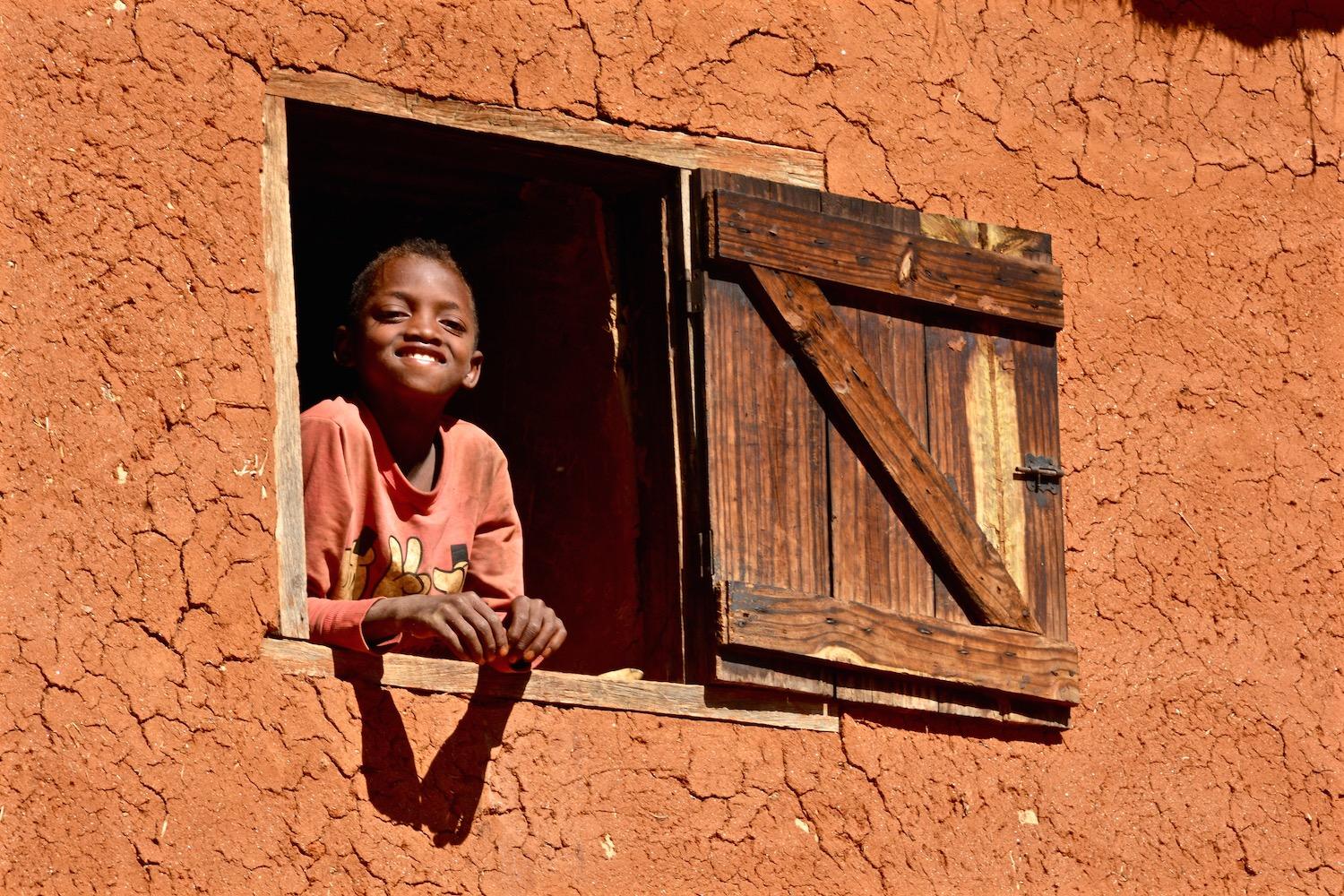
From Antsirabe to Antoetra, at the Gates of Zafimaniry Country
National Route 7 continues south to Ambositra, capital of woodcraft in the Highlands, where we visit a few sculpture and marquetry workshops.
Then a track leaves the paved road heading east and climbs through granite hills covered with eucalyptus and pine trees to Antoetra, the only Zafimaniry village accessible by vehicle. Beyond that, the country can only be crossed on foot.
Upon arrival, Marc introduces the team that will accompany us during nine days of trekking: the local guide, the tracker, the cook, his assistant and the porters. We share with the elders the welcome protocol, which opens the doors to Zafimaniry country.
Night in Antoetra.
Road and track: approximately 4 hours, 140 km.
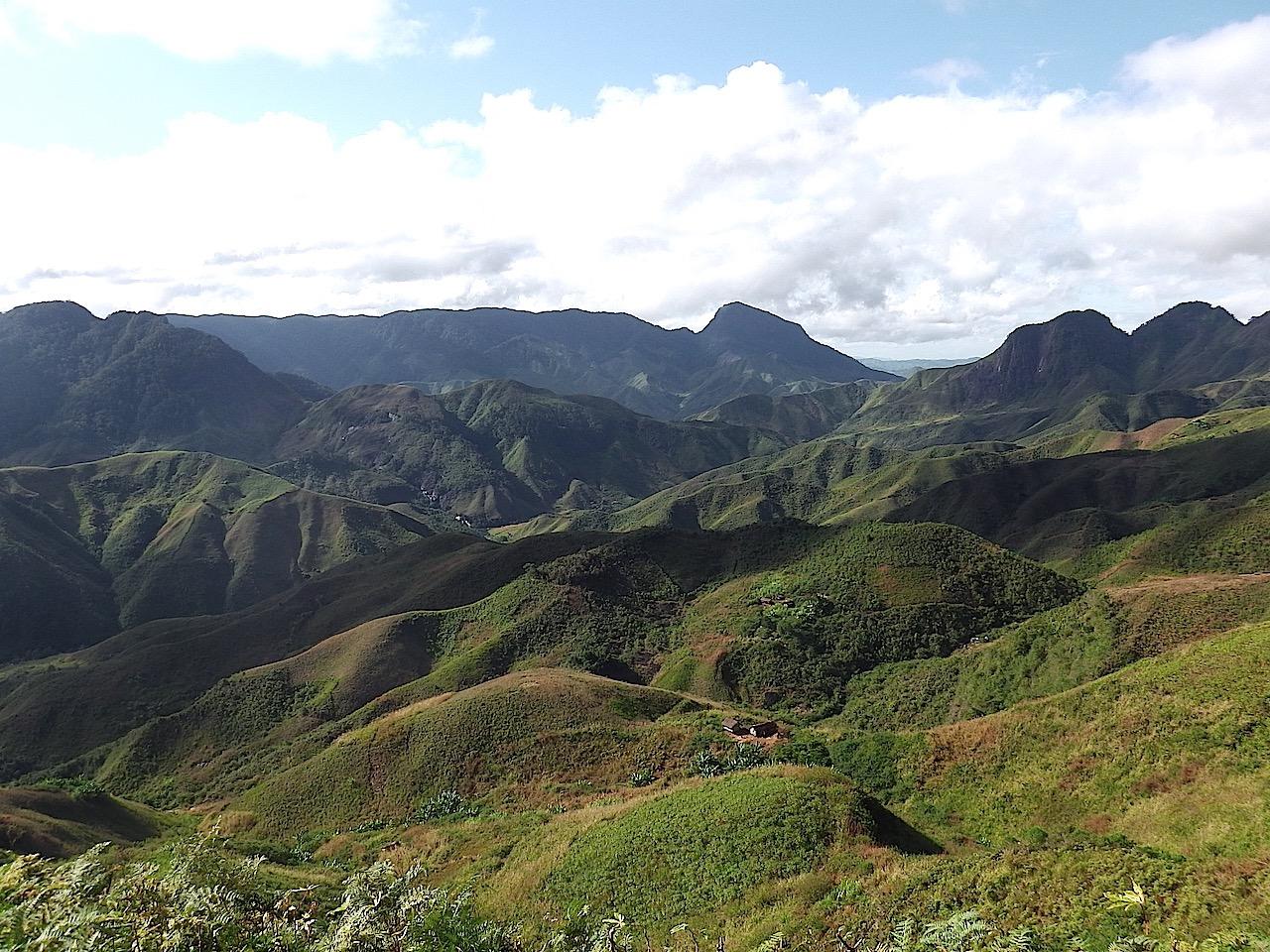
From Antoetra to Sakaivo via Lehibory Peak
First real day of hiking, and one of the most beautiful stages of the journey. The trail leaves the Antoetra plateau via a descent between eucalyptus and mimosa trees, then climbs towards Lehibory peak, at 1,885 meters, offering a viewpoint over the valleys and granite domes of the Zafimaniry region.
We stop in the villages of Ifasina and Tetezandrotra, where craftsmen open their workshops. Doors, shutters and lintels bear geometric patterns that tell of this people's bond with their ancestors and with the forest. This woodworking know-how is inscribed in UNESCO's intangible cultural heritage.
A long descent, with steps cut into the stone, leads us to Sakaivo, one of the most beautiful villages in the Zafimaniry region.
Dinner and night with a local family.
Hiking: 5 to 6 hours.
Antoetra → Sakaivo
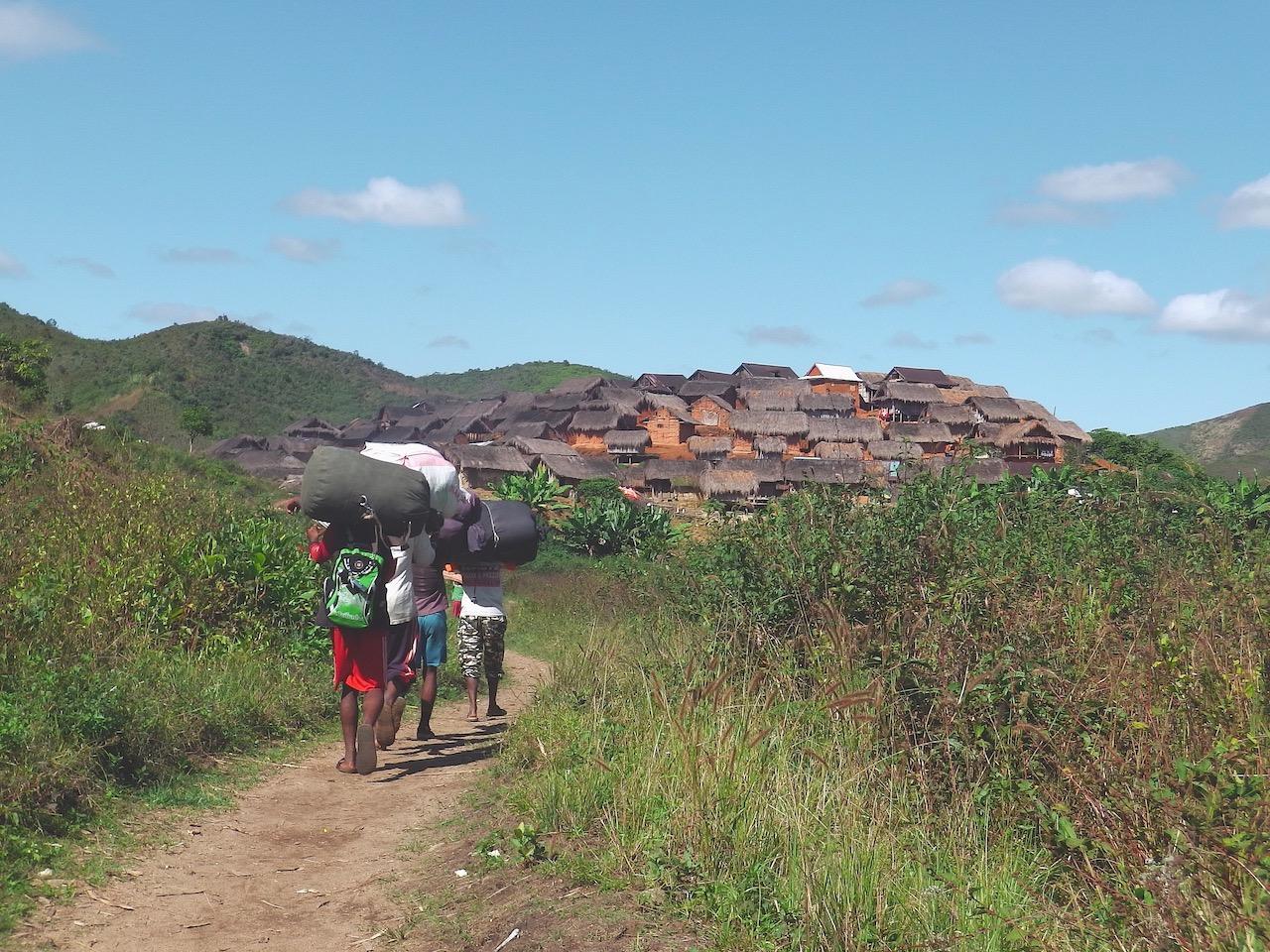
A day at Sakaivo and Fanandrana waterfall
A day to slow down and live at the pace of Sakaivo. In the morning, a short walk takes us to the Fanandrana waterfall, where water cascades into granite pools perfect for swimming.
Back in the village, we share a meal with our hosts. The afternoon is dedicated to encounters: sculpture demonstration, zafimaniry long chair making, weaving workshop. In the evening, around the fire, the inhabitants sing and sometimes dance the dombolo, under a sky of great purity.
Dinner and overnight stay with a local family.
Walk: approximately 2 hours.
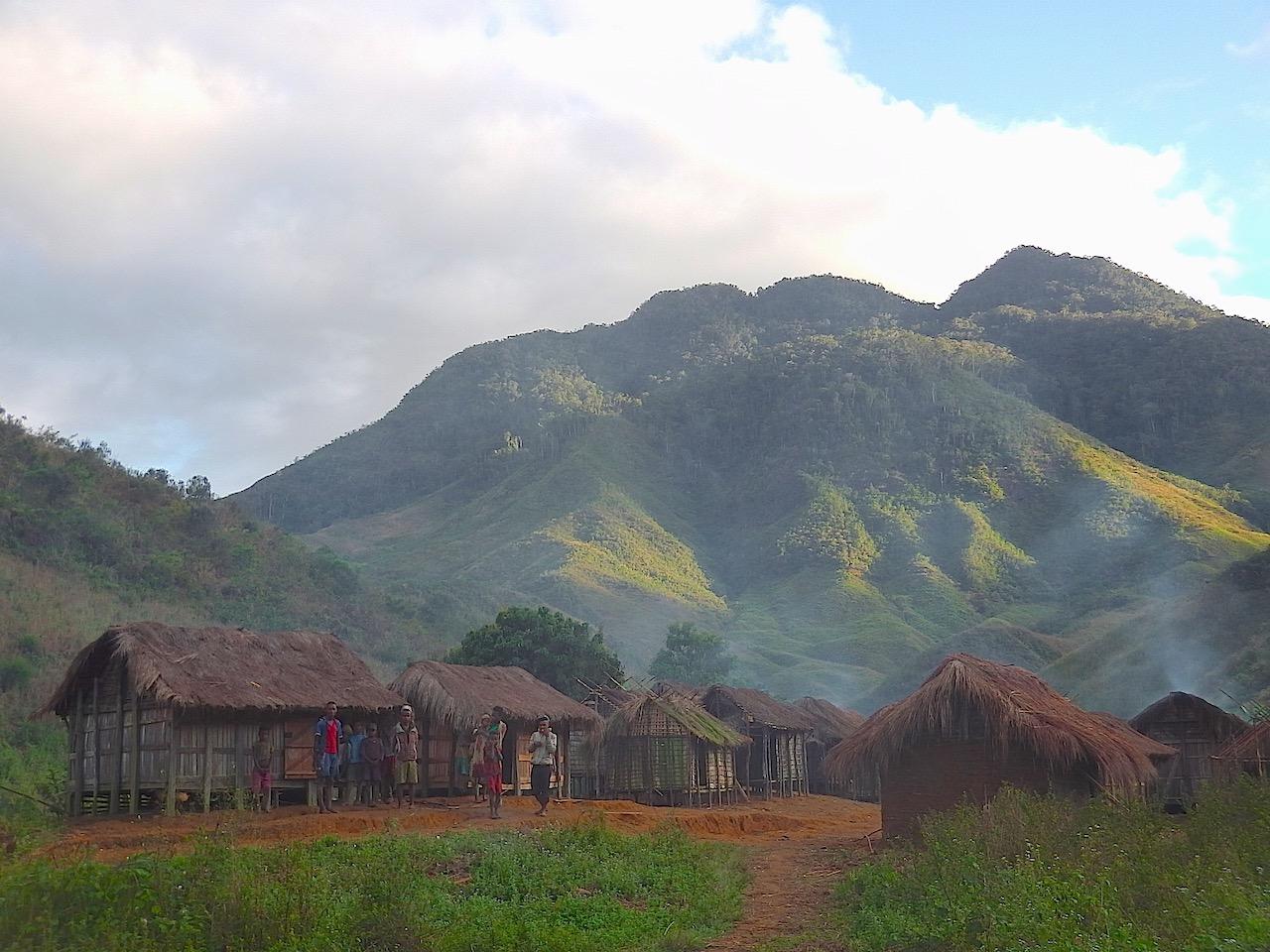
From Sakaivo heading east, first camp at Ampasina
We leave Sakaivo heading east, into a much less traveled part of the Zafimaniry country. The trail descends into a narrow valley, crosses terraced rice fields and several streams, then climbs up the other side.
The vegetation gradually changes: the humid influences of the eastern slope make themselves felt, and forest groves narrow in the valley bottoms.
The first camp of the crossing stands in the middle of nature, near the hamlet of Ampasina.
Dinner and night in camp.
Hiking: 4 to 5 hours.
From Sakaivo
From Ampasina to Maromanana, from hamlet to hamlet
The stage alternates between gentle climbs and descents between the cultures. We pass through several hamlets where daily life unfolds before our eyes: women are pounding rice, children are returning from the fields, men are working with wood.
Foreign walkers are rare here, and the welcome is warm and curious. The air becomes more humid, the forest more present at each pass.
We arrive in Maromanana in the late afternoon.
Dinner and night with a local host.
Walking: 4 to 5 hours.
From Maromanana to Ambodimanga, entering the forest
Forest takes over the open landscapes. The trail follows water courses, crosses wooden footbridges and winds between tree ferns. Endemic birds, butterflies and the first orchids signal the transition between the Highlands and the eastern slope of the island.
The bivouac is set up in a clearing near Ambodimanga, the "foot of the mango tree".
Dinner and night in bivouac.
Hiking: 4 to 5 hours.
Walking tour
From Ambodimanga to Sandrakely, a shorter day
After several demanding stages, this day is intentionally shorter. We arrive late morning in Sandrakely, a small village where we are welcomed by local residents.
The afternoon is free: rest, reading, observing village life, basket and mat weaving in raffia. A welcome break before the two more demanding stages that follow.
Dinner and night with local residents.
Hiking: approximately 3 hours.
Walking tour
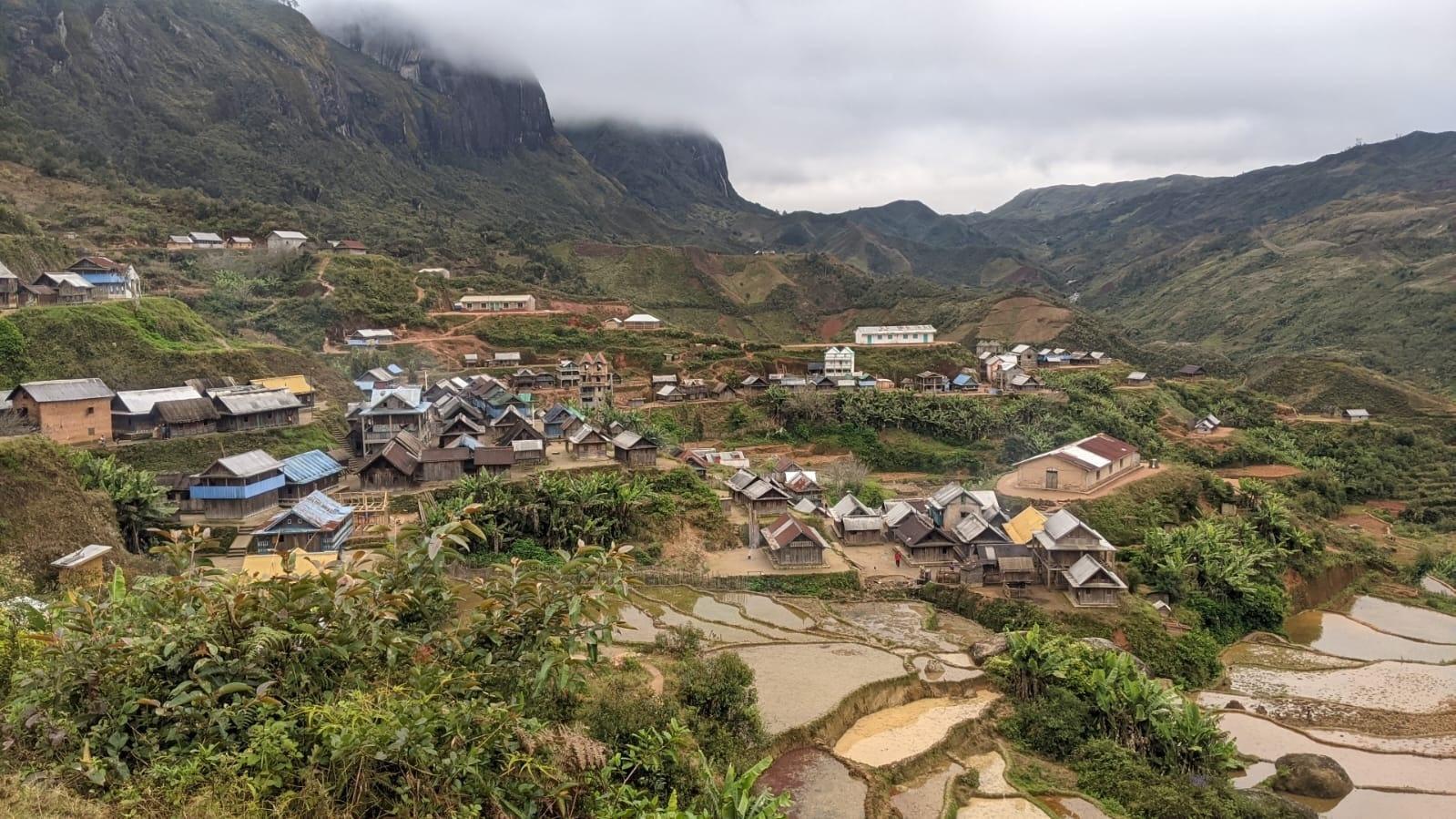
From Sandrakely to Tsaratanana by the ridge
This is the most demanding stage of the trek and one of the most spectacular. The trail climbs a ridge overlooking both sides of the island: to the east, the humid forest cascading down to the Indian Ocean; to the west, the Highlands already distant.
We have a picnic at the summit, then a technical descent takes us in the afternoon to Tsaratanana, "the good earth", where the bivouac stands.
Dinner and night at bivouac.
Walking: 6 to 7 hours.
Walking tour

From Tsaratanana to Ifanadiana, on the Eastern Slope
We are now switching to the eastern side. The descent is gradual, through increasingly tropical scenery: lychee trees, coffee plantations, banana plants, and the first plantations of vanilla and cloves. Heat and humidity are rising.
Upon arrival in Ifanadiana, the district capital on National Road 25, we find the bustle of a small commercial town, with its markets and shops.
Overnight in a guesthouse, the first real bed in several days.
Hiking: 5 to 6 hours.
Walking tour
From Ifanadiana to Ranomafana, final day of hiking
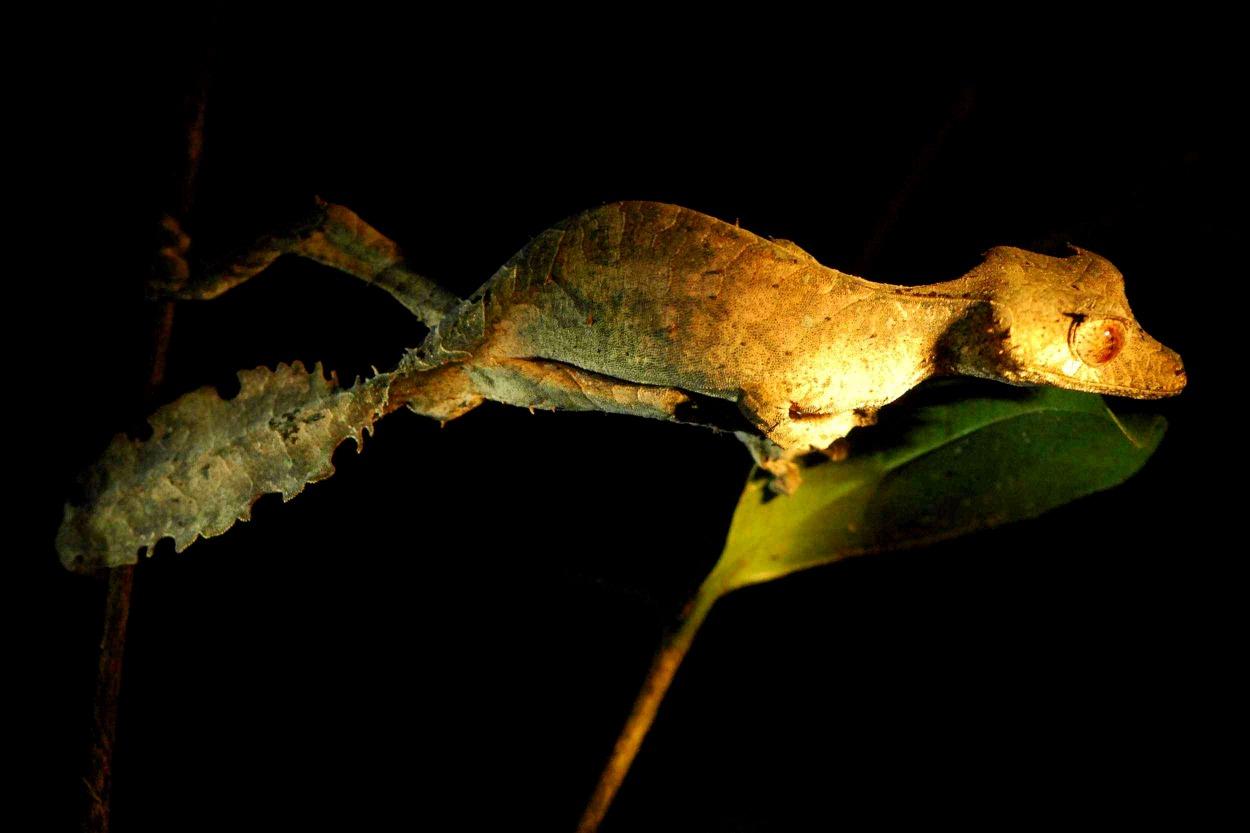
Last day of trekking. The trail leads back up to Ranomafana, passing through Fiadanana and several hamlets. The humid forest closes in around us, denser and more resonant: lemur calls in the distance, bird songs, woodland scents.
We arrive in Ranomafana in late afternoon, where we meet up with our vehicles and luggage. We say goodbye to the trekking team. The warm waters of the village's hot spring celebrate the end of the crossing.
Night in Ranomafana.
Trekking: 5 to 6 hours.
To Ranomafana
Ranomafana, a day of reserve or discovery
This day is held in reserve to absorb any unforeseen weather or terrain issues during the trek. If it is not needed, it becomes an additional discovery day in Ranomafana National Park: a longer circuit in the forest, lemur observation at dawn, or a rest day depending on the group's preferences.
In the evening, an outing to the edges of the park allows you to observe nocturnal species, small lemurs and chameleons.
Night in Ranomafana.
Le parc national de Ranomafana et le bain thermal
Ranomafana National Park protects a mid-altitude rainforest, inscribed on the UNESCO World Heritage List among the rainforests of the Atsinanana. We depart early with a local park guide on the Talatakely circuit: primary forest, Namorona River and its waterfalls, red-bellied lemurs, Milne-Edwards' sifakas and, with luck, the rare golden bamboo lemur, discovered here in 1986.
In the afternoon, we relax in the pools fed by the Ranomafana hot spring, whose name means "warm water".
Night in Ranomafana.
From Ranomafana to Antsirabe through the Highlands
National road 25 climbs the great eastern escarpment in hairpin curves up to the Highlands, then we continue on national road 7 heading north, through Betsileo country, its terraced rice fields and perched villages.
After Ambositra, we return to Antsirabe for one last night on the Highlands.
Night in Antsirabe.
Drive: approximately 6 hours, 240 km.
From Antsirabe to Antananarivo and departure
We head up national road 7 towards the capital. According to the flight schedule, the end of the day is free in Antananarivo, before the transfer to Ivato airport for the return flight, or towards the continuation of your journey in the Big Island.
Route: approximately 4 hours, 170 km.
Hover over a destination or activity to learn more
Price per person
Indicative price per person, based on double room. Each trip is customized according to your preferences.
This trip can be tailored to your preferences
This itinerary provides an excellent foundation for discovery, but it can be fully customized. Our local advisors build each trip tailored to your budget, dates and preferences.
Not included
- International flights and visas
- Lunches and dinners outside of trekking days
- Beverages, during and outside meals
- Activities not mentioned in the program
- The single room supplement: 120 € per person
- The sleeping bag
- Tips and Personal Expenses
- Travel insurance assistance repatriation and cancellation
- The night in Antananarivo on day 15
Included
- Marc's accompaniment, Détours Madagascar English-speaking guide, from day 1 to day 15
- 4x4 vehicle transfers with driver and fuel: from Antananarivo to Antoetra on days 1 and 2, from Ranomafana to Antananarivo on days 14 and 15
- Nights in Antsirabe, Antoetra and Ranomafana in double or twin room, breakfast included
- Nights at local homes during the trek (under tent if accommodation with local families is not possible)
- Nights in bivouac, with camping and cooking equipment
- The night in guesthouse at Ifanadiana
- Full board during the nine days of trekking, from day 3 to day 11
- The trekking team: local guide, scout, cook, assistant cook and porters, with their bonuses
- Visiting rights of the Zafimaniry villages and the welcome protocol
- Municipal taxes and camping fees
- Entry to Ranomafana National Park, the local park guide and the night outing
- Access to Ranomafana thermal pool
- File processing fees and travel logistics
Practical Information
Registration is considered firm and final after payment of a deposit of 40% of the total price and acceptance of the specific terms of sale.
The balance must be paid no later than 45 days before the departure date.
See our specific terms of sale for full details.
In the event of cancellation by the traveller, the following fees apply:
More than 60 days before departure: 40% of the total price (deposit retained)
Between 60 and 30 days before departure: 50% of the total price
Less than 30 days before departure: 100% of the total price
We strongly recommend taking out cancellation insurance. See our specific terms of sale for full details.
Your Passport:
Important: your passport must be valid. It must be absolutely and obligatorily valid for 6 months after the end of your stay in Madagascar.
Your travel documents
Your valid passport,
Your international and/or domestic flight tickets,
Your repatriation and emergency care insurance contract,
Your vaccination record if applicable,
Your blood type card if possible.
Obtaining a visa to enter Madagascar
Upon arrival in the territory:
Since February 16, 2026, the visa costs €30 for up to 15 days, €35 for 16 to 30 days, €40 for 31 to 60 days and €50 for 61 to 90 days. It can also be requested online before departure on the official e-visa portal (evisamada.gov.mg). An additional tourist tax of €10 is paid in cash upon arrival.
It is easily obtained upon your arrival in Madagascar.
This applies to all airports in Madagascar that handle international flights.
Upon arrival at the airport terminal, upon exiting the plane, a corridor for passengers is dedicated to issuing tourist visas.
This procedure is the simplest. We recommend it to you.
At the embassies and consulates of your home countries:
For information, download the document explaining the procedure and the file requirements for obtaining a visa from the Embassy of Madagascar.
To participate in our trips, it is strongly recommended to be insured for repatriation assistance and medical expenses abroad.
Your local agency encourages you to familiarize yourself with the specific contract developed with our partner CHAPKA ASSURANCES and AXA ASSISTANCE.
To subscribe to insurance, learn about coverage and rates, follow the link below.
CAP EXPLORER: The comprehensive insurance solution designed to enjoy your trip with peace of mind!
Choose the plan that best suits you:
Explorer'Multirisque
Explorer'Annulation
Explorer'Assistance
Specific to our trips, we strongly recommend subscribing to them.
If you choose to subscribe to one of these plans, the policy detailing all coverage and procedures for claiming any loss are available on the insurer's website.
Your local agency will be aware of it, but only the participant is responsible for complying with the procedures for declaring any loss. The participant must therefore keep this policy with them throughout their trip.
Chapka — Cap Explorer
Our insurance partnerTravel with peace of mind with our partner Chapka. Cancellation, repatriation, medical expenses, baggage… All the coverage for a worry-free trip.
Travel with peace of mind — I'll handle the insuranceFrequently asked questions
A tourist visa is required, issued upon arrival at Ivato Airport (Antananarivo) or online (e-visa). Your passport must be valid for at least 6 months from your date of entry. Before booking your trip, check with Madagascar's consular authorities for the conditions applicable to your nationality, including visa fees and authorized lengths of stay.
Go to the My Trips section to find all your projects.
You can send a message to your host directly from the Tea Lounge.
For a tailor-made quality trip, expect between 160 and 270 euros per day and per person, including accommodation, meals, internal transfers and English-speaking guide. International flights (900-1400 euros return) are additional. Long transfers and domestic flights represent a significant portion of the budget.
Your documents are accessible in the Documents tab of your trip.
Absolutely. We adapt each itinerary to suit your travel profile. For families, we prioritize relaxed pacing, family-friendly accommodations, fun and educational activities, and comfortable private transfers. Our local English-speaking guides know how to captivate children with age-appropriate anecdotes.
It's simple. You exchange with our local team to define your wishes, budget and dates. You receive a detailed itinerary proposal within 48 hours. You adjust every detail together until it's perfect. You confirm and travel with peace of mind. Your local agency remains available 7 days a week throughout your trip.
In case of emergency, contact your local agency immediately.
Payment is generally made in two installments.
Our agency is part of the Nomadays network, registered in France. You benefit from APST (Association Professionnelle de Solidarité du Tourisme) protection, which covers 100% of your funds. Secure payment, professional insurance, and English-speaking assistance 7 days a week on the ground throughout your stay. Travel insurance (assistance and repatriation, cancellation) is not included: we offer it through our insurance partner and strongly recommend it.

Let's talk about your adventure — High Plateaus
Ambassador of Malagasy fihavanana, based in Antananarivo
For me, traveling to Madagascar is stepping into the spirit of fihavanana: sharing, helping one another, meeting people, and taking time to understand what connects them to their land.
— Noro