Northern Madagascar
During an expedition to the Far North, the impression of a red island does not impose itself on the mind. On the contrary, the tanety (bare hills) give way to dense jungle, lakes and marshes to beaches, and rampant vegetation takes over the mountain massifs.
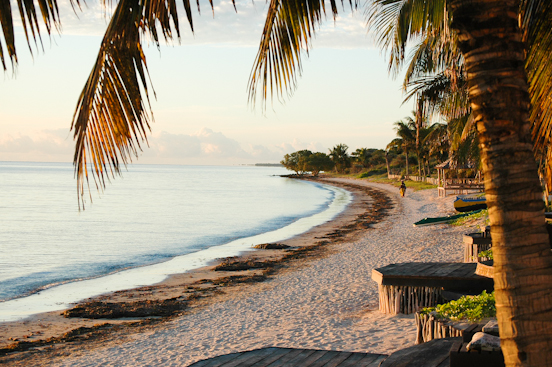
During an expedition to the Far North, the impression of a red island does not impose itself on the mind. On the contrary, the tanety (bare hills) give way to dense jungle, lakes and marshes to beaches, and rampant vegetation sweeps across the mountain massifs. In the Northeast, the Vanilla Coast shelters the precious remnants of Madagascar's virgin forests. At the extreme North, in the Antsiranana region, the Bay of Diego-Suarez carves its indentations into an emerald sea protected by the arid rocks of Cape Amber. The traveller will discover a green island spared by savanna fires, with immaculate white sand, the brilliance of coral reefs and the unique biodiversity of natural reserves. The best travel season stretches from July to November, when the weather is dry and tropical depressions and cyclones do not strike the coasts.
Ramena Beach, bordered by one of the world's most spectacular roadsteads and overlooking Nosy Lonjo – a sugar-loaf-shaped rocky island – is worth the journey to Diego-Suarez on its own. The setting is almost without equal, despite the influx of hotels and bars. From there you sail in a traditional dhow towards the Emerald Sea, an Indian Ocean lagoon whose intense, shallow green waters harbour an abundance of turtles, manta rays and sharks. Established on the Mozambique Channel, some forty kilometres from the continent, the beautiful and sensual Nosy Be is a hiking paradise: traverse its mangroves, visit its coffee plantations, take part in vanilla harvesting, discover a clove or ylang-ylang distillery… The agricultural potential of the island of fragrances remains largely unknown. The region attracts more for swimming and scuba diving at Nosy Komba, at Nosy Tanikely, at Nosy Sakatia and in the Mitsio Archipelago – ranked among the finest jewels of Malagasy ecotourism – thereby bypassing artisanal production units. After a day of swimming alongside sea turtles, visitors are encouraged to encounter the Antakarana or Sakalava people. Solidarity tourism is a means of reducing indigenous poverty by reconciling cultural exchanges, participation in farming activities and the purchase of authentic products.
An extraordinary fauna
It is no secret that Madagascar holds ecological treasures. The figures are staggering: more than 118 species of birds, 149 species of reptiles and amphibians, 35 species of palms, 275 species of ferns, and more than 2,000 species of flowering plants, including the famous orchids that attract tourists and international biologists. Visitors will agree that Northern Madagascar is a biodiversity hotspot!
The great mammals of Africa could have lived in these uncultivated environments, where man was content to be a discreet and peaceful guest. But Mother Nature chose to gather the most unusual specimens there. Lemurs are legion; admire the silky sifaka, easily recognisable by its cream-grey fur, the indri indri which can weigh up to 9 kg in adulthood, or the aye-aye, whose name derived from the Malagasy "hay hay" refers to an exclamation due to the half-cat, half-vampire appearance of the primate. (With its rodent jaws, ears dilated like those of a bat and a squirrel's tail, the aye-aye is anything but beautiful.) Unique birds proliferate there, such as the blue coua, whose plumage would put French warblers and tits to shame, or the siketribe, a passerine with a disproportionately curved beak. The plant kingdom demands equally careful examination. To appreciate this biodiversity at its true value, two places are a must: the Marojejy National Park and the Cape Masoala Reserve. They are equal in terms of endemism rate, with the difference that the former features terrain with vertiginous escarpments, while the latter contains extraordinary maritime landscapes. Give free rein to your desires: rock climbing, forest hiking, white-water rafting, quad or motorbike tours in the highlands…
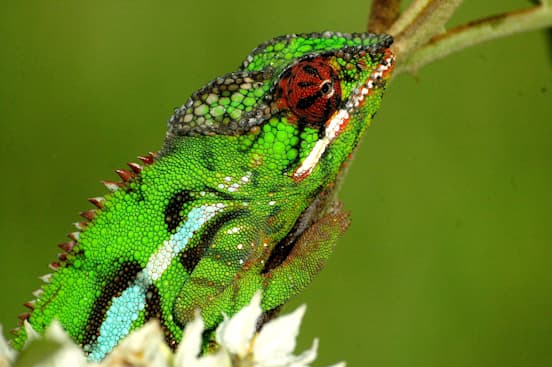
As for Amber Mountain, it dominates the Bay of Diego with its dense rainforest vegetation. There lives the world's smallest chameleon: the Brookesia micra, which is the size of a matchstick head. Dr Franck Glaw, a German zoologist at the Munich Museum of Natural History, discovered it in 2017: "an extreme case of island dwarfism, he told us, due to the destruction of the reptile's natural habitats". The western coast, for its part, presents a jagged, largely unexplored shoreline, dotted with paradisiacal islets (Nosy Hara, Nosy Mitsio, the Radama islands…), pristine seabeds, outrigger canoes and bulging dhows. In the centre, the Tsaratanana volcanic massif harbours Madagascar's highest point, Mount Maromokotra at 2,876 metres altitude.
Hiking in Northern Madagascar
Hiking through the humid mountain forests will serve as a pretext to share the primitive lifestyle of villagers. Resisting the lure of technological evolution, they draw on nature's forces to survive. Bamboo or ravenala leaf dwellings are fashionable, fishing boats are carved from tree trunks, and aromatic herbs are used for illness. Boys can manoeuvre a canoe before they learn to read and write. As you venture into the virgin forests of Cape Amber, you might think man is no longer at odds with the ecosystem. The image of regained paradise fades gradually as you listen to the tour guides' accounts of logging theft, slash-and-burn cultivation and rosewood exploitation perpetrated by government officials. The journey to the Far North fascinates and amazes us, but leaves a bitter aftertaste, thinking that this precious biodiversity is shrinking relentlessly, and that future generations will no longer see the sharp little eyes of the aye-aye, nor the brilliant fur of the sifaka, nor the pale grey belly of Madagascar's secretary bird.