Albert Rakoto Ratsimamanga: A Name of Trust Today Associated with Covid Organics
The name Ratsimamanga came back into the spotlight on April 19, 2020, when the President of the Malagasy Republic announced the discovery and distribution of a remedy against Covid-19. I
The name Ratsimamanga came back into the spotlight on April 19, 2020, when the President of the Malagasy Republic announced the discovery and distribution of a remedy against Covid-19. It is a drinkable solution, a herbal tea developed by IMRA, a research institute founded by Albert Rakoto Ratsimamanga and his wife. For Malagasy people, this name is synonymous with efficacy! For those unfamiliar with it, here's a brief overview!
Ratsimamanga: A National Icon
A member of the royal family, a physician, and a renowned scientist
Albert Rakoto Ratsimamanga was the grandson of Prince Ratsimamanga, uncle and advisor to Queen Ranavalona III. Being born into an aristocratic family shaped his destiny, but as a man, he remained humble and of service. It is clear that his calling was medicine.
In the 1930s and 1940s, he became a physician for the Indigenous Medical Assistance (AMI), then traveled to France to earn his doctorate in medicine and doctorate in science, as well as diplomas from the Institute of Tropical Medicine and the Pasteur Institute.
His research on biochemistry and the physiology of hormones, particularly corticosteroids, earned him international renown. In the 1970s, he returned to Madagascar and founded the CNRSP (National Center for Scientific and Pharmaceutical Research) as well as IMRA (Institute for Applied Research in Madagascar).
A nationalist and diplomat
In 1935, Albert Rakoto Ratsimamanga founded the MDRM (Democratic Movement for the Renovation of Madagascar), personally filing its bylaws at the Prefect's office in Paris. This movement is pivotal in Malagasy history, known for its struggle for freedom and independence. Everything came to an end in 1947 in bloodshed, but the blood of heroes.
After Madagascar gained independence in 1960, he became Malagasy ambassador to France (until 1972), and also established embassies in West Germany (1962), Sierra Leone (1963), the U.S.S.R. (1973), and North Korea (1973). Furthermore, he represented his country before the WHO, UNESCO, and the FAO. At his death on September 16, 2001, the nation lost a national hero.
A Name the Malagasy People Trust
A remedy known worldwide for diabetes treatment
Upon his return to Madagascar around 1973, he founded IMRA with his wife, Suzanne Urverg, researching and developing phytomedicines and improved traditional remedies. The institute reached its pinnacle in 1998, when after 25 years of research, Prof. Rakoto-Ratsimamanga and his collaborators, in partnership with French pharmaceutical company Rhône Poulenc-Rorer, discovered the world's first plant-based antidiabetic agent: MADEGLUCYL. He was named "International Man of the Year 1997-1998" and the institute flourished, employing 102 people, including 32 researchers and technicians by 1998.
Various medicines used by the Malagasy people
Located in Avarabohitra Itaosy, Antananarivo 102, Madagascar, the institute comprises a botanical garden, animal facilities, various research laboratories, and a medical center. IMRA, now the Albert and Suzanne Rakoto Ratsimamanga Foundation, develops medicinal and cosmetic products, as well as essential oils. Multiple research areas are covered: phytochemistry, parasitic and cellular pharmacology, diabetology, pharmacodynamics and toxicology, analytical chemistry of essential oils…
Malagasy people use these products, which are less expensive than imported alternatives, daily for medical care and health maintenance: calcium, liver care products, kidney stone treatments, and more. The population calls them Ratsimamanga products and nearly everyone trusts them, especially since they prove effective. On October 2, 2012, the Albert and Suzanne Rakoto Ratsimamanga Foundation was officially recognized as being in the public interest by the Council of Government.
The Announcement of Covid-Organics and the Rise of Ratsimamanga's Fame
What is Covid-Organics?
It was therefore entirely natural that the Malagasy Government chose IMRA to represent it and order the research and development of a remedy against the virus of the moment! It did not take long for the institute to bottle the remedy previously announced with great fanfare by the Malagasy President.
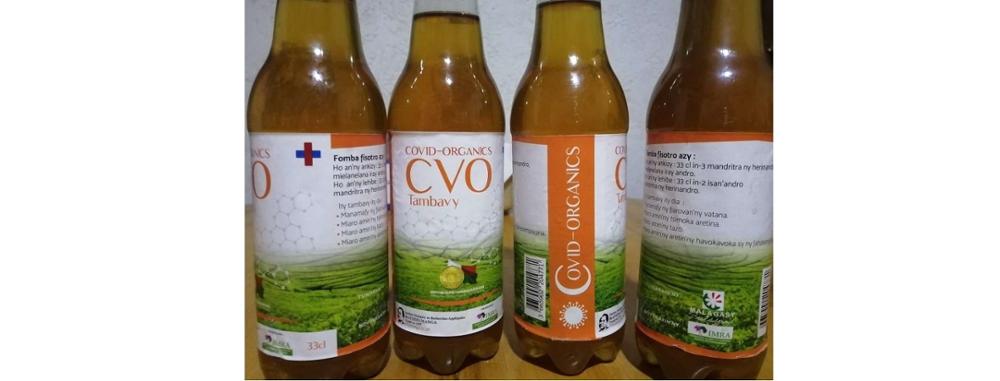
On April 19, 2020, the Malagasy people and "the rest of the world" discovered it was a drinkable solution, namely a herbal tea based on Artemisia. This preventive and curative remedy, named Covid-Organics (CVO), was reported to have proven effective on Malagasy Covid-19 patients and would soon undergo clinical trials in foreign laboratories.
Similarities with the proposal from the House of Artemisia
On March 23, 2020, the House of Artemisia launched the Call for Projects to Combat COVID-19: Preventing and Mitigating the Epidemic with Artemisia annua. In this document, the NGO advances arguments and scientific evidence to suggest the use of the plant as prevention, in the form of daily decoction at a rate of 10 g per person per day over 7 days. This resembles the dosage of Covid Organics in a rather striking way. It would not be surprising to learn that each bottle contains 10 g of artemisinin.
In any case, in this call for projects, the safety of an Artemisia annua decoction preparation is vigorously and rationally defended with scientific evidence. The plant's active compounds resolve symptoms of moderate respiratory difficulty, with proven results in treatments of SARS-CoV in 2002 and COVID-19 in 2020 in Chinese patients. The House of Artemisia stated it was ready to immediately and freely provide Artemisia annua to medical personnel in intensive care units of French hospitals. Production is "very inexpensive," the document states.
What is artemisia?
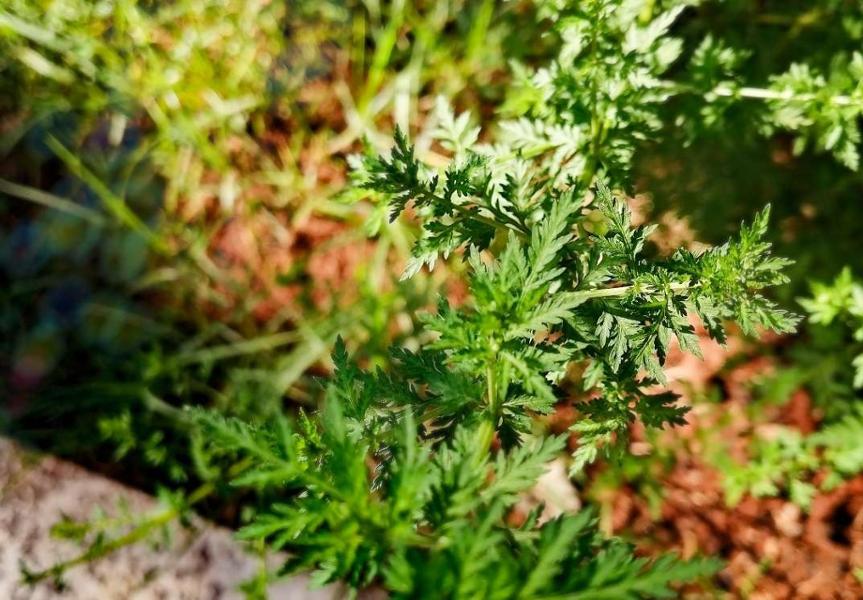
Covid Organics is based on Artemisia, a plant used for centuries in Chinese medicine. Chinese pharmaceutical researcher Tu Youyou even won the Nobel Prize in Medicine in 2015 for her research work on malaria involving Artemisia. However, the WHO and the National Academy of Medicine appear skeptical and recommend combining it with other medications.
Artemisia actually comes in many species and is widely present in France, China, and the Sahara. It is consumed in various forms: therapeutic herbal tea, spirits (absinthe based on Artemisia absinthium) for recreational use… It should be noted that Madagascar has the world's largest stock of artemisinin (approximately 10% of global production), which the company Bionexx exports to Asia and especially Europe.
On March 24, 2020, Lucile Cornet-Vernet, founder and vice-president of the House of Artemisia, an association based in Paris, sent a letter to several African countries recommending the use of artemisia annua and artemisia afra, two medicinal plants with antimalarial properties, to combat Covid-19. About a dozen countries, including the DRC, the Central African Republic, Rwanda, Côte d'Ivoire, Benin… and Madagascar, reportedly agreed in principle to conduct clinical trials based on the plant.
The Pan-African weekly Jeune Afrique investigated and discovered that part of President Andry Rajoelina's speech about the Covid-19 remedy reproduced passages from this famous letter from the House of Artemisia, originally addressed to the Malagasy Minister of Health, Ahmad Ahmad.
 © Détours Madagascar
Reception of Covid Organics
Views from the medical community and scientific experts
The potential of artemisia in fighting Covid-19 is certain, but to claim it can cure patients, one would need to conduct in vitro trials, before testing on actual patients. This is what Catherine Hill, an epidemiologist and former head of department at the Gustave Roussy Institute in Villejuif, shared. One institute already launched an in vitro trial on April 8, but has not yet been able to assert anything! It is the renowned German Max Planck Institute, winner of 18 Nobel Prizes since 1948 and author of 15,000 publications per year. American company ArtemiLife and Danish researchers collaborated on this trial.
Since April 20, a statement from Madagascar's National Academy of Medicine has circulated on Facebook, warning the population about the famous remedy and the fact that no clear scientific evidence has been provided, with particular caution recommended for children.
On LinkedIn, Prof. Stephane Ralandison, Dean of the Faculty of Medicine in Toamasina, also questions the credibility and usefulness of Covid Organics. He argues that Malagasy Covid-19 patients present few symptoms, and in such cases, regardless of treatment, results tend to be positive. And why expose "healthy people" to any risk, however small? He questioned.
Public opinion
Malagasy people generally trust the name Ratsimamanga, this scholar and Malagasy hero. His reputation will continue to grow even though he is no longer alive! In any case, he will have left a legacy that will endure for a long time! Some reactions were nonetheless mixed because the President announced it as self-promotion and the Malagasy people deserved more detailed and reassuring explanations from an expert, a scientist.
The Head of State had also announced that the herbal tea would be distributed and administered to students returning to school. Some parents are not necessarily in agreement, especially since the announcement seemed to suggest they had no choice!
Of course, many have praised the efforts and competence of IMRA and the president. In the streets, crowds lined up to receive their dose of Covid Organics, bottle in hand. Others wonder among themselves where they can obtain it!
The Mayor of Antananarivo concluded in a press release that the Malagasy population is younger and more resilient, with immune defenses better adapted after having already faced many epidemics (malaria, influenza, cholera, plague, etc.) and having been exposed to chloroquine from a young age. In any case, Madagascar will overcome this virus!
© Détours Madagascar - April 24, 2020