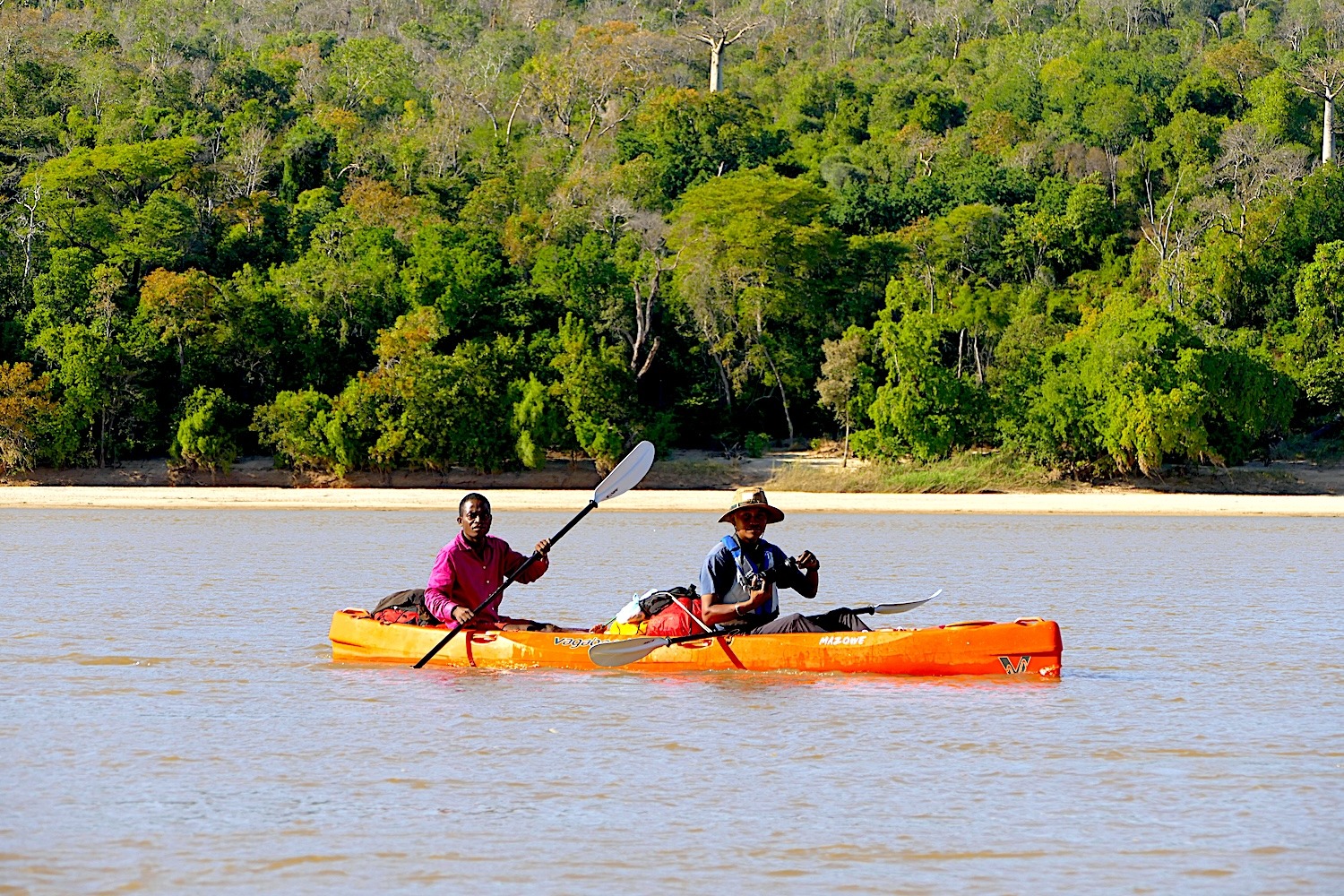
How, When and Where to See Humpback Whales in Madagascar?
Madagascar is among the world's best destinations for observing humpback whales. Indeed, the island lies along the migration route of these cetaceans, which come there each year to repro
Madagascar is among the world's best destinations for observing humpback whales. Indeed, the island lies along the migration route of these cetaceans, which arrive there each year to reproduce and give birth. Sensational leaps, courtship displays, whale songs… This is the spectacle that cetaceans offer to visitors. But how do you go about it, where should you go, and when? Discover our practical guide to seeing whales in Madagascar.
How to Recognize Humpback Whales?
Humpback whales (Megaptera novaeangliae) can reach up to 16 m in length. They are distinguished by long pectoral fins that can measure up to one-third of their body length (they can reach up to 4 m long). They have a hump of fat located at the base of their dorsal fin. It is this hump that gives them their name. They also owe their name to their rounded shape (hump-like) when they dive.
They have a large flattened head bearing rounded protrusions called tubercles. They possess a dark back and a flat belly on which wide and spaced ventral grooves, known as throat grooves, can be observed. As for their caudal fin (the tail), they have distinct patterns and unique pigmentation that scientists use to identify individual whales.
Why is Madagascar a Premier Destination to See Humpback Whales?
If Madagascar is one of the best places in the world to see humpback whales, it is because the island lies along their migration route. Indeed, humpback whales undertake long journeys from high latitudes where they spend the summer months feeding, to the warm tropical waters of Madagascar where they come to breed from autumn onward.
In total, humpback whales travel up to 1,500 km from the polar coasts of Antarctica to reach the tropical waters of Madagascar.
Briefly, humpback whales always follow the same cycle:
- 4 months in the poles where they feed (mainly on krill, small shrimp found only in polar regions);
- 4 months of migration (approximately 2 months for each journey, round-trip);
- 4 months in breeding zones.
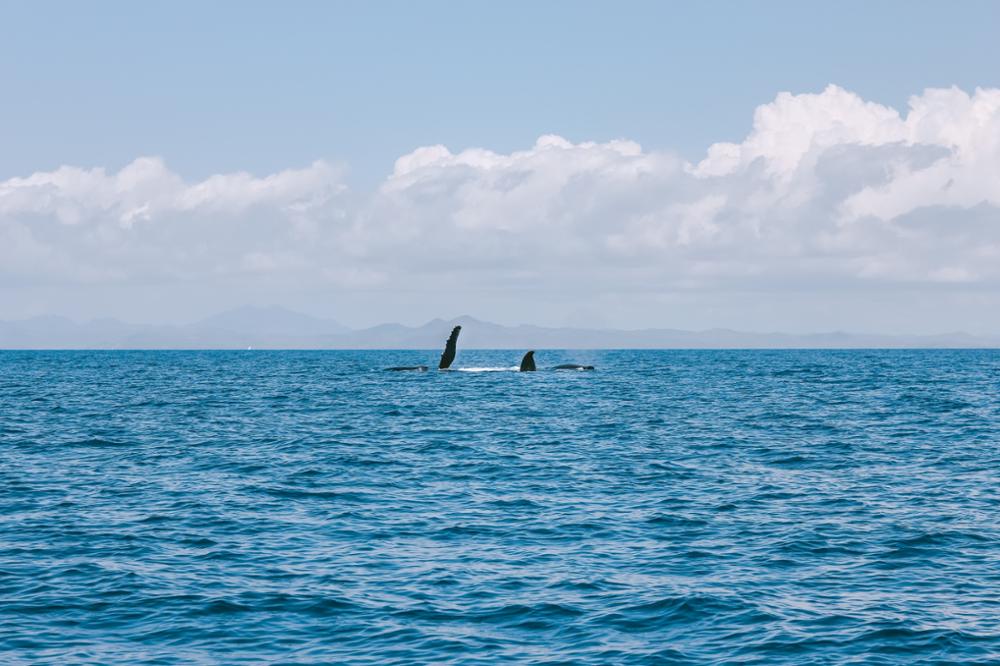
Traveling to Madagascar to observe humpback whales is therefore an opportunity to see them in their wintering and breeding grounds. As a result, you may witness wonderful scenes such as courtship displays where males perform impressive leaps and fin slaps. You may also witness a birth and see how whale calves take their "first steps" with their mothers. Moments rich in emotion that remain engraved forever…
Do you love cetaceans and marine creatures? The waters of Madagascar are not only home to humpback whales, but also host other species such as:
- Bryde's whale,
- Omura's whale,
- Sperm whale,
- Globicephala,
- Long-beaked dolphin,
- Bottlenose dolphin,
- Whale shark,
- Tiger shark,
- Bull shark,
- Hammerhead shark,
- Manta ray (mobula ray),
- Green sea turtle,
- Hawksbill sea turtle...
What Are the Best Spots to Observe Humpback Whales in Madagascar?
When humpback whales arrive from the poles to the south of Madagascar, they generally split into two groups: one heading toward the east of the island and the other toward the west. You can therefore observe them on both sides of the island.
Here are the best places to see humpback whales in Madagascar:
Sainte-Marie Island (Nosy Boraha)
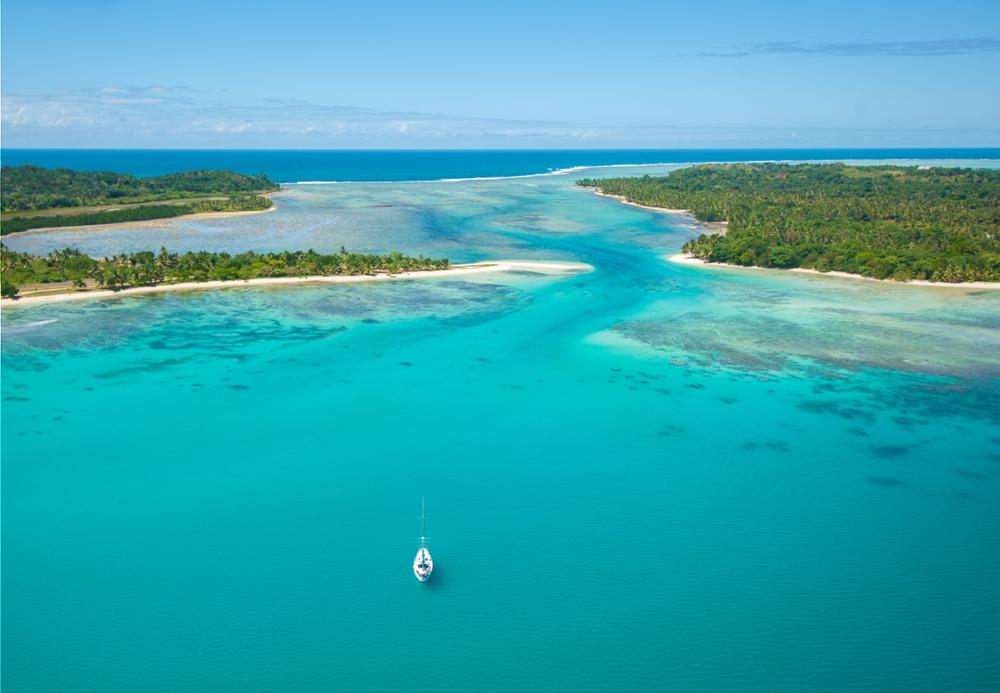
Once a pirate stronghold, Sainte-Marie Island is today the most sought-after destination for observing whales in Madagascar. Known locally as Nosy Boraha, this island located 30 km off the east coast of Madagascar is renowned for its clear waters and pristine environment. Being one of the privileged sanctuaries for cetaceans, the waters surrounding Sainte-Marie Island attract between 2,000 and 3,000 humpback whales each year.
Having become a world-renowned whale watching spot, Nosy Boraha even has its own festival dedicated to cetaceans: the Whale Festival. It is held every year in July (see later in this article)
Antongil Bay
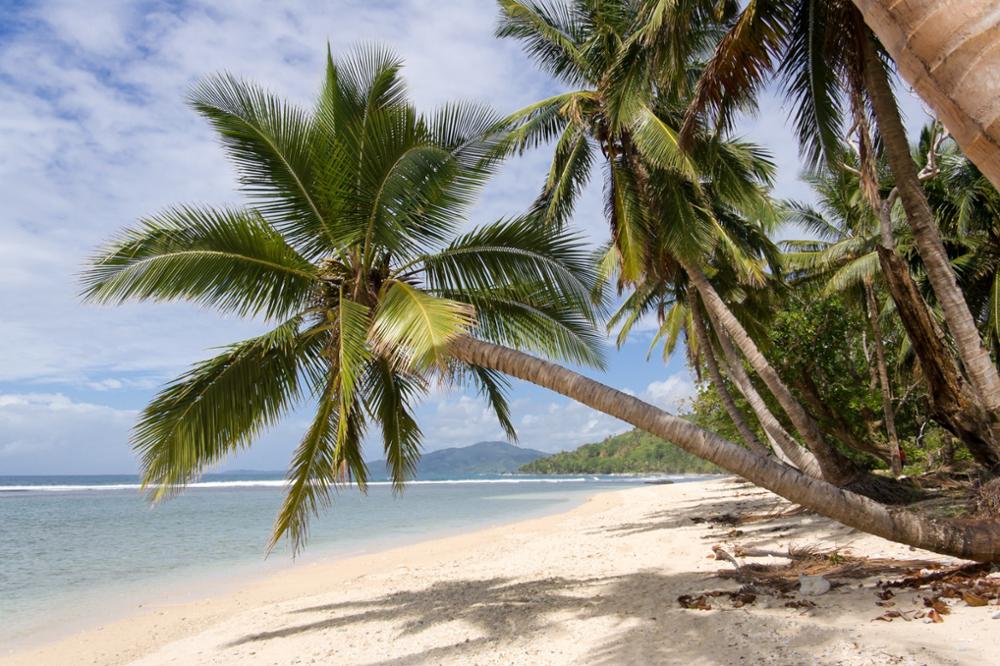
Still on the east coast, further north of Sainte-Marie Island, near the Masoala National Park and Makira Natural Park, is another emblematic whale watching spot: Antongil Bay. The calm and sheltered waters of the bay constitute an ideal refuge for whale births. The spot is even considered one of the most significant breeding zones for humpback whales in the western Indian Ocean.
More difficult to access and less well-known than Sainte-Marie Island, Antongil Bay is an ideal alternative for travelers wishing to see whales in a more authentic and intimate setting.
Nosy Be
As mentioned, humpback whales arriving from the poles choose two directions: the east or west coast of Madagascar. Those opting for the west coast primarily head toward Nosy Be, a volcanic island located in Ampasindava Bay, 8 km off the coast of Madagascar. This large island of 321 km² is often considered the jewel of the Mozambique Channel.
Note that humpback whales arriving at Nosy Be do so slightly later than those heading to the east coast. Therefore, be sure to choose your destination based on your travel dates (see later in this article).
Other Spots
While Nosy Be, Sainte-Marie Island, and Antongil Bay are considered the best places to see whales in Madagascar, it is possible to spot them elsewhere on the island. Among other spots, we can mention:
These destinations being less favored by whales, the chances of spotting them are lower, but they are perfect places for those who want to venture off the beaten path and see whales in complete intimacy.
When to See Humpback Whales in Madagascar?
The best time to see humpback whales in Madagascar extends from late June through early December, with peak viewing between August and September. Note that whales arrive as early as June at Sainte-Marie Island and in Antongil Bay, whereas at Nosy Be they typically arrive around late July.
If you are visiting Sainte-Marie Island in July, do not miss one of the most important festivals in Madagascar: the Whale Festival. Launched in 2015, at the initiative of the Cétamada association, Sainte-Marie's tourism office, and the local population, it aims to raise awareness about whale conservation.
It takes place over 9 days during which many activities occur such as:
- Concerts and traditional music;
- Live performances;
- Craft exhibitions;
- Competitions and contests (soccer, rugby, beach volleyball, trail running, mountain biking, pirogue races, pétanque...);
- Film screenings;
- Conferences;
- Land excursions to discover the treasures of the island;
- Sea outings to observe whales...
How to See Humpback Whales in Madagascar?
Several options are available to you to observe humpback whales:
Shore-Based Observation
Shore-based observation is the most ecological and most respectful way of observing animals' well-being. By observing them from the shore, you can remain safe and avoid disturbing them with your presence or the noise pollution caused by boats.
To increase your chances of seeing them and going to the right place, we still advise you to hire a local guide. Also remember to bring binoculars!
Signs to Know to Identify the Presence of Whales:
If you wish to see whales from the shore without hiring a guide, here are some tips. Start by scanning the water with the naked eye and focus on an area to try to spot a water spray, a bright splash, or a fin. Normally, you won't miss the blows of humpback whales. These can reach 3 m in height and width!
Be patient when whales dive back into the water, as they can remain submerged for extended periods (approximately 15 minutes holding their breath) and are capable of traveling long distances. The good news? Since Madagascar is a breeding zone, you can more easily spot them above water when males perform spectacular leaps and fin slaps to attract females.
Also note that the presence of birds can be a sign of whale presence.
Boat Excursion
Want to see whales up close? In that case, you may consider a boat excursion. Many companies organize sea outings aboard a catamaran, a pirogue, or a motorized boat.
While there are laws and rules to follow for whale watching in Madagascar, be sure to choose an operator that respects animal well-being (see later in this article).
Many operators offer bringing a hydrophone on board so you can listen to the songs of humpback whales or even the calls of dolphins. This is notably the case with our partner Les Baleines Rand'eau. We warn you, your heart might just skip a beat at how captivating their songs are...
How to Observe Humpback Whales Without Disturbing Them?
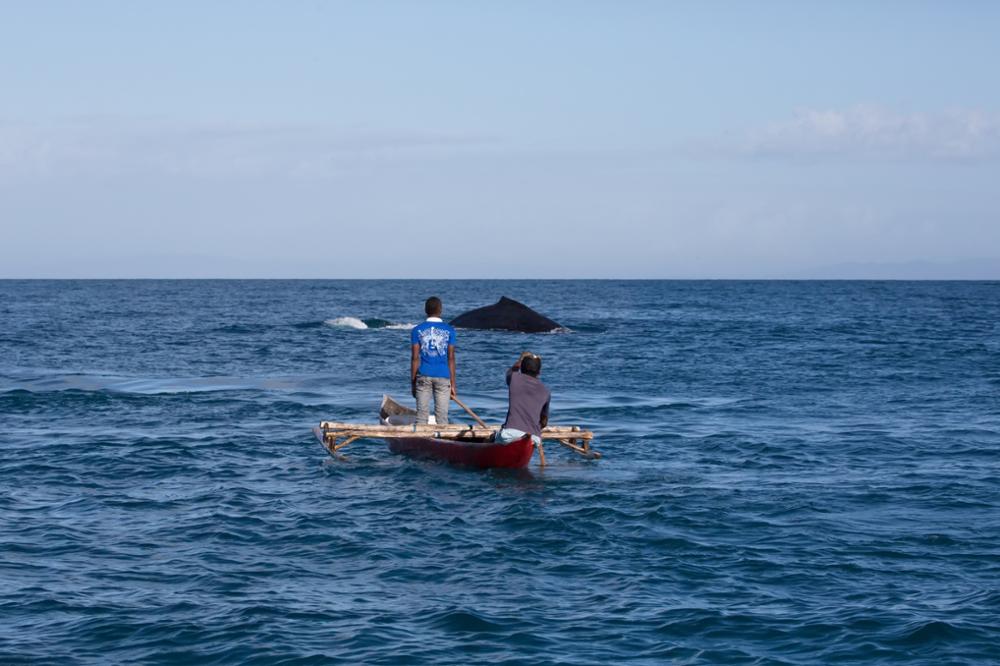
What Rules Must Be Followed?
First of all, you should know that whales are protected by law. In Madagascar, the interministerial ordinance no. 2083/2000 of March 8, 2000 regulates proper commercial observation practices of these cetaceans. Additionally, the Malagasy Ministry of Tourism has mandated the CétaMada association to oversee all marine megafauna observation activities.
In addition to creating an observation charter presenting the code of good conduct to follow at sea (according to the interministerial ordinance), the association freely trains local pilots and guides for ethical whale watching that respects animal well-being.
Among the rules to follow during a whale watching excursion, we find:
- Reduce speed from 800 m away;
- Adapt pace to that of the observed group;
- No more than 3 boats in the observation zone;
- Stay more than 100 m away from whales;
- Do not navigate through a group;
- Do not cut across the cetaceans' path;
- Do not pursue the group;
- Remain 1 hour maximum in the observation zone and 30 minutes maximum if there are calves;
- Do not feed the animals;
- Do not touch the whales;
- Do not throw waste into the sea.
It is forbidden to swim with humpback whales: water entries with humpback whales are prohibited in Madagascar, but are permitted with other species like whale sharks.
How to Choose an Ethical and Animal-Friendly Boat Excursion?
Although there are rules for whale watching in Madagascar, there are still individuals who work around them. That is why it is important to ensure you choose a respectful operator.
To make sure you make an ethical choice, the International Whaling Commission offers a series of questions to ask directly to the operator to ensure they comply with existing regulations and respect animal well-being.
Discover the questions to ask when booking a whale watching excursion provided by the International Whaling Commission.
Need help organizing your stay in Madagascar and your whale watching excursion in responsible conditions? Don't hesitate to contact us!
Florine Dergelet