Madagascar's Cultural Emblems: The Zebu and Rice
If you asked someone familiar with the great island to sum up Malagasy culture in a few words, they would certainly include the zebu and rice. Here's why.
20 Oct. 2019 If you asked someone familiar with the great island to sum up Malagasy culture in a few words, they would certainly include the zebu and rice. Here's why.
The Zebu
Origins of the Malagasy Zebu
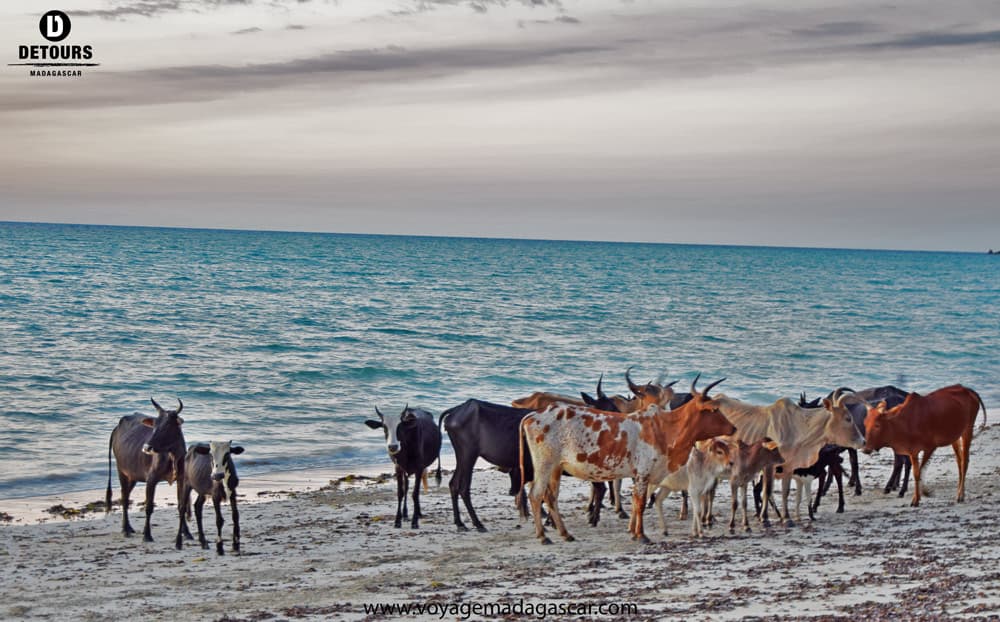
The presence of the zebu, known as omby in Malagasy, on the great island goes back centuries! The earliest traces of these bovines on Madagascar date back to the 8th century. This is what archaeological excavations have revealed, particularly in the south and on the highlands of Andramasina Ambohimanana.
According to researchers, these early zebus were small in stature and, crucially, had no humps. It was only through successive African and Austronesian migration waves that new breeds took root on the island, such as the humped ox. This latter breed gradually became the norm among most Malagasy herders. To such an extent that the animal became a symbol of power and prosperity for its owner.
A Sign of Wealth and Power
Then and even today in many parts of the island, a man's wealth is measured by the number of zebus he owns. His livestock is his most precious possession. In parts of southern Madagascar, among the Mahafaly people, when the owner dies, a large portion of the herd is slaughtered and the horns are displayed on his tomb to showcase his wealth. The most powerful families are those with the largest herds. This family asset, recognizable by ear markings, falls under the authority of the eldest of the eldest branch (firstborn of the eldest sibling). Naturally, the kings were the most powerful. The zebu was long offered as a gift to ask for a young woman's hand in marriage and to seal business dealings.
In Rites and Ceremonies
It is also a sacred animal that plays an important role in ceremonies. Every ritual must be overseen by an ombiasy (diviner) and accompanied by the sacrifice of one or more beasts. Since the number depends on the color of their coat (a fact known only to the ombiasy), the ideal is to own as many zebus as possible to be prepared for any eventuality. Sacrifices are also made on certain occasions as offerings to ancestors, called razana:
- In the North, at Anivorano Nord, to feed the sacred crocodiles of Lake Antagnavo
- In the highlands to commune with ancestors and seek their blessing at any inauguration
- In the north of Toamasina province, to ask permission to cultivate arable land where a tomb is found
Various Uses of the Zebu
The zebu remains highly valued today as a working tool in Malagasy countryside. It is even possible to see zebu-drawn plows in the city of Antananarivo, amid cars, on the edges of rural communities. To plow fields, transport harvests, goods, and anything else, the plow is still widely used.
The horned ox is also the subject of a national sport: savika. The "zebu boy" grabs the hump and uses his legs like a spring to avoid falling and being trampled. The goal is to hold on as long as possible. In the central highlands of Madagascar, men of the Betsileo ethnic group practice "zébumachie" to impress young women. Furthermore, the horns and skin of this animal serve as raw materials for craftspeople making objects of all kinds: decorations, drums, utensils, and more.
The Decline of Zebu Numbers
Historically, it was said there were as many zebus as people on the great island. Thus in the Tsiroanomandidy region, in central-west Madagascar, the number of zebus sold is in decline. It has dropped from 90,000 heads per year in the early 1990s to approximately 60,000 in recent years, according to the Ministry of Agriculture and Livestock. The decrease is indeed severe. Across the entire herd, numbers fell from 20 million beasts in 2005 to 9 million in 2015. This precipitous drop in livestock is caused by trafficking and theft of zebus by the dahalo.
Zebus and the Dahalo
In Bara culture, an ethnic group from the south, the dahalo is the one who steals a zebu to offer it to the father of his future wife, or to settle a dispute between two families. Today, zebu theft is no longer simply perpetrated in this manner but has become large-scale criminal enterprise, extending across the entire territory. The dahalo (outside their original meaning) are now organized into criminal bands willing to do anything, even kill, to steal the beasts. General Didier Paza, former state secretary for the gendarmerie, estimates the number of attacks against herds between 2011 and 2016 at two thousand. This phenomenon has led many herders to abandon their activity, now considered far too dangerous.
Rice

A Vital Staple
Rice cultivation is central to Madagascar's economic activity. It accounts for 12% of GDP and sustains the livelihoods of two million inhabitants. Today, it is estimated that 60% of agricultural land is used for rice production. Malagasy people are massive rice consumers. They cannot live without it. It is the essential element of their diet. Studies estimate that a Malagasy person consumes an average of 11.5 kg of rice per month. Rice is to Malagasy what bread is to the French. In 2016, Madagascar had to import 240,000 tonnes of rice from India, Pakistan, or Myanmar because local production could not meet the needs of its inhabitants.
A Traditional Practice
The arrival of warm weather often coincides with the first buds appearing on peach trees. In traditional agriculture, respecting the vegetative cycle is not the only element guaranteeing a bountiful harvest. Farmers often call upon ombiasy to protect themselves against climate threats and locust attacks. Each rice season thus begins with rites, sacrifices, and incantations addressed to Zanahary (God the Creator) and to the razana to obtain a good harvest. The keeper of charms also ensures that rules and prohibitions are respected. In case of transgression, the guilty party must compensate the victims and provide the animal required for the expiation sacrifice. However, some scientists see these practices as an obstacle to the development of Malagasy rice cultivation.
Rice in All Its Forms
Malagasy people eat rice at every meal and on every occasion: morning, noon, evening, every day, during a celebration, during a ceremony, and so on. During the famadihana (the turning of the bones ceremony), people eat vary be menaka, rice bathed in zebu oil and cooked. If you enter a house, the host will serve you rice. It may be white rice or red rice (the oldest variety of Malagasy rice, called vary gasy), served with a side dish (laoka) or on its own. Rice is eaten with vegetables, meat, or voamaina (dried seeds). The vary amin'anana (rice porridge with a bit of leafy greens), a typical dish, is eaten in the morning and/or evening. During special occasions, fried rice is prepared (a kind of rice salad) which is not a Chinese dish as one might think. You can never have enough!
Bernard CONCHON
© Détours Madagascar – 20 October 2019