The Zafimaniry
The Zafimaniry
South of Ambositra, Zafimaniry country brings together around a hundred forest villages where sculpted woodcraft, recognized by UNESCO, continues to be passed down.
Southeast of Ambositra, Madagascar's capital of craftsmanship, Zafimaniry country is home to a highland population renowned for its sculpted woodcraft. This forest community of the Central Highlands perpetuates knowledge passed down since the 18th century, now inscribed on UNESCO's Representative List of the Intangible Cultural Heritage of Humanity.
Why visit Zafimaniry country
Zafimaniry country is one of the rare Malagasy territories where a tradition of wood sculpture continues to be transmitted daily, in both house architecture and furniture. About forty kilometers south of Ambositra, Madagascar's handicraft capital, the region offers three rarely combined elements: intangible heritage recognized by UNESCO, high-altitude forest and rice paddy landscapes, and exclusively foot access that preserves village authenticity. A visit here is as much cultural trekking as ethnographic encounter.
History and identity of a forest people
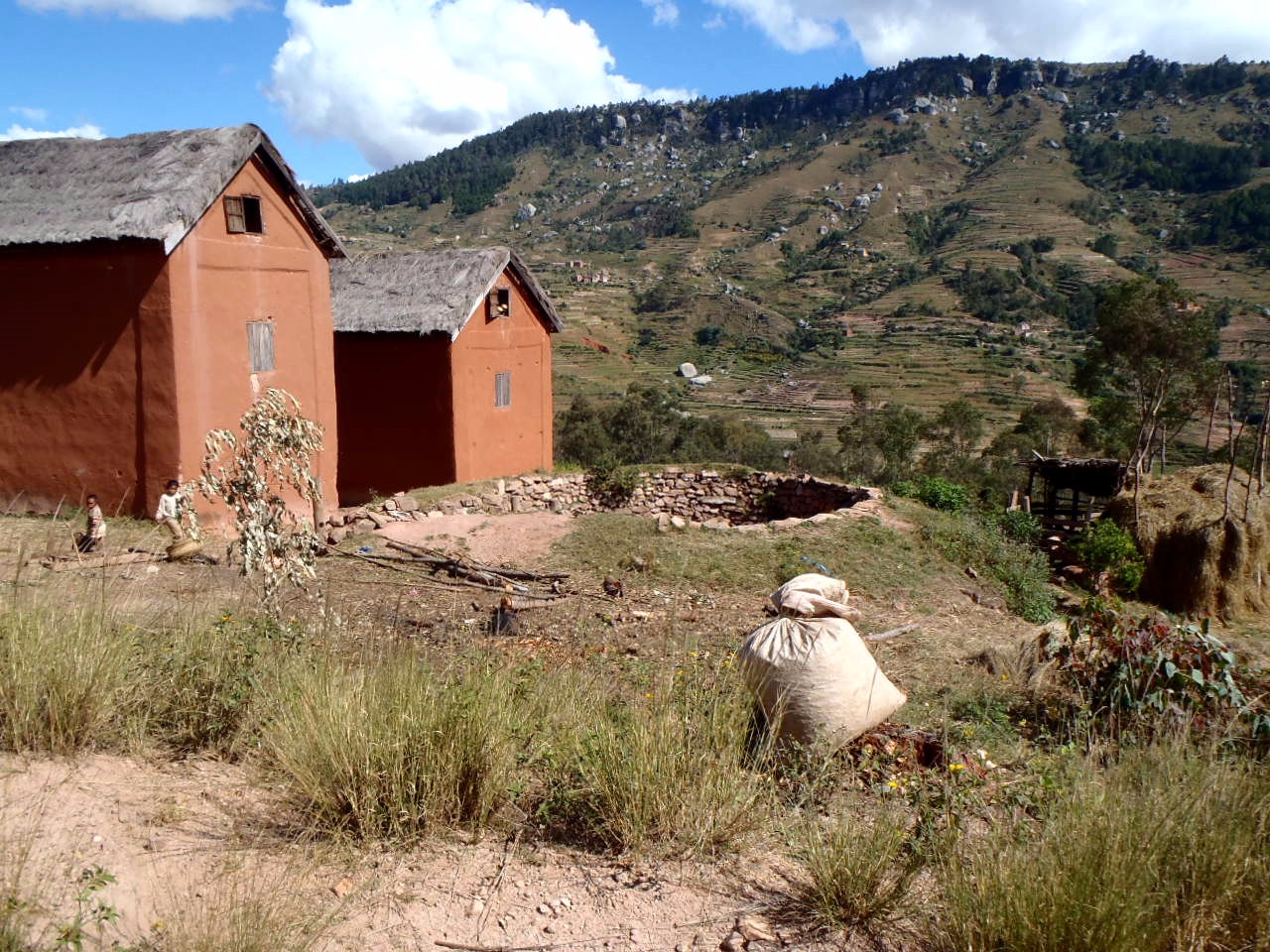
Zafimaniry country groups together around a hundred small villages and hamlets organized around the village of Ambohimitombo. The population is estimated at approximately 20,000 inhabitants, spread across this mountainous and difficult-to-access zone.
The Zafimaniry settled in this region in the 18th century to escape deforestation already affecting the Highlands. Often associated with their neighboring Betsileo, they claim a distinct identity: neither fully Betsileo nor Tanala, they form a separate group, with their own customs and cosmology. Their economy is based on slash-and-burn agriculture, terraced rice cultivation, and woodwork.
The sculpture technique, once widespread across much of Madagascar, now survives only among the Zafimaniry. This singularity was recognized by UNESCO in 2003, under the proclamation of masterpieces of oral and intangible heritage, then integrated into the Representative List of the Intangible Cultural Heritage of Humanity in 2008.
The art of Zafimaniry woodcraft
Woodwork structures all Zafimaniry culture. Houses, doors, shutters, posts, furniture and everyday objects are assembled by mortise and tenon, without nails or metal parts. This technique allows structures to be dismantled and reassembled, and bears witness to fine knowledge of local timber species.
Wooden surfaces feature symbolic geometric patterns: diamonds, stars, cross-hatching, circles. Each ornament is codified and transmitted orally from generation to generation. These patterns tell of family bonds, social structure and collective beliefs, forming a kind of visual writing of the community.
What you observe in the villages
- The sculpted facades of traditional houses, with their worked shutters.
- Long wooden chairs with carved details, the recognizable signature of Zafimaniry craftsmanship.
- Sculpture demonstrations by artisans, often performed in front of their homes.
- Chests, bowls and utensils adorned with geometric patterns.
- Depending on villages and occasions, the traditional dombolo dance accompanied by singing.
Visiting Zafimaniry country responsibly
The sustainability of this culture is fragile, threatened by deforestation, which restricts access to local timber species, and by tourism pressure that sometimes drives standardized production. A few simple principles allow you to genuinely support artisans:
- Buy directly from sculptors in villages rather than from resale shops.
- Favor unique pieces over repetitive productions.
- Inquire about the origin of the wood used.
- Respect fady (local prohibitions) indicated by the guide at village entrances.
- Engage a local guide, who also ensures mediation with communities.
When to go
The dry season, from April to November, is the most favorable period. Mountain trails are passable, and craft activities often take place outdoors. The rainy season, from November to March, greatly complicates foot travel and coincides with cyclone risk. Because of the altitude, evenings are cool year-round, so pack warm and waterproof clothing even during the dry season.
How to get there
The classic starting point is Ambositra, on RN7 about 260 km south of Antananarivo (plan for a day's drive). From Ambositra, you reach the village of Antoetra by vehicle, the gateway to Zafimaniry country, via a track taking several hours depending on conditions.
Access to the villages is then exclusively on foot. The most popular circuit connects Antoetra to Ifasina, about 5 to 6 hours of round-trip hiking through forests, rice paddies and hills. Longer itineraries, lasting two to four days, allow you to reach other hamlets such as Sakaivo or Faliarivo, with accommodation with local families. A local guide is mandatory and highly recommended for cultural mediation.
What to see nearby
Zafimaniry country is part of a broader itinerary through the Highlands and southern Madagascar, accessible from RN7.
- Ambositra: the marquetry craftsmanship capital, the logistical base for reaching Antoetra.
- Andringitra Massif: national park renowned for its granite landscapes and high-altitude trekking, further south on RN7.
- Lemurs' Park: reserve near Antananarivo, useful for encountering wildlife at the beginning or end of your circuit.
Frequently asked questions
Frequently asked questions
One day from Antoetra is enough for the Antoetra–Ifasina circuit (5 to 6 hours of round-trip hiking). For deeper immersion with a night with a local family and discovery of several villages, allow two to four days.
Yes. A local guide is mandatory from Antoetra. They ensure respect for fady (local prohibitions), mediation with communities, and navigation on unmarked trails.
Accommodation is primarily with local families in villages such as Ifasina or Sakaivo. Comfort is basic (mat on floor, outdoor facilities) but the welcome is one of the highlights of your stay. A few simple structures exist in Antoetra and Ambositra.
The trails cross hills with sometimes steep ascents and descents on ground that becomes slippery in rain. A good level of regular hiking fitness is sufficient for the short circuit; multi-day itineraries require better conditioning.
Prioritize buying directly from sculptors in the villages, choose unique pieces rather than series, and inquire about the origin of the wood. This supports artisans and limits pressure on the forest.
Planning your trip
Zafimaniry country fits naturally into a circuit on RN7, between Antananarivo and the south. To build a complete itinerary combining Highlands, national parks and coasts, consult our Madagascar trips.
Interested in this visit?
We can include it in your personalised itinerary.