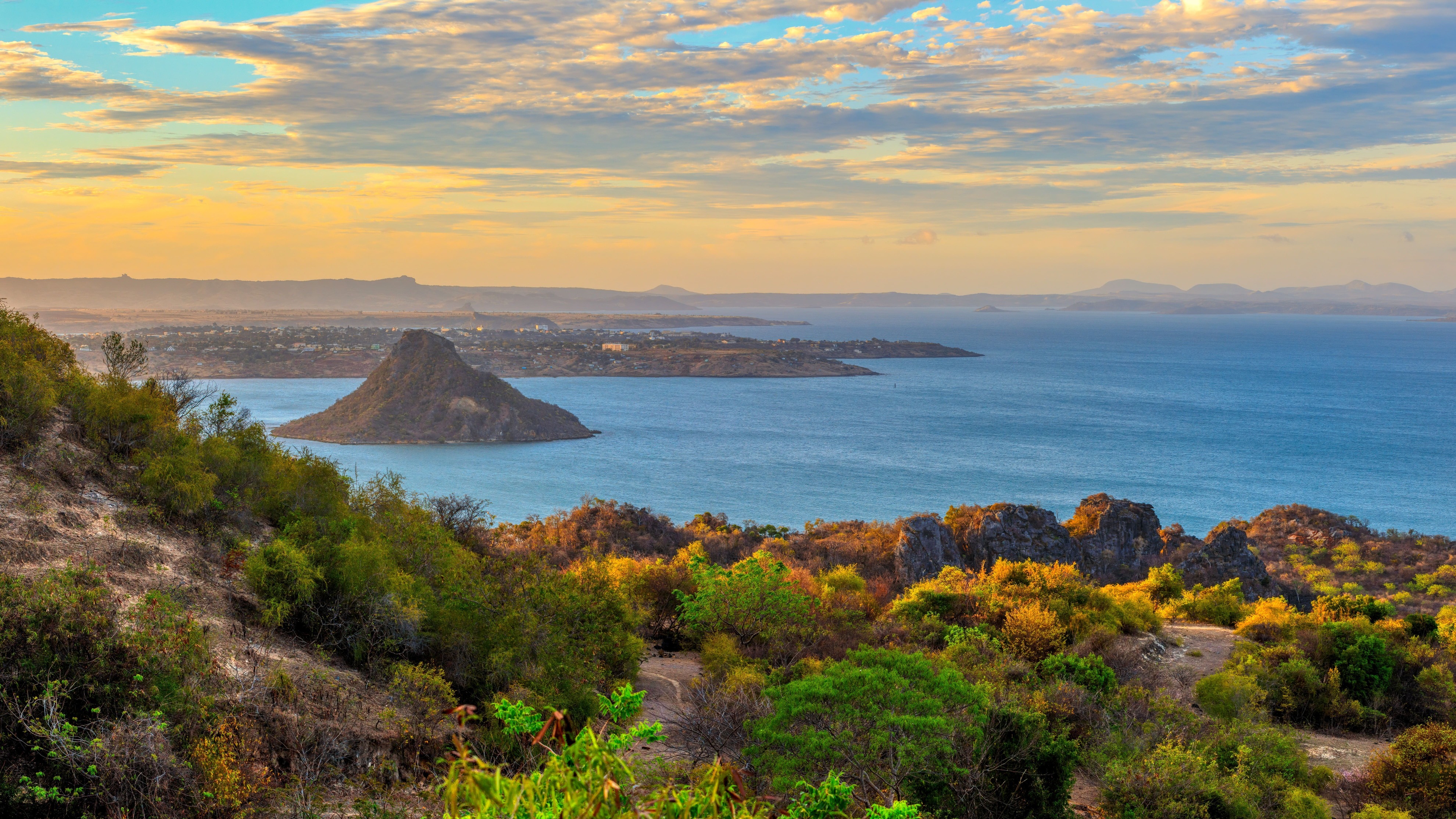
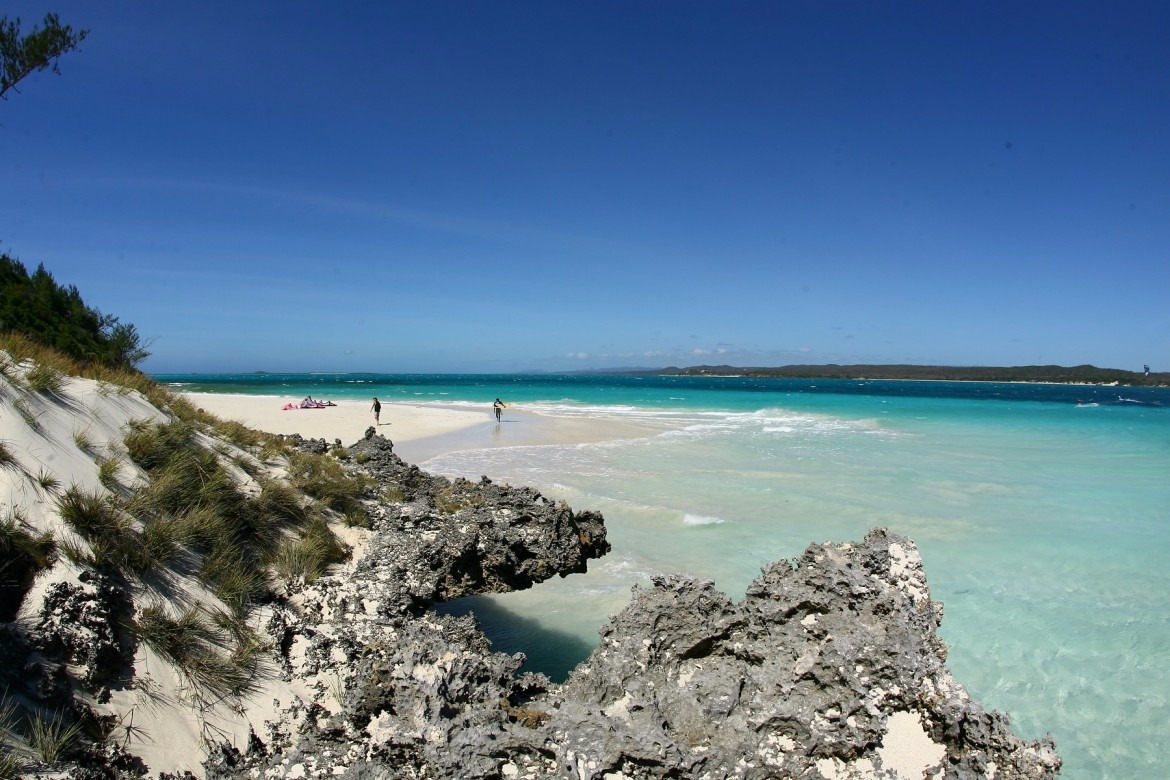
East Coast and Sainte-Marie
Andasibe rainforest populated with indris, 600 km of Pangalanes lagoons, humpback whales off Sainte-Marie from July to September: the East Coast moves to the rhythm of water.
Madagascar's East Coast is, first and foremost, a matter of water. Water from the sky that falls an average of 3,000 mm annually over Maroantsetra, water from rivers cascading down the Angavo escarpment, brackish water in the Pangalanes canal running along the coastline for nearly 600 kilometers between Toamasina and Farafangana. This narrow strip wedged between the Indian Ocean and the eastern cliff face concentrates the country's primary humid forest, what remains after two centuries of clearing for rice, clove, and vanilla cultivation.
Our team at the capital organizes departures to the East via RN2, four hours of paved road to Andasibe, the entry point to Andasibe-Mantadia National Park. This is where you hear the indri, the largest living lemur, whose morning song carries two kilometers through the canopy. The park is home to eleven other lemur species, Parson's chameleons reaching 70 cm, and a density of endemic birds difficult to find elsewhere on the island. Further along the same road, Toamasina (Tamatave) remains the country's premier port, a logistics hub before descending the Pangalanes by motorized canoe or heading north.
Betsimisaraka culture dominates the coast. This people, whose name means "the many inseparable," live off rain-fed rice, lagoon fishing, clove plantations around Fénérive-Est, and lychees exported in November-December. Villages along the Pangalanes can be crossed on foot in minutes, with cases made of ravinala (the traveler's tree, Madagascar's emblem), dugout canoes carved from single trunks, drying racks for clove buds perfuming the air during harvest season, around October.
Off Soanierana-Ivongo, an hour and a half by boat or twenty minutes by plane from Tamatave, the island of Sainte-Marie (Nosy Boraha) stretches its 60 kilometers in length. The island served as a refuge for European pirates between 1685 and 1720, and the marine cemetery at Pirate Island preserves gravestones engraved with crossed tibias. From July to September, 400 to 700 humpback whales cross the Sainte-Marie channel to give birth and mate in the warm, shallow waters. Observation trips depart from Ambodifotatra, the island's capital, guided by operators trained in regulatory approach distances.
Further north, Antongil Bay closes the East Coast with a particular geography: 60 kilometers of depth, mangroves, and behind them, the Masoala peninsula, the island's last great humid forest, accessible only by boat from Maroantsetra. Masoala combines primary forest and coral reef within the same protected area, which is rare at this latitude. It is also the region of Malagasy cacao, whose fine beans are exported to European chocolatiers from Ambanja and the nearby Sambirano valley.
The East is not to be rushed through. Distances are short on the map but long on the ground, secondary roads turn to tracks at the first downpour, and morning light remains the best time for wildlife. We build itineraries around weather windows, systematically avoiding cyclone season.
To Discover
Indri at Andasibe at sunrise. Guided walk of two to three hours in Mantadia Park early morning, when indri families sing to mark their territory. The sound carries two kilometers and structures the entire soundscape of the forest.
Whale season at Sainte-Marie. Boat trips from July to September in the channel between Sainte-Marie and the coast, where 400 to 700 humpback whales come to give birth. Supervised approaches, early morning departures from Ambodifotatra or Ampanihy Bay.
Descent of the Pangalanes canal. Navigation by motorized canoe between lagoons, locks, and Betsimisaraka villages, over two to three days between Manambato and Ambila-Lemaitso. Square-net fishermen, drying clove buds, nights in bungalows by the water.
Masoala and Antongil Bay. Camping and hiking in the island's last great primary forest, access only by dhow from Maroantsetra. Combination of humid forest and coral reef diving in a single day, a unique configuration in Madagascar.
Pirates' cemetery on Pirate Island. Small island off Ambodifotatra where around twenty graves engraved from the 17th and 18th centuries remain, traces of the time when Sainte-Marie served as a base for Olivier Levasseur and William Kidd.
When to Go
The East is Madagascar's most rainfall-prone region. Cyclone season runs from January to March, with precipitation exceeding 400 mm per month in Maroantsetra and roads regularly cut off. We do not schedule trips during this period. April remains humid in transition. The best window extends from May to October, with coastal temperatures between 22 and 28°C, showers still possible but brief, and a navigable sea. September-October marks the peak for combining active terrestrial wildlife and the tail end of whale season at Sainte-Marie.
Andasibe, at 900 meters altitude, is noticeably cooler: 12 to 15°C at night in July-August, bring a fleece for nocturnal lemur observation outings. On the coast and at Sainte-Marie, tropical humid climate prevails year-round, humidity remains high even in dry season. Humpback whales are present from mid-June to mid-September, with maximum concentration in August.
Practical Advice
Plan a minimum of five days for a combined Andasibe and Sainte-Marie trip, taking a domestic flight Tana-Sainte-Marie that avoids the road to Soanierana-Ivongo. To include the Pangalanes canal, add three days. For Masoala and Antongil Bay, plan an extension of five to seven days; access is via Tana-Maroantsetra flight then boat, and weather heavily conditions movement. The logistical entry point is the capital, Antananarivo, from which RN2 heads to Andasibe-Tamatave and all domestic flights depart.
The East naturally combines with the Highlands at the beginning or end of your circuit, since you transit through the capital. A classic arrangement involves Highlands then Andasibe then Sainte-Marie over twelve to fourteen days. Combining with the South and RN7 requires more time, three weeks minimum. Comfort on the East Coast varies: decent hotels in Andasibe and Sainte-Marie, simple lodge accommodations on the Pangalanes and in Masoala. The region suits contemplative travelers, wildlife observers, families with teenagers on Sainte-Marie. Serious hikers will find more elevation gain in the Highlands or the Far South.