West and Tsingy
Between the centuries-old baobabs of Morondava and the razor-sharp limestone blades of Tsingy de Bemaraha, western Madagascar is a region of logistical adventure accessible from April to November.
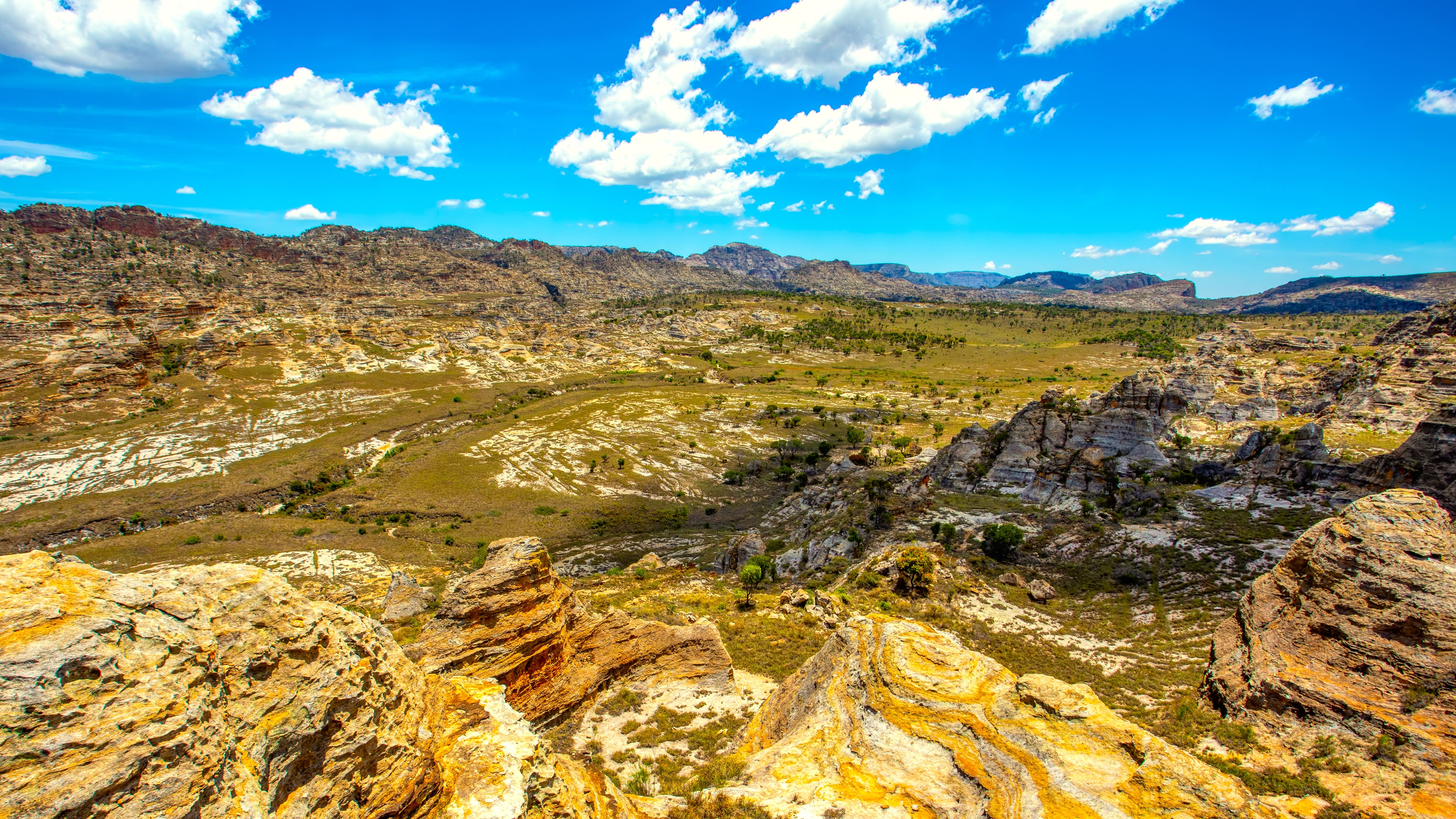
Western Madagascar stretches between the Mozambique Channel and the western foothills of the Central Highlands, across a dry savanna zone dominated by Adansonia grandidieri and Adansonia rubrostipa baobabs. Our English-speaking team based in the capital organizes departures to Morondava, the region's main gateway, either by domestic flight of approximately one hour from Antananarivo, or overland via Antsirabe and Miandrivazo, allowing for two full days of driving. The region corresponds to the Sakalava country of Menabe, an ancient kingdom whose remnants still appear in the painted tombs bordering coastal villages.
The dry tropical climate shapes the entire visiting calendar. From May to October, tracks are passable and ferries on the Tsiribihina and Manambolo rivers function normally. From January to March, the rainy season closes access to Tsingy de Bemaraha National Park, rivers swell, and villages like Bekopaka and Belo-sur-Tsiribihina become isolated. This seasonal constraint explains why the West requires advance planning, and why we advise against departures between December and March.
Two sites draw the bulk of visits. The Avenue of the Baobabs, some twenty kilometers north of Morondava on the Belon'i Tsiribihina track, lines up around thirty centuries-old trees across several hundred meters. We bring travelers there toward 5 p.m., when slanting light gives the trunks their copper hue and zebu herds return to the village. The second site, Tsingy de Bemaraha National Park, has been a UNESCO World Heritage site since 1990. It consists of Jurassic limestone plateau eroded into razor-sharp blades by rainfall, crossed by canyons and caves. Access from Morondava requires two days of 4x4 travel on tracks, with ferry crossings at Belo-sur-Tsiribihina and Bekopaka.
Beyond these two highlights, the region offers less-frequented experiences. The Tsiribihina descent by motorized or traditional dugout canoe lasts three days from Miandrivazo to Belo, with camps on sandbars, lemur observation in riparian forests, and stops in Sakalava villages. Farther south, Kirindy forest is home to the fossa, Madagascar's largest endemic predator, as well as mouse lemurs and Verreaux's sifaka. It is also one of the few places where our naturalist guides can show these species without lengthy hikes.
The local economy rests on traditional Vezo fishing along the coast, rice cultivation in flooded lowlands, and extensive zebu herding with cattle moving in herds between villages. At Morondava's morning market, parrotfish, mangrove crabs, and romazava made with mafane greens—Madagascar's national dish—are on offer; we recommend tasting it at least once. Famadihana celebrations, the turning of the bones, punctuate the dry season from June to September in inland villages, an opportunity for encounters should the traveler be curious and dates allow.
The West is not a beach destination, despite its proximity to the Mozambique Channel. Waters are warm but often turbid due to silt from rivers, and beach amenities pale compared to Nosy Be or Sainte-Marie. It is a region to choose for its geological landscapes, contact with Sakalava culture, and the logistical adventure that reaching the Tsingy still represents.
To discover
Tsingy de Bemaraha in two days. Walking through the Grand and Petit Tsingy from Bekopaka, with suspended bridge passages and rappelling descents into limestone canyons. The circuit requires good fitness and closed-toe shoes.
Avenue of the Baobabs at dusk. Thirty minutes on track from Morondava to the Adansonia grandidieri alignment. We arrive an hour before sunset to experience the changing light and meet zebu carts returning from the fields.
Tsiribihina descent by dugout canoe. Three days and two nights from Miandrivazo, camps on sandbars and stops in the Sakalava villages of Bemaraha and Begidro. An alternative to track travel for reaching the Tsingy by water.
Kirindy dry forest. Sixty kilometers north of Morondava, daytime observation of Verreaux's sifaka and night outings for mouse lemurs and, with luck, the fossa between October and December, breeding season.
Cuisine and Morondava market. Stop at Mahabo market for grilled morning fish, and dinner of romazava or coconut octopus in beachfront eateries, reflecting dual Sakalava and Vezo influence.
When to go
The ideal window runs from April to November. From April to June, the landscape remains green after rains, temperatures are mild at 25 to 28°C during the day and drop to 18°C at night in the interior. From July to September, it is peak dry season, temperatures of 28 to 32°C, clear skies, and ideal conditions for the Tsingy and Tsiribihina descent. From October to November, heat rises rapidly, 32 to 35°C during the day, sometimes higher at Bekopaka, and nights stay above 22°C. This is also the best period for observing Kirindy wildlife, but we plan early departures to avoid peak heat.
From December to March, the monsoon renders tracks impassable. Ferries on the Tsiribihina and Manambolo are suspended as soon as rivers rise, and Tsingy Park officially closes from mid-November depending on the year. Rainfall reaches 200 to 300 mm per month in Morondava in January and February. During this period, we direct travelers toward the Central Highlands or the North.
Practical advice
To visit the West properly, allow a minimum of seven days on site: one arrival day and one night in Morondava, two days of track driving to and from Bekopaka, two days in Tsingy Park, one day at Kirindy and the Avenue of the Baobabs. If you add the Tsiribihina descent, plan ten to eleven days total from Antananarivo. Morondava airport is served by regular domestic flights in dry season, and the road from the capital via Antsirabe and Miandrivazo takes two to three days depending on track conditions after Malaimbandy.
The region combines well with the Central Highlands upstream, especially if you arrive by road, and with the South and RN7 downstream for those wanting to continue to Isalo and southern landscapes. Comfort remains rustic beyond Morondava: lodges in Bekopaka offer hot water and solar electricity, but intermediate stops like Belo-sur-Tsiribihina remain basic. We recommend the West to travelers curious about logistical adventure, geology and landscape photography enthusiasts, and hikers in good physical condition. It is not the region best suited to young children or travelers seeking beach experiences.