Ifaramalemy sy Ikotobekibo, Madagascar's Immortal Tale
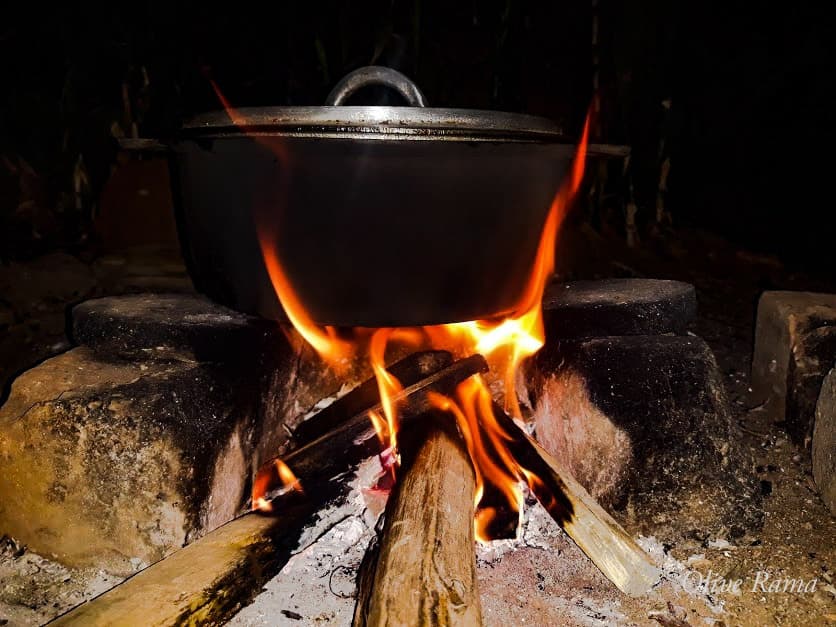
Once upon a time, at sunset, young and old would gather around a wood fire that had been used to cook dinner. In the courtyard of the house, everyone would sit on the ground, often with children on a mat,
Once upon a time, at sunset, young and old would gather around a wood fire that had been used to cook dinner. In the courtyard of the house, everyone would sit on the ground, often with children on a mat, to listen to an "angano", a tale.
Dadabe or nenibe (grandfather or grandmother) was the master of this joyful narrative moment offered to all. Even neighbors were invited to this "takariva amorom-patana", a fireside chat. Beware! This was not a campfire. The fire was used properly to cook the meal. Either one made "afo kitay", a wood fire, or one used a charcoal hearth.
Nowadays, in distant villages, some villagers still enjoy these moments of sharing. Since houses are not separated by walls or sometimes even fences, Rakoto could easily cross Rabe's courtyard without this act being seen as an infringement.
Malagasy tales are traditionally made of exaggeration, a way for the elders to educate and pass wisdom on to their descendants. Here is one of the most told to the little ones: Ifaramalemy sy Ikotobekibo.
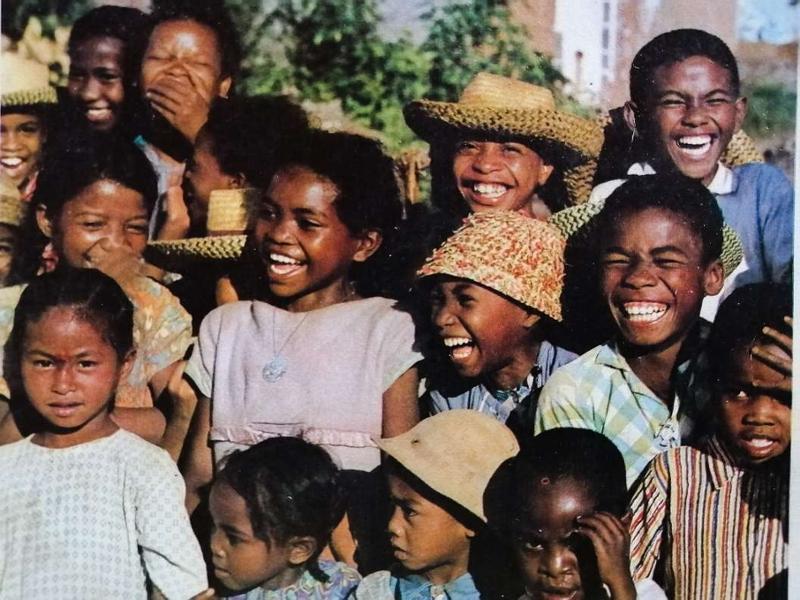
Once there was a couple who had many children. The youngest son was pot-bellied, which earned him the nickname Ikotobekibo, and the youngest daughter was lame, hence her nickname Ifaramalemy. These two youngest could do nothing, to the great despair of their parents. Eventually, their parents came up with the idea to get rid of their useless children by burying them alive. Later, they began to dig a hole. Their youngest asked what the hole was for, and the couple replied: "It's to ripen bananas!" Fortunately, the older brothers and sisters of Ifara and Ikoto quickly learned that their youngest were to be buried alive. They were sad and confused and announced their parents' intention to Ifara and Ikoto the next day. Their younger brother and sister told them: "If that's the case, we will flee for fear of dying prematurely!" They accepted their decision while feeling pity for them. Some even offered them food so they would not starve along the way.
And so Ifaramalemy and Ikotobekibo set off, the sister limping with a cane and the brother suffering from breathlessness because of his big belly. It was so hot that both sweated abundantly along the way. Ikoto felt very tired. As they moved further away, Ikoto cried, because he could no longer continue walking. Ifara said to him: "Come, little brother. I will carry you on my back until you regain your strength!" And she carried him on her back across an entire meadow. She exhausted herself greatly carrying her little brother while limping. After three days of walking, they found a beautiful plain and stopped there to rest. But the place was so welcoming that they decided to build a small hut from dead leaves, branches, and lumps of earth.
When the hut was built, they both lived in it. Later, Ikoto became a master hunter, and each time he returned, he ordered his sister: "Ifara, put up the partition!" and would not remove it until he had finished eating what he had hunted. This made Ifara very sad.
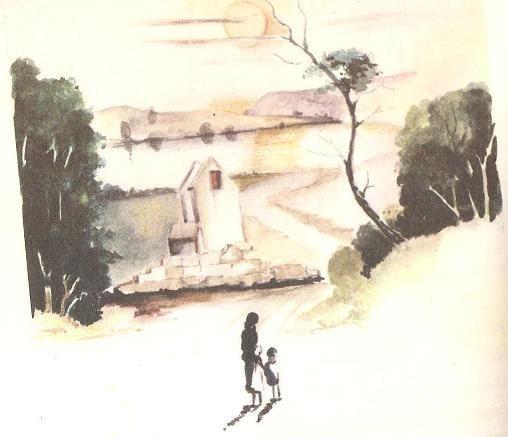
Photo from Angano sy Tantara - kilonga.com
But one day, Ifara decided to go hunting as well, because there was nothing left to eat at home. As she had traveled a certain distance, she happened to stumble upon Itrimobe's house. Since Itrimobe was absent at that moment, Ifara took the opportunity to look around the house and take food and supplies to bring back home.
That day, Ikotobekibo continued to keep his hunt to himself, but Ifara who still loved him did not have the heart to hide the milk and honey rice, as well as the oiled eel that she had snatched from Itrimobe's house. When Ikoto saw all this food, he was so impressed that he decided to go there with his sister.
When they arrived at Itrimobe's, Ikoto, being a stomach on legs, could not help but stuff himself. He could no longer get up and Ifara did not know what to do. She helped him climb into the rice granary and gave him a spear and a large knife that she found in the house, telling him: "When Itrimobe arrives, you must kill him or he will eat you", then she left. "THAT SMELLS LIKE HUMAN!!! THAT SMELLS LIKE HUMAN!!!", Itrimobe growled when he entered and climbed into the rice granary. As soon as he poked his head through the entrance, Ikoto pierced him with the spear, making him lose his balance. He survived, but Ikoto pierced him again and he finally fell dead. Itrimobe was dead! When Ifara learned of Itrimobe's death, she decided to move in with him and her brother. They inherited all of Itrimobe's possessions and became very rich. Their parents heard about it and came to visit them and won them over. They all lived happily ever after. Tales are tales!
"Angano, angano, arira, arira, izaho mpitantara, ianareo mpitsentsitra."
I tell, you listen.
Translated from texts by Ramano, Alimanaka Malagasy - 1955
© Détours Madagascar - March 27, 2020