The Man
The end of the rainy season has arrived in Madagascar. Mother Nature is splendid, verdant and generous. The birds burst into songs as melodious as each other. The evenings, when the sun glows red at sunset, are starting to turn cool on the
The end of the rainy season has arrived in Madagascar. Mother Nature is splendid, verdant and generous. The birds burst into songs as melodious as each other. The evenings, when the sun glows red at sunset, are beginning to turn cool on the Malagasy Highlands.
Antananarivo, our capital, is ringed by magnificent patchworks of rice paddies. At the heart of countless shades of green, the city sprawls across rolling hills at nearly 5,000 feet above sea level.
In normal times, it is April 24, 2020. Happy travelers roam the country without a care in the world, encountering smiles and kindness, their eyes full of wonder. Together, we trek peacefully through mountain massifs, both famous and lesser-known. Madagascar is truly a trekking paradise: Andringitra, Marojejy, Ibity, Isalo, Vavavato. In uniquely pristine places like Makay, we quench our thirst for freedom and the pleasure of being in unspoiled nature, often accompanied by a myriad of cheerful and spirited porters.
Together, we discover a vast territory composed, like a puzzle, of a kaleidoscope of geographical and human identities, all sharing the same common threads: kindness, smiles, and hospitality.
We sleep under the stars, in carefully chosen accommodations or in idyllic settings. Madagascar is also a feast for gourmands who love countless flavors.
Emerald-green lagoons and the Mozambique Channel dotted with delicate triangular sails soothe the wanderer's restless spirit.
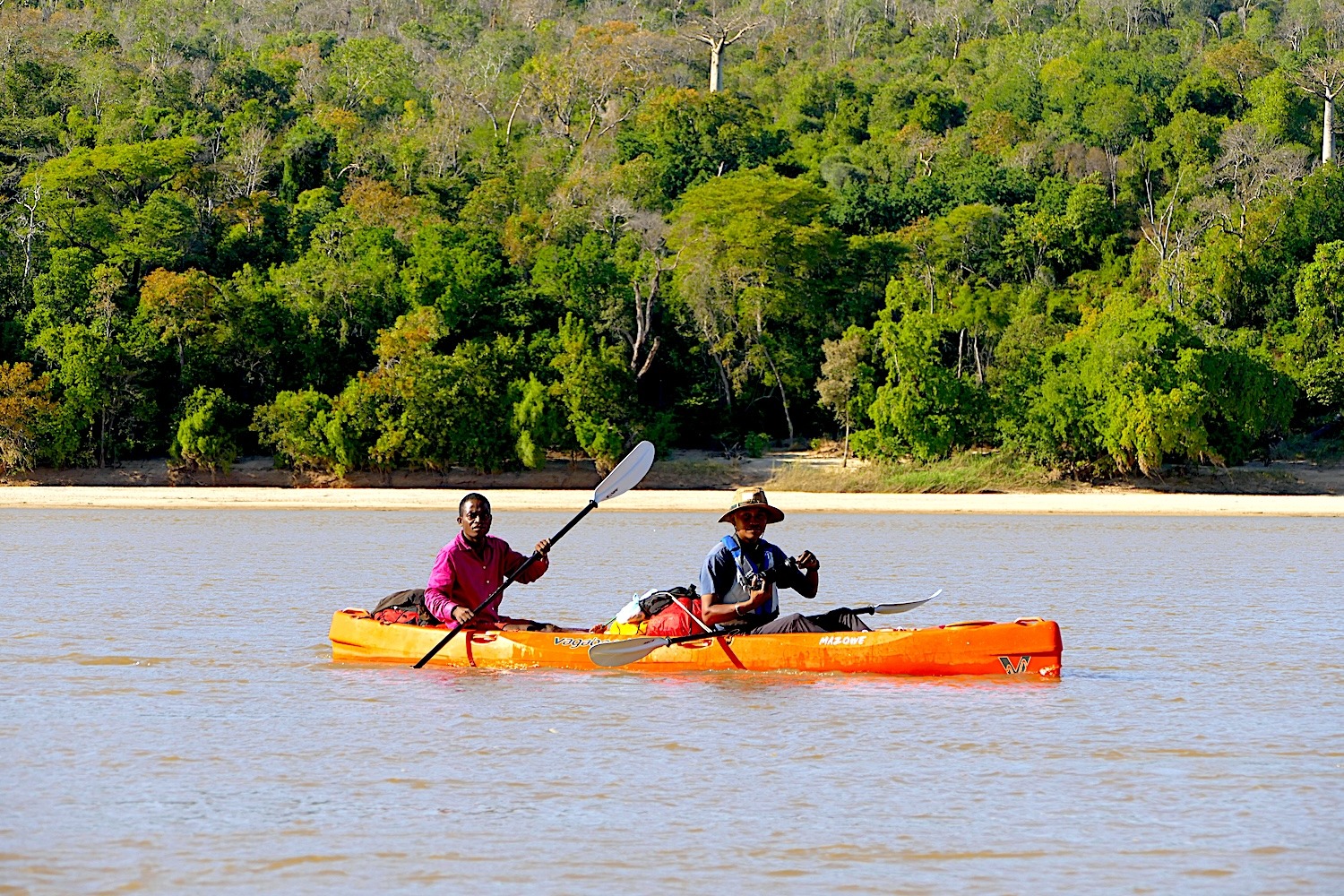
Together, we drift languidly on the peaceful waters of rivers and canals, surrounded by exuberant vegetation—the Pangalanes, the Manambolo.
The paradisiacal islands of Nosy Be, Sainte Marie, and Radama captivate through their pristine nature.
It is April 24, 2020!
News falls hard and cold.
The pandemic is killing thousands of people across the world.
A sinister, sad period.
No travelers roam the Great Island.
No journeys unfold on its lands.
No planes take off or land at Ivato or elsewhere.
No accommodations offer shelter to leisure travelers.
Human life is motionless, petrified, while time flows on unchanged, peacefully.
Nature reclaims its domain as mankind suspends almost all movement.
We confine ourselves awaiting better days, our eyes fixed on world news,
Our ears listening to distant death tolls.
Almost nothing moves, for lockdown is nearly impossible in a country like Madagascar.
The pandemic has brought humanity to a standstill, brought us to our knees—all because of an insignificant little virus born from the destruction of biodiversity.
Time for the Earth to catch its breath.
It is like a silent warning, a solemn admonishment.
Are we capable of hearing it, of understanding it, of acting differently?
This warning is no mere whim but a genuine wake-up call, a shot across the bow!
In Madagascar, the situation is simple, though complex.
The epidemic seems, to date, to be contained, under control, no longer spreading.
Fortunately, there are no deaths to report, no critically ill patients.
The hundred or so cases have mild symptoms and should recover quickly.
The reasons? It is too early to analyze.
The virus arrived on the island late; firm health measures were implemented immediately. They clearly allowed the disease's spread to be contained.
The Malagasy population is young and possesses strong resilience against epidemics, viruses, parasites, and other microbial threats. It is likely that the immune defenses of Malagasy people enable non-transmission.
Then, there is surely another factor to consider: the population has been treated for years with chloroquine to combat an even more deadly enemy—malaria.
After a month of relative lockdown, life gradually resumes, a bit dazed, faces masked, groggy like a boxer on the brink of knockout.
We remain very attentive to tomorrow, on our guard, to protect ourselves from a resurgence of COVID-19.
Madagascar, the island, is isolated from the rest of the world. That is our advantage, for everything is easier to control.
We who are travelers, travel professionals, exist only through your desire to travel. Today, uncertainty clouds our dreams.
The life of our company, a small nimble yet fragile vessel in the midst of this turbulent ocean, is at stake.
Tourism—like other economic sectors—is heavily affected.
How will we emerge from this episode?
How can we preserve our team members who have given their best to build our ideal and our commitment as an eco-responsible tour operator?
How can we prevent a profound socio-economic crisis from compounding the health crisis?
Our limitations are gradually becoming clear!
Most fortunately, we receive daily messages of solidarity from you who, through words or gestures, support us. Thank you from the bottom of our hearts.
Are we capable of reinventing our conception of travel?
Must we completely change direction and put our expertise, our organizational sense, our planning ability, our deep knowledge of the land and its people at the service of another cause, other causes, setting aside our love of well-conceived travel?
Are we capable of pivoting toward other meaningful activities aligned with the common good, during and after the crisis in Madagascar?
Must we simply—as we hear suggested nowadays—abolish the concept of travel, ban travelers altogether?
Human nature is nomadic; man is a migrant. Travel is his deepest essence, his DNA. Throughout history, hominids have moved out of necessity, constraint, conquest, and curiosity.
In groups or individually, man is nomadic by nature. When sedentary, when not traveling physically, his spirit wanders through curiosity and need.
How do we reconcile this fundamental reality—man as a born traveler—with a respectful and responsible economic activity?
It seems clear that the way we travel must and should change. The spirit of travel must evolve. This was a sentiment we shared before Coronavirus.
This crisis is the accelerator, the propellant toward a necessary transformation.
The genesis of the current crisis is, above all, linked to mankind's destruction of biodiversity. It is not the first time, and if we do not take collective care, it will not be the last.
A few days ago, I wrote to a partner who runs a fine small company in France: "Our way of conceiving travel, of crafting itineraries is linked to respect for humanity, with humility and humanism..."
And today?
The large Détours family and tribe, in Mauritania and Madagascar, is hard at work managing the current situation and preparing the future. We are developing tomorrow with pragmatism and realism for you, for all of us.
We certainly do not have all the answers to the many questions, but we remain active.
Our societies are suffering, everyone is suffering, the whole world is suffering, yet our spirit as travelers, our conception of life, and our motivation remain intact, in service to exchange among humankind, to universal respect, and to shared responsibility.
As always, and now more than ever given this dark period shaking us, this encourages us to travel (immobile for now) with our senses awakened, to discover, to share, to listen and understand, to see and respect, to taste the thousand flavors of life! We remain attentive and curious travelers.
We must continue and savor wandering with slowness, in an intimate but non-intrusive manner, in harmony with the natural environment, without excess or predation.
Then, perhaps, we will have progressed and this warning will have proven beneficial.
The entire Détours team wishes you the very best, but for now, prefer to travel without moving. The hour will come soon!
Sylvain PHILIP - Antananarivo, April 24, 2020