Malagasy Architecture: The Making of the Casa
Madagascar boasts diverse architecture. In each part of the island, inhabitants adapt their constructions based on available resources. Whether in size, shape, or raw materials used, each architecture is unique in its own way.
Madagascar boasts diverse architecture. In each part of the island, inhabitants adapt their constructions based on available resources. Whether in size, shape, or raw materials used, each architecture is unique in its own way. A trekking adventure in Madagascar is a wonderful way to discover this architecture.
Traditional Houses in the Highlands
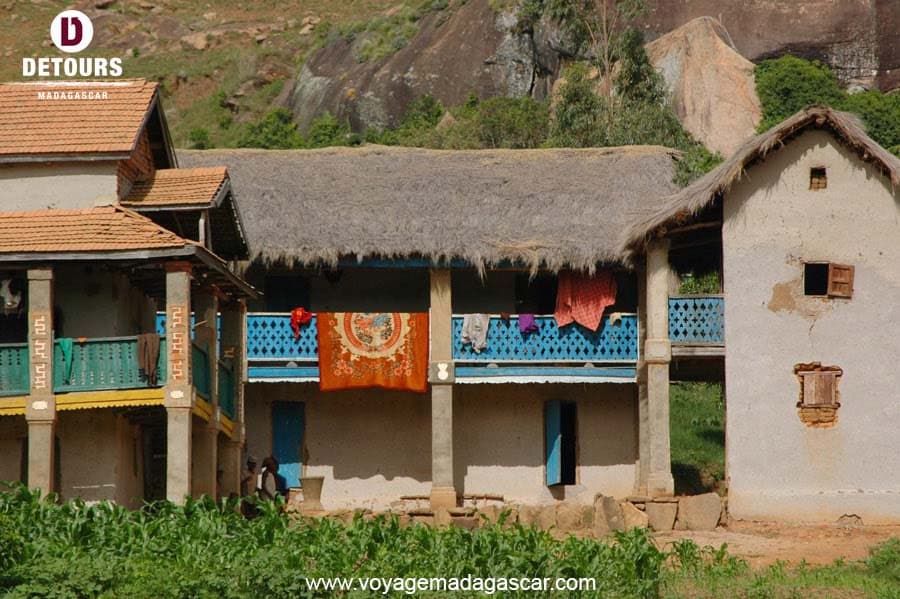
In the Highlands, most houses are built from rammed earth. It was Jean Laborde who introduced this technique in 1831. The roof is made of thatch or tiles. Often called "trano gasy" (Malagasy house), the traditional Merina house is single-story with a wooden veranda, supported by columns. In the past, this architecture was the same whether in town or countryside. But nowadays, most houses in towns have become modern while those in rural areas remain traditional.
The Construction of Casas on the Coasts
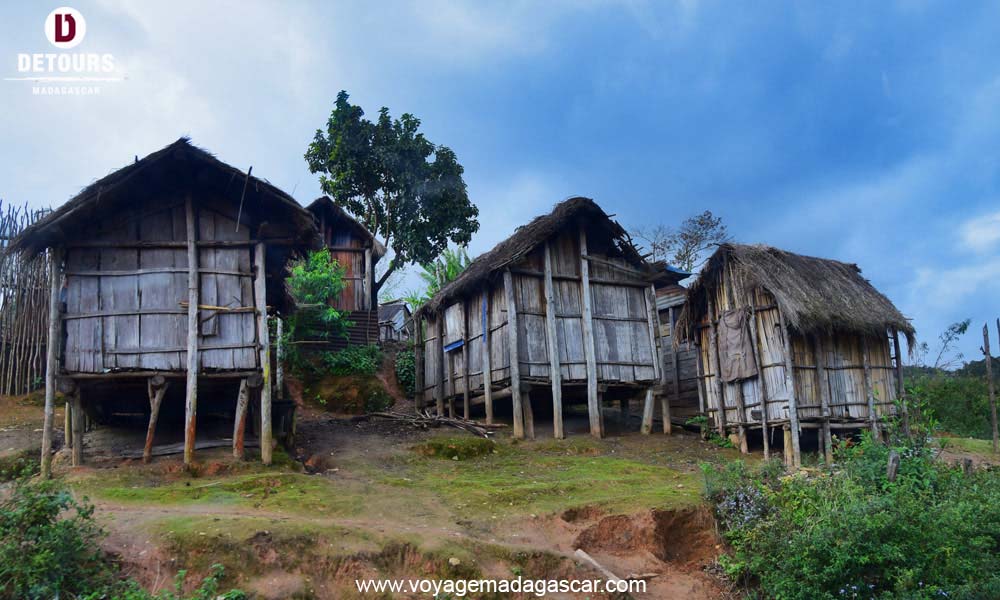
The casas of the East rely on the use of ravinala (the traveler's tree). This tree is predominant in the eastern part of Madagascar. Named "trano falafa", all products used for house construction come from the ravinala. The "raty" is the ensemble of leaves woven together. They are used to construct the walls of the house, while "falafa", the thick dried leaf stems of the ravinala, are used for the roof. The "rapaka" (tree trunk) is used for the flooring. This type of house is built on stilts.
The traditional house of southwestern Madagascar is constructed from reed. For the western part, the palm tree is most commonly used for building casas. The same applies to the north, where they prefer raphia instead. This plant is predominant there. Raphia is a type of palm that can reach up to 20 meters in length. What makes it even more suitable for house construction is that its leaves are the largest among all palm species.
Rituals Surrounding Construction
It should be noted that for Malagasy people, there are rituals to respect before building a house and consulting an astrologer (mpanandro) is one of them. It is he who decides the right day to begin construction and the house inauguration. According to tradition, not respecting this ritual brings misfortune to the family involved. When you are invited to a Malagasy family's home, you must be careful because everything has its place and this carries meaning. It is therefore important to know these conventions. Malagasy people place great importance on cardinal directions. All doors of traditional Malagasy houses must always face west. It is the direction where the sun sets. Malagasy people believe that this way, the house can benefit from the sun's rays until sunset. Speaking of the North, the Malagasy consider it to symbolize power and honor. This is why the parents' bed is placed on the north side of the house. When sleeping, the head must always point toward the North or East and the feet toward the south. This is explained by the fact that Malagasy people believe happiness and wealth come from the north while the south is only inauspicious. Since the sun rises in the East, it is forbidden to go against it. Otherwise, the entire family is deprived of blessings.