Madagascar's Circumcision Celebration
Full volume music, people dancing and drinking, a young boy surrounded by mountains of toys… Welcome to the didimpoitra! Men carrying their little boys dressed in red, celebrations that last for weeks: this is the sambatra! Circumcision takes different forms across the island, but the symbolism remains the same!
Full volume music, people dancing and drinking, a young boy surrounded by mountains of toys… Welcome to the didimpoitra ! Men carrying their little boys dressed in red, celebrations that last for weeks: this is the sambatra ! Circumcision takes different forms across the island, but the symbolism remains the same!
In Madagascar, all boys must undergo this tradition to be truly considered men (belonging to the "male gender") ! In certain ethnic groups of the Great Island, the uncircumcised cannot be buried in the family tomb (fasan-drazana). Circumcision remains a deeply rooted tradition in Malagasy society, but it is increasingly becoming modernized!
The Ritual of Didimpoitra
In Imerina, in the Central Highlands region, circumcision (didimpoitra, famorana or hasoavana in Malagasy) is performed on boys around 3 years old. It always takes place during Madagascar's winter, between May and August, because the cold rapidly heals wounds. Originally, it could only be performed with the approval and prescriptions of a mpanandro (a kind of diviner-shaman), as the date must be chosen according to the andro nahavelomana (birth day) of the young boy.
Traditional rituals are maintained in rural areas, while in large cities, everything is simplified and arranged to best suit the boy and his parents. It is a fascinating tradition to discover during your trip to Madagascar.
Circumcision in the countryside (as it has been done for hundreds of years)
The hasoavana is a grand celebration to which the entire family is invited. It takes place in a specially dedicated case (house or room) for the occasion. The festivities begin the day before, consisting of dances and songs that continue until the end of the event. Valiha, flute and drums take center stage! The men drink alcohol abundantly as in all Malagasy celebrations! No one sleeps, because the night is very important!
Around 2 or 3 in the morning, the most vigorous men (whose parents are still alive) set off to fetch rano mahery from the foot of a mountain, a kind of sacred water that will be used to wash the hands of the circumciser, the knife and the child's wound. Upon their return, those in the case try to overturn the calabash containing the rano mahery to prevent it from reaching the circumciser. If it is overturned, they must return to fetch more from the source! When the calabash finally gets through, the water is truly powerful (the meaning of rano mahery). In any case, everyone will ensure that it passes. These strong men also bring sugar cane so the boy's life won't be too harsh, and a banana plant, so he will be fertile and have many children later.
Around 4 or 5 in the morning, the rain-jaza (circumciser) begins the operation after the mpanandro or the eldest of the assembly has prayed for everything to go well. Meanwhile, the mother, sisters, aunts and female cousins are confined to a room to pray as well. They pray loudly so as not to hear any cries from the boy. The men witnessing the circumcision bang anything they can find to muffle the cries and prevent the women from hearing.
It should be noted that the rain-jaza is a particular person with special gifts, like the mpanandro. He has a gift for healing wounds, preventing hemorrhage. For this gift to be effective, he must respect fady (taboos), just like the assembly. As a general rule, no one is allowed to have sexual relations during the night of the circumcision.
Once the foreskin (lohatsitsy in Malagasy) is removed, the assembly cries "'zay no vita e!" (It's done!) and the maternal grandfather eats the piece of skin with banana, symbolizing fertility and virility.
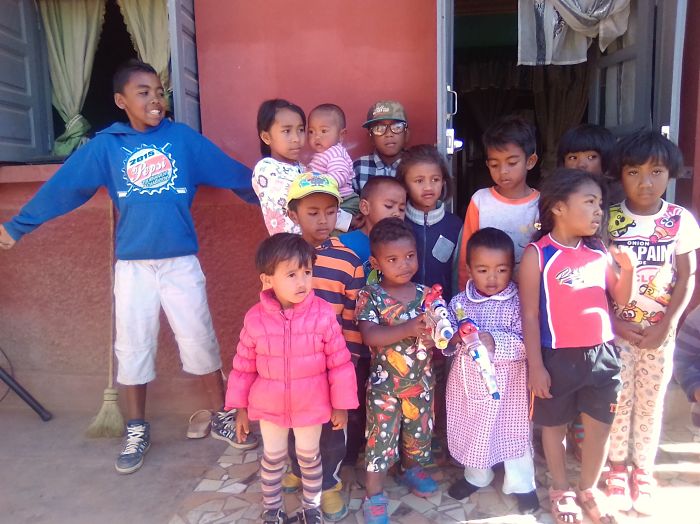
The child is pampered and receives gifts, then quickly falls asleep. Everyone rejoices and especially eats after giving the tsodrano (blessing) which takes the form of a monetary gift (as is always the case). A kabary (speech) of thanks closes the event.
Circumcision in the city (adapted to modern times)
For city dwellers, any day during winter is suitable for the didimpoitra. It is a medical doctor who performs the circumcision in his office or operating room. The celebration may begin the day before or not, depending on the family's means and individual preferences. In the morning, the men of the family take the little boy to the surgeon. Their role is to hold his arms and legs to prevent him from moving. The uncle or maternal grandfather swallows the foreskin with a banana. The child is returned to his mother who always dreads this moment and is very stressed until the complete healing of the little male organ.
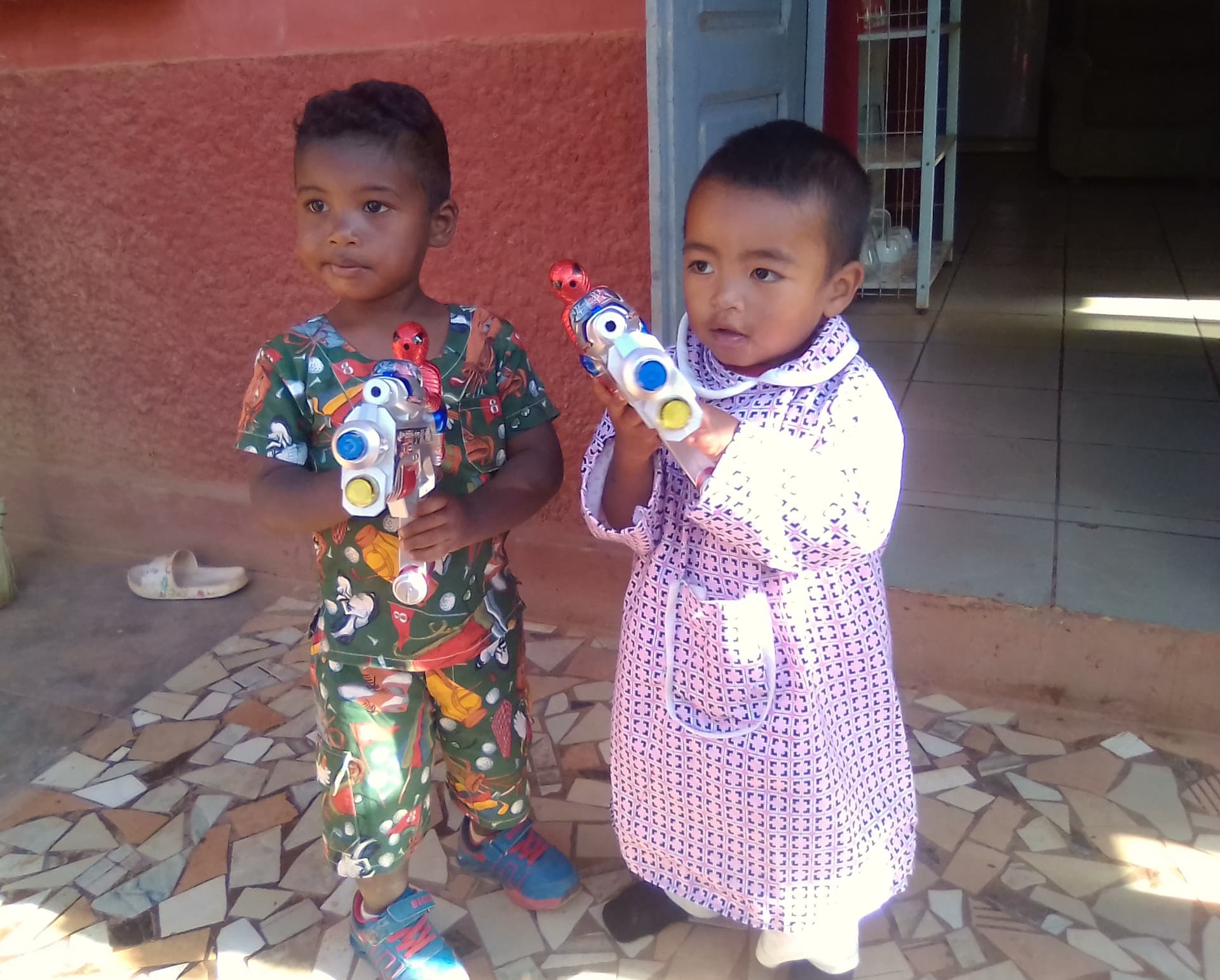
The return home is very joyful! Everyone is happy and cries "arahaba ririnina e!" (Congratulations in this winter season) as is customary! The young man in question is showered with toys to make him forget the pain and rejoice on this special occasion when he has finally become a man! Sometimes he cries while playing! The celebration is in full swing: food, alcoholic and non-alcoholic drinks, singing and dancing.
The evolution of circumcision
Nowadays, parents who can afford it do not hesitate to turn to modern medicine to ensure their child's safety. American-style circumcision is trending! Some medical centers have the little boy inhale a slightly anesthetic gas to ease the pain.