Rice-fish farming in Madagascar: a practice that should be a reference
Rice represents more than 40% of agricultural income sources for Malagasy households. The rice-fish system has always existed in Madagascar, but with rice-fish farming, fish production becomes more substantial
Rice represents more than 40% of agricultural income sources for Malagasy households. The rice-fish system has always existed in Madagascar, but with rice-fish farming, fish production becomes far more significant. This sustainable agricultural technique is perfectly adapted to Malagasy farming, especially since it would help combat malnutrition and poverty. But how does it work? Is it achievable?
What is rice-fish farming?
The FAO defines rice-fish farming as the raising of fish or shrimp in a rice paddy, in parallel with rice cultivation. In Madagascar, rice-fish farmers primarily raise carp, but also tilapia and gourami. This form of farming provides a source of protein in a diet based on rice, as well as a source of income in a society with a vulnerable economy.
Even though the spaces dedicated to rice cultivation are reduced due to the implementation of specific necessary improvements (refuge channels, dikes, etc.), rice production remains the same or even increases. This is explained by the fact that fish provide:
· a reduction in weeds;
· good fertilization;
· better soil oxygenation;
· an action equivalent to hoeing that favors plant tillering.
How does it work?
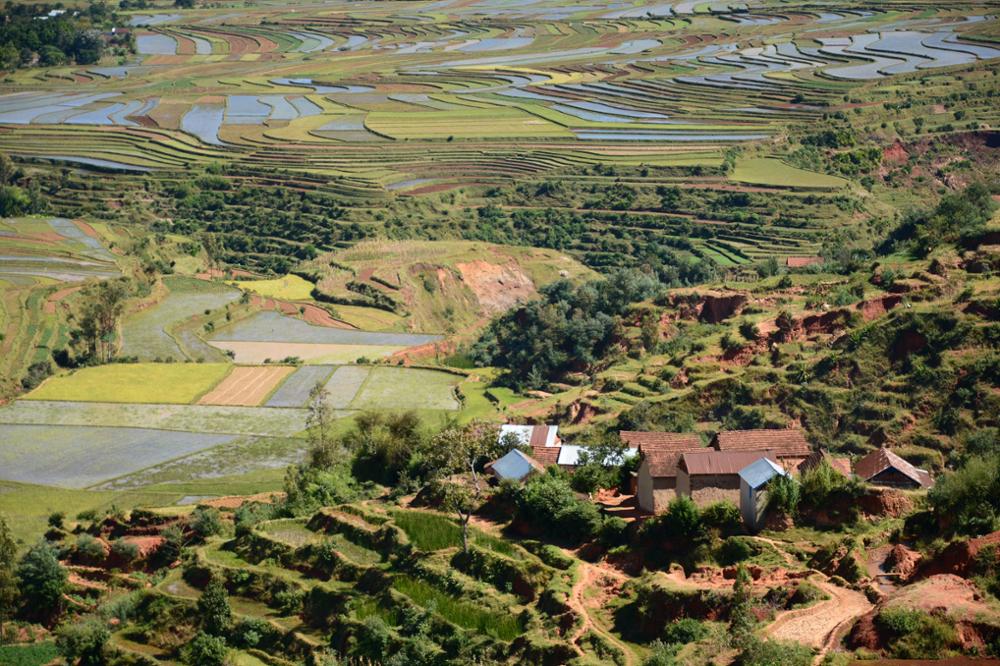
Rice-fish farming can take two forms, namely natural rice-fish system and managed rice-fish system. In the former, fish enter the paddy naturally through water exchanges during the rainy season or when paddies are flooded. In the latter, fish are introduced by humans and their growth is controlled. Malagasy farmers use provisions particularly to fatten carp.
In all cases, fish are always found in the paddies, but in smaller quantities. By implementing infrastructure better suited to fish development, the simple farmer becomes a rice-fish farmer with two sources of income. He will need to set up:
· a refuge pond for fish during planting or harvest periods, or when the paddy water is drained
· higher dikes around the perimeter of the paddy to better manage water and prevent fish escape
· a water level regulation system, preventing predators from entering (inlet screen) and fish from escaping (outlet screen)
Fingerlings (previously purchased or raised in the refuge pond) are introduced after rice planting. Malagasy farmers prefer carp because they are easy to raise. Tilapia are also easy to produce, but they have less flavor and deter other species.
Is it widespread in Madagascar?
Rice-fish farming has always existed in Madagascar since the natural rice-fish system has always been exploited, even if not to its full potential. At each rice harvest, farmers also harvest fish (carp, eels, tilapia, etc.) and sell them in some cases. It was simply a matter of showing them how to develop their paddies to obtain larger fish and greater quantities, along with improved rice production.
Faced with poverty and malnutrition (the latter responsible for 40% of child mortality), a project was launched in 2014 to promote carp aquaculture in the rice paddies of Madagascar's highlands, specifically in the regions of Haute Matsiatra, Vakinankaratra, where a village in Vavavato is witnessing significant rice-fish farming activity, Itasy, and Amoron'i Mania.
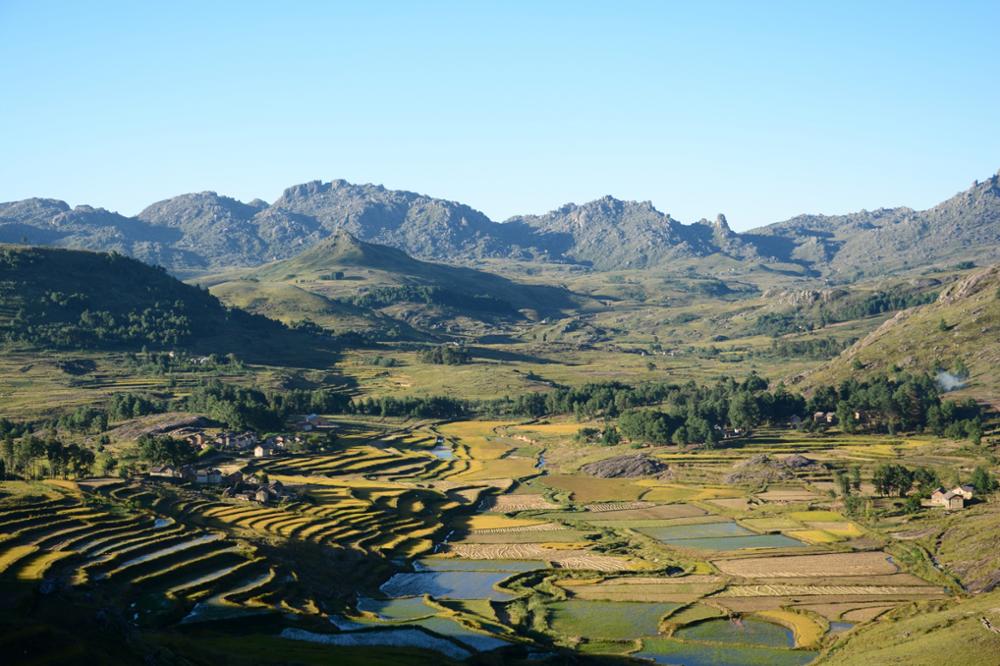
These four regions were chosen because together they concentrate more than 20% of Malagasy people living below the poverty line. Children suffering from chronic malnutrition average more than 50%, sometimes far more.
Today, rice-fish farmers are multiplying due to the financial benefits that fish farming can bring and the simplicity of the infrastructure. Note that freshwater fish costs between 10,000 and 16,000 ariary per kilogram. The feed used for fattening fish is also readily accessible and quite affordable.
Can it be one of the tools to ensure food security in Madagascar?
In Madagascar, having a meal means eating rice, and in large quantities! A household of 3 people consumes on average about 2 kg of rice per day if their means allow. This always surprises travelers during their stay in Madagascar! This diet is not "healthy," but Malagasy people are accustomed to it! Since most daily work is physical and laborious (80% farmers), this caloric intake is necessary.
In the countryside, far from the pollution of big cities, people nevertheless have a fairly high life expectancy since one encounters many nonagenarians and centenarians. They don't eat meat in abundance, but regularly consume vegetables and legumes. Beef, chicken, and fish are consumed on special occasions and at celebrations.
In regions where children suffer from malnutrition and sometimes die from it, it is not only the variety of food that is lacking, but also the quantity. If rice-farming households consume on average about 70% of their production, they nevertheless sell the majority of their fish due to the price it represents.
To encourage greater self-consumption, it would be necessary to raise farmers' awareness about the importance of nutritional benefits that fish can provide:
· proteins
· iodine
· minerals (calcium, zinc, iron, phosphorus)
· vitamins (A, D, E, B)
· omega-3 (beneficial for pregnant women and for brain development in young children)
· etc.
Fish consumption can indeed combat malnutrition in Madagascar, but you still need to convince Malagasy people. The concept of healthy eating is unfamiliar to them or is different in their view. Furthermore, Malagasy food culture is relatively limited. Malagasy people know very few fish dishes: fish in tomato sauce with onions, fried fish, and carp with bamboo peas. For those who eat pork, it is added to eels.
Combating malnutrition and ensuring food security in Madagascar isn't just about helping farmers produce more sources of protein, nutrients, minerals, fiber, etc., but also convincing them to consume more of it. The task proves complex!