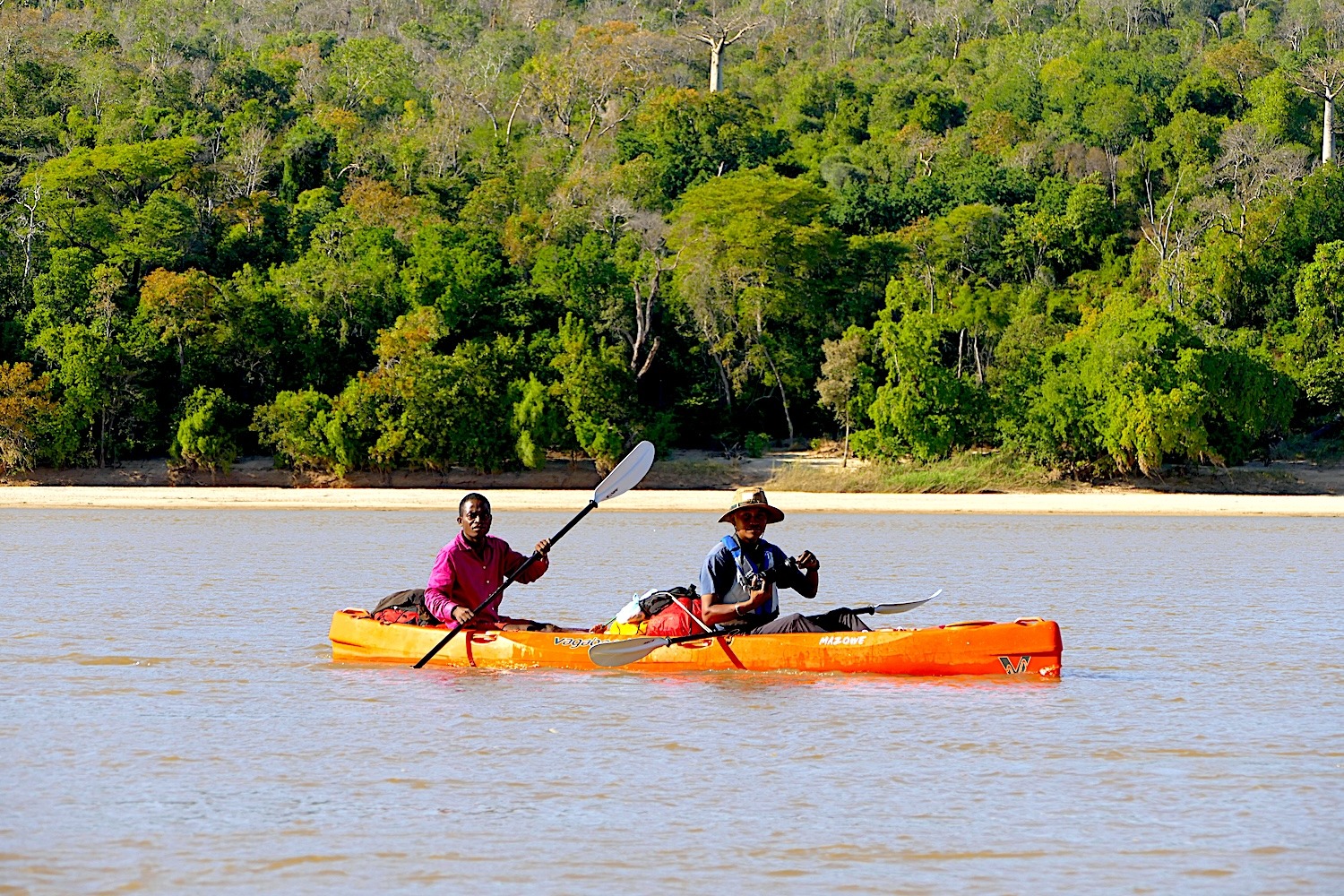
Madagascar, an infinitely diverse territory conducive to tourism development
Madagascar is a tourist island with strong potential, due to its size, diversity of landscapes, and endemism. Its natural geographic assets and unique ecosystems are numerous and form the streng
Madagascar is a tourist island with strong potential, owing to its size, diversity of landscapes, and endemism. Its natural geographic assets and unique ecosystems are numerous and form the strength of Malagasy tourism. The island-continent, covering a little over 587,000 km², is traversed by several climates, reinforcing the quality of landscape diversity.
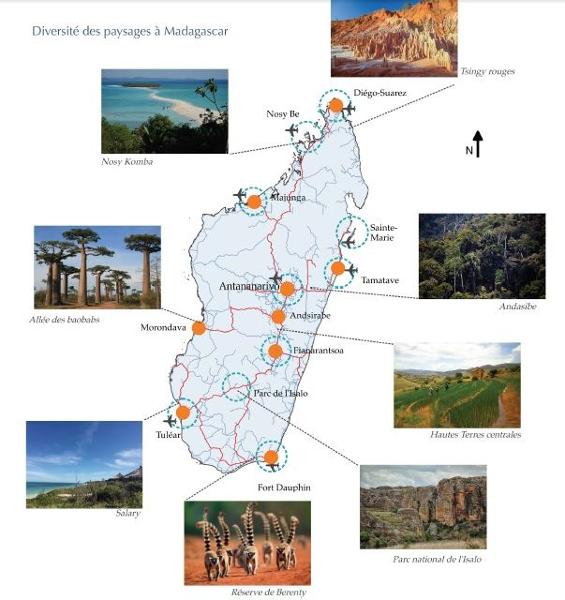
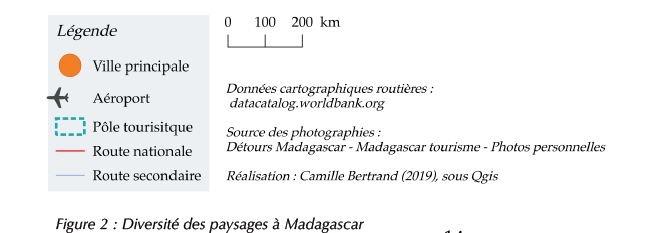
It is necessary to first define the geographic assets that are highlighted by the tourism sector. In the north of the country, there are primary endemic forests, rare and impressive rock formations (the Tsingy of Ankarana or even the red Tsingy), but above all paradisiacal coastal zones that attract more beach tourism than in the rest of the country (with the island of Nosy Be notably). In the East, vegetation is abundant and diverse since the region is heavily exposed to precipitation and is characterized by a humid tropical climate. On the central highlands, the high plateaus and mountain ranges are favorable for adventure hiking and trekking. The West is marked by an arid landscape, a hot and dry climate, with rugged terrain (Tsingy of Bemaraha), and is also appreciated for its lagoons, coral reefs, and mangroves (around Tuléar notably). Finally, the far South presents a savanna and arid plains environment, but due to its isolation, is little frequented by tourists. This brief overview demonstrates the diversity offered by Malagasy territory and highlights the potential for tourism development in the country (fig. 2).
One of Madagascar's tourism appeal arguments lies in the endemism of its territory. The island presents megabiodiversity, and its endemism rate can reach 95% for certain species (Razafindrakoto, 2017). Thus, the island's biological capital makes it a premier destination for nature observation and the discovery of unique landscapes. It is precisely the island's natural environment and its diversity that constitute its main assets. According to Sarrasin (2013), ecotourism in Madagascar represents 55% of tourists and is part of the growing current of "green tourism." The distribution of travelers in Madagascar is generally concentrated around a beach resort or national park.
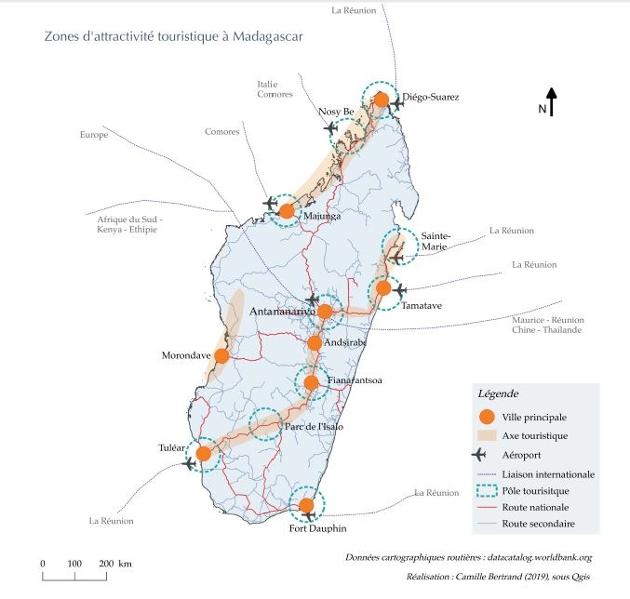
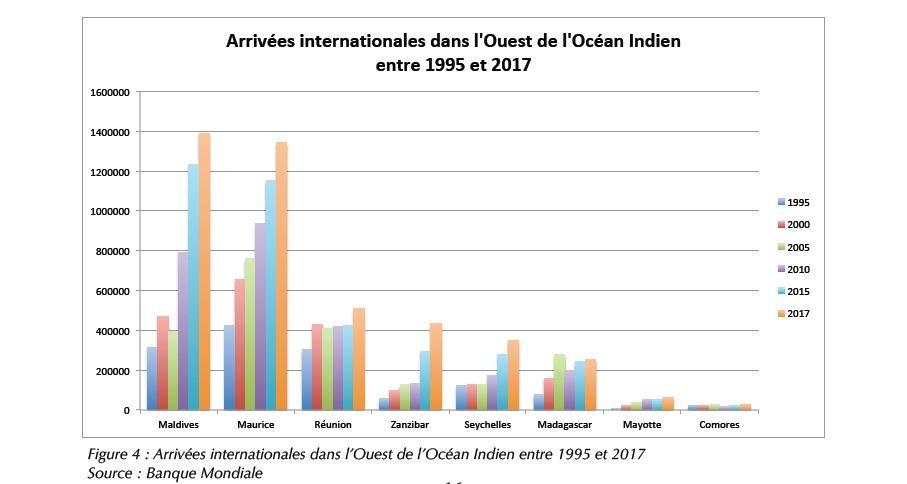
The ONTM, Madagascar's national tourism office, relies precisely on this asset to enhance and promote the country on an international scale, and uses the slogan "Madagascar treasure island" as a commercial argument. The island's advertising is framed through the lens of endemism, which is the primary argument used by travel agencies, the ONTM, or the tourism ministry. Local emblems are exploited to attract travelers and appeal to country stereotypes: the lemur and the whale symbolize faunal diversity and endemism, while the baobab illustrates flora endemism. Moreover, Madagascar appears as a very niche destination on a global scale—but also at the regional level of the western Indian Ocean—and is frequented primarily by knowledgeable European travelers. This geographic ensemble (Maldives, Zanzibar, Seychelles, Mayotte, Comoros, Madagascar, Réunion, Mauritius), unites these entities more by their location and proximity than by their similarities in tourism offerings or clientele. Western Indian Ocean tourism quadrupled between 1995 and 2017 (fig. 4), while global tourism slightly more than doubled. It is especially the beach destinations (Maldives, Mauritius, Zanzibar, or to a lesser extent the Seychelles) that experienced considerable growth. Madagascar and Réunion recorded less obvious increases and distinguish themselves from other destinations: they attract rather a clientele seeking nature tourism, adventure, and exploration.
Excerpt from Camille Bertrand's Master's 2 thesis, student at Sorbonne Université in Geography, Planning, Environment and Logic of Exchanges Master's program, specialization in Globalization, spatial dynamics and sustainable development in countries of the Global South.
Intern at Détours Madagascar - 2019. On overcoming obstacles to establishing and sustaining a structured tourism sector in Madagascar: changes in favor of a model conducive to local development?
© Détours Madagascar – June 5, 2020