Traditional Malagasy Wedding: A Fascinating Cultural Experience
Traditional marriage holds profound significance for the Malagasy people, and its procedures differ markedly from what we know in Europe. For a marriage to be complete, couples must wed both civilly and religiously.
Traditional marriage holds profound significance for the Malagasy people, and its procedures differ markedly from what we know in Europe. For a marriage to be complete, couples must wed both civilly and religiously. You'll discover that this culture is remarkably fascinating and will deepen your understanding of the Malagasy family.
Origins and Significance
The "vodiondry" is the traditional Malagasy name for marriage ceremony. Literally, it refers to a sheep's hindquarters—the very part offered to elders as a mark of respect. For the Malagasy, a marriage proposal is never directed solely at the young woman but equally to her entire assembled family. Courting a woman without first presenting the vodiondry is considered disrespectful by society. Requesting her hand in marriage is an act of respect toward both families.
The Proposal Process
Before the vodiondry, two preliminary steps must unfold: The first is the "fiantranoana" (entering the house). This is when the suitor meets the family of his intended to ask their permission to propose. Should they accept, the couple moves to the second step: the "fisehoana" (presentation). This marks the first official contact between the young man's family and the young woman's family. Both sides then agree on a date for the next stage of tradition. Historically, this date was set after consulting the "mpanandro" (astrologer), who determined the auspicious day based on the "vintana" (astrological signs) of the future bride and groom.
The Traditional Wedding Ceremony in Madagascar
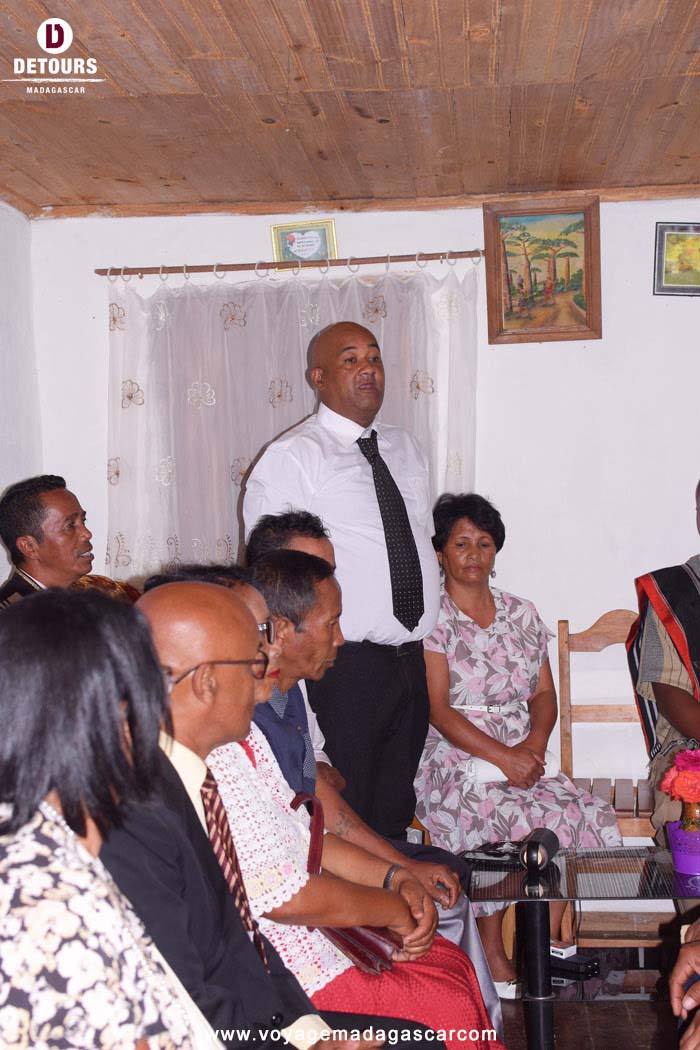
Once proposals have been made, the wedding itself unfolds. At its heart lies the "kabary"—an extended series of speeches that can last several hours, featuring two participants who function almost as adversaries, exchanging words according to ancestral codes. The first speaker represents the young man's family; the second, the young woman's family. The eloquence of these orators reflects the family's standing. The "kabary am-panamabadiana" (wedding discourse) is distinctive in that it enumerates the ancestors of both families to clarify any potential kinship ties and to honor each family's ancient lineage. The young man's family orator works to showcase the groom's qualities and his ancestors' worth, mustering compelling arguments to sway the future in-laws. The young woman's family orator, meanwhile, aims to demonstrate that her family holds equal value.
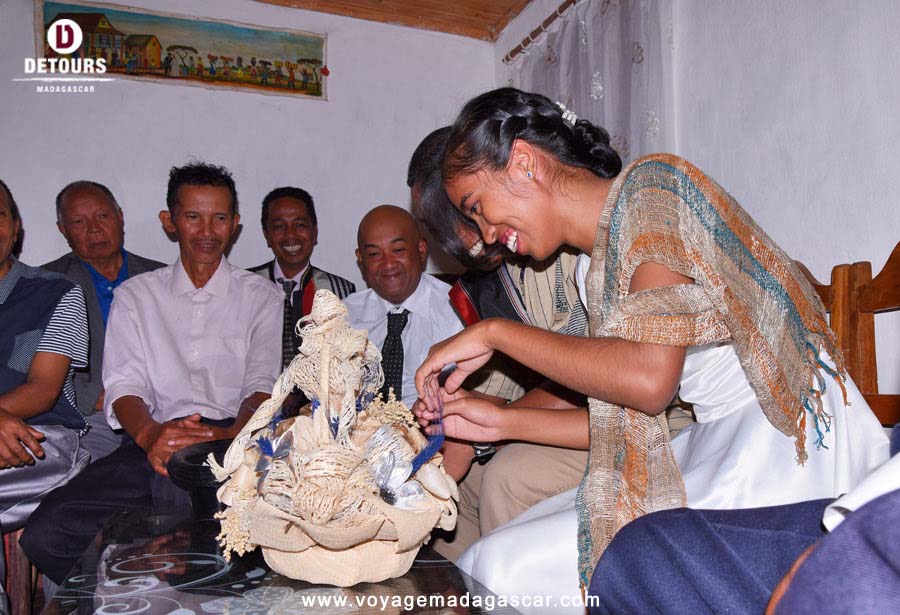
Throughout this rhetorical exchange, monetary gifts are presented to the young woman's family. At minimum, three envelopes are given (to parents, brothers, and uncles). This money does not signify selling the daughter but rather compensating for her absence, as she traditionally handles most domestic duties. To conclude this tradition and ease the tension after lengthy speeches, everyone gathers for a festive meal. Once the ceremony ends, the couple is considered married in the eyes of society, and the young woman may leave with her new family. Occasionally, the families fail to reach agreement, and the wedding is cancelled or postponed—a source of shame for the groom's family. It's worth noting that each ethnic group brings its own distinct touch to the ceremony.