Ravintsara: The X-Man of Plants
Ravintsara is experiencing international success thanks to its effectiveness as a natural remedy for flu and numerous other conditions. It is best known in the form of essential oil, but do you know its origins, identity, and virtues...?
Nov 27, 2018 — Ravintsara is experiencing international success thanks to its effectiveness as a natural remedy for flu and numerous other conditions. It is best known in the form of essential oil, but do you know its origins, identity, and virtues...?
A Camphor Tree That Underwent Natural Mutation
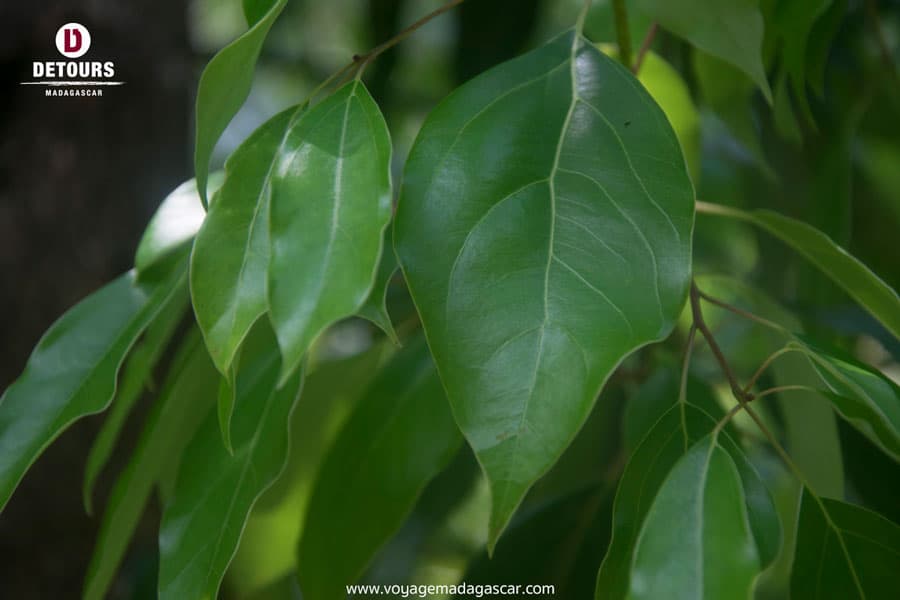
In reality, ravintsara or ravensara is a camphor tree from China, a Cinnamomum camphora introduced to Madagascar between the 16th and 17th centuries. The tree then underwent a mutation, eliminating camphor from its chemical composition. Researchers remain intrigued by this phenomenon they still cannot explain. Could the tree have undergone a cross with ravensara aromatica, another tree from the same family that has always existed on the island? It is worth noting that camphor trees from Japan contain 50% camphor, whereas the Malagasy camphor tree contains almost none. Ravintsara leaves are composed mainly of Cineole or Eucalyptol from the family of oxides, which explains its scent close to that of Eucalyptus. For reference, it takes 200 kg of leaves to extract 1 liter of essential oil. Note that ravintsara essential oil and ravensara essential oil are different. In any case, prioritize products bearing the Organic Farming (AB) label!
A Natural and Traditional Remedy in Madagascar
Ravensara or ravintsara (no distinction for Malagasy people) has always been used as a medicinal plant. In his work History of the Great Island of Madagascar published in 1658, French commander Étienne de Flancourt observes massive use of ravintsara by the Malagasy population as a traditional remedy. Its properties seem miraculous, as it is used to treat all sorts of ailments. Today, Malagasy households still use it to treat colds and flu. The leaves are boiled in water, then the steam is inhaled while wrapped in a blanket. This is called "hevoka." It is a powerful antiviral, but also an immune stimulant and decongestant. Bacteria, viruses, and fungi cannot resist it. While previously, ravintsara essential oil was not accessible to most Malagasy people because it was too expensive—between €10 and €12, or approximately 45,000 Ar—today it is more within reach at €3 to €4, or approximately 15,000 Ar.
Ravintsara Essential Oil: The Winter Superhero
In Europe, particularly in France, Ravintsara essential oil is becoming increasingly popular, especially in winter. Health professionals recognize the virtues of this oil and recommend its use. Its antiviral character was notably confirmed by the work of Jassim and Naji in 2003, while its anti-inflammatory and antioxidant virtues were demonstrated by a study conducted by Lee, Hyun, and Kim in 2006.
To treat flu, soak your hand and inhale the essential oil about ten times. Massage the essential oil on the inside of each forearm, the arch of the foot, and the lower spine. Apply 6 drops to each area to be massaged.
Here are the other conditions on which ravintsara essential oil can act:
- Cold sores
- Productive bronchitis with wet cough, rhinopharyngitis, etc.
- Otitis
- Sinusitis
- Gastroenteritis
- Anxiety and worry
- Asthenia (and mental fatigue)
- Concentration
- Seasonal blues
- Boils
- Varicose veins
Charlène Nomadays — An early SEO writer at Nomadays who became content manager and head of the communications division, Charlène has accompanied the adventure from its inception with passion and loyalty. After spending seven years in Asia—from China to Thailand, passing through Mongolia and South Korea—she has made travel a way of being in the world. A lover of words, nature, and human connection, she strives to convey in her writing a sensitive, committed, and responsible vision of tourism. Each article is for her a bridge between curiosity, respect, and wonder.