The Road to the Tsingy of Bemaraha, According to Olive
The 'tsingy of Bemaraha' is both the landing ground of the island's first inhabitants and shifting geological formations that have intensified over the long span of time. They
The "tsingy of Bemaraha" is both the ancestral ground of Madagascar's first inhabitants and a geological formation shaped across deep time that has grown more dramatic over the centuries. Today they stand as an immutable forest of limestone spikes, their expanse so breathtaking that you feel yourself insignificant before their magnitude. Come with me—I'll take you there.
June arrives, and Madagascar has shaken off the rains. Now is the moment we've been waiting for, our hearts full of hope. We're determined to reach the tsingy of Bemaraha, departing from Antananarivo, passing through Morondava.
From Morondava, we set out at first light. Eight hours of expedition in a 4x4 before arriving at Bekopaka, an unassuming village in the middle of nowhere, guardian of the "tsingy"—those vast limestone deposits of marine origin dating back two hundred million years.
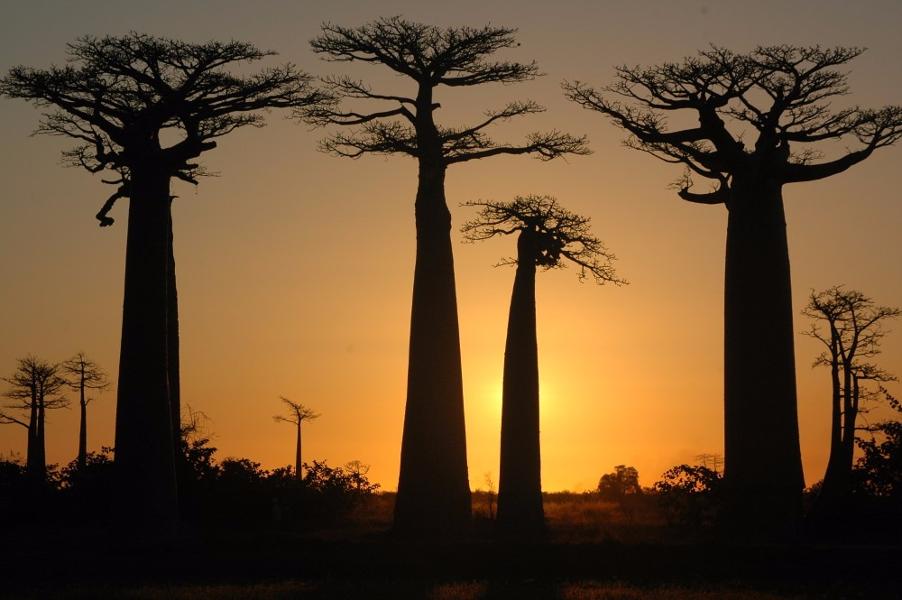
The bumps of red earth roads lull us along the avenue of the baobabs, still hidden in thick morning mists, their roots exposed to the sky, revealing themselves gradually and feeding our curiosity about these giant trees. We'll see them better on our return from the tsingy when we walk this avenue to photograph and capture the magnificent sunset that casts its orange glow across the baobabs.
Crossing the arid landscapes of the Menabe region on a mix of earth, gray sand, and white gravel crushed by vehicles, we encounter men searching for pasture for their zebu or goats. Most stop to watch us pass, their eyes following until we disappear from view.
Nearly halfway through the morning, we discover the first village in the Center West of the Menabe region: Tsimafana. We barely make out a few houses constructed of falafa, the building material of homes in preserved villages along Madagascar's coasts, obtained from surrounding trees and sometimes their foliage.
It's surprising how active such a small place can be: large cargo trucks park along both sides of the road, men accustomed to the scorching sun move about bareheaded and walk across burning sand on bare feet. They bustle about, unloading heavy sacks of rice from the trucks and other goods, waiting for the public chaland that will transport them to Belo on Tsiribihina or even Bekopaka.
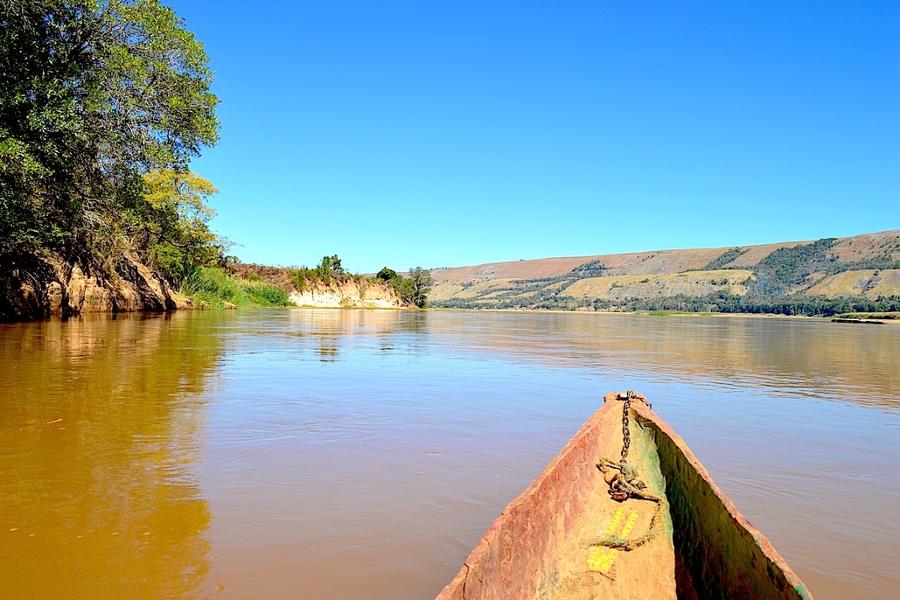
For us, this is the departure point to board the first ferry that can hold about four vehicles with their passengers. We climb aboard, proud of the distance we've covered and eager to discover this opulent territory of the Tsiribihina River. In the distance, we glimpse rice paddies submerged in water, identifiable by the tips of rice stalks appearing at the surface.
Impressive flocks of birds punctuate the journey.
We reach Belo on Tsiribihina and stop for an excellent lunch at Mad Zebu's gastronomic restaurant—it's remarkable to find such fine dining in such a remote location! They serve zebu meat in all its forms: fillet, tartare, schnitzel. After all, there's no shortage of zebu in this region.
We walk through the entire settlement of Belo on Tsiribihina and gradually lose sight of the solid houses that reminded us of civilization. The arid landscape of the West catches up with us just as quickly.
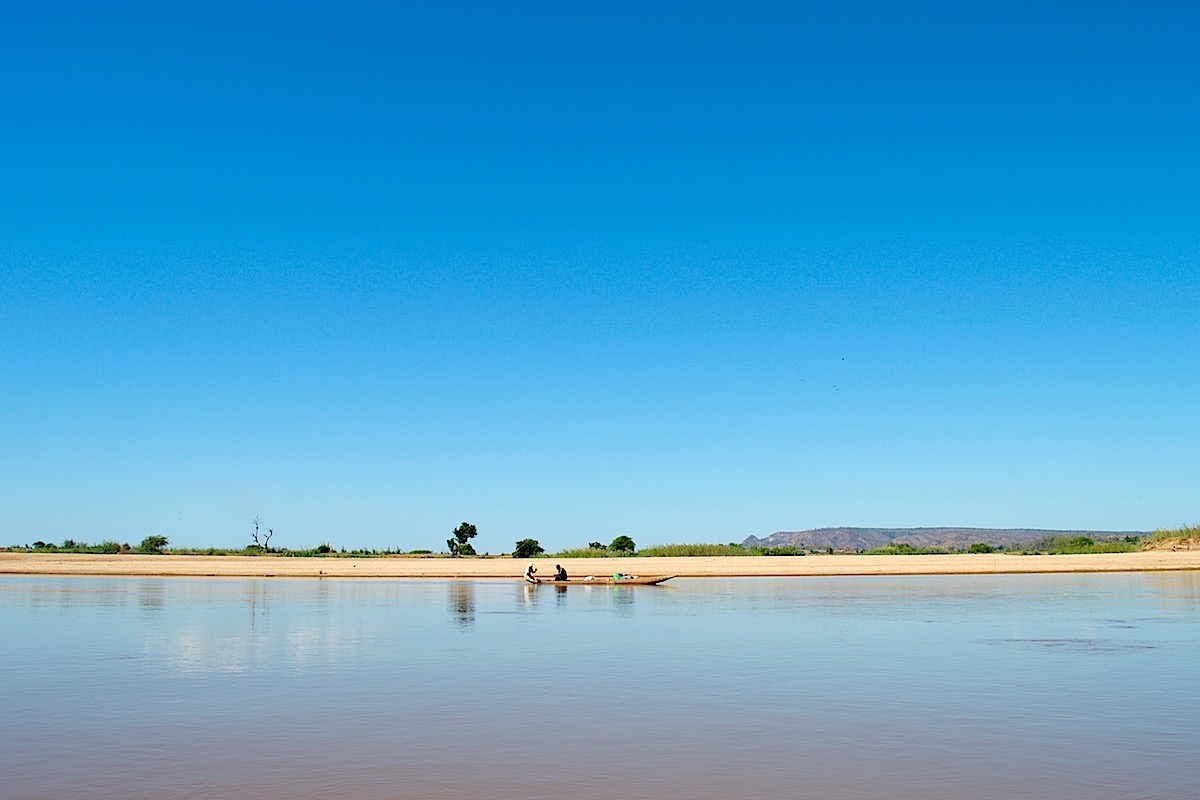
To reach the entrance of Bekopaka, we board the second ferry on the Manambolo River. The beauty of the landscape is so stunning it could hold us longer on this river and stop time itself. Towering cliffs surround us—this intoxicating discovery, these grand vistas, and that peculiar sensation of traversing such immensity are well worth the journey.
One night in an ecolodge, and we're in the tsingy of Bemaraha…
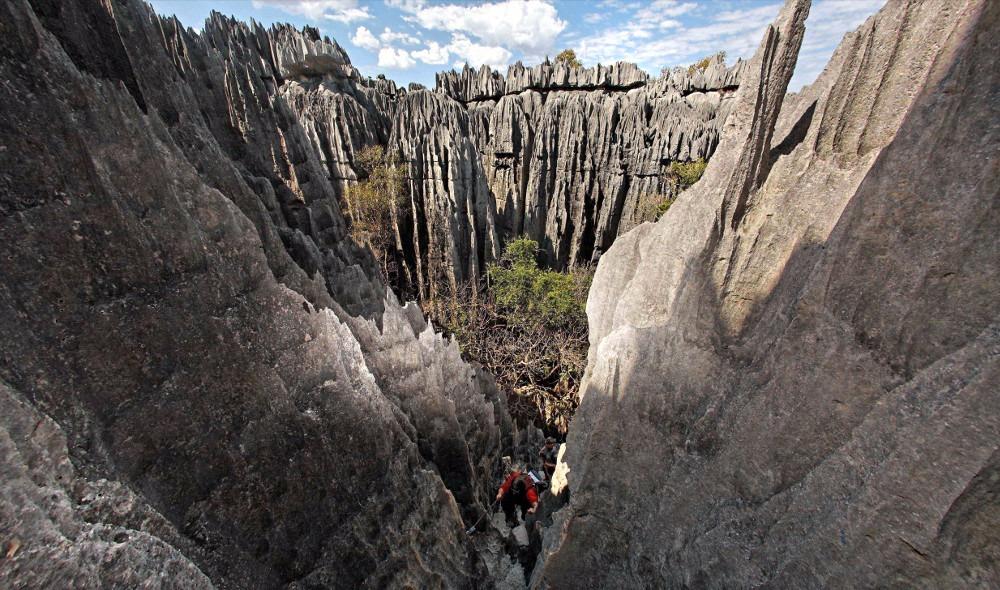
We begin exploring this place full of mystery: first, the challenge is to navigate the trails in search of lemurs inhabiting this remarkable geological formation, then to slip between the roots of the tsingy, and finally to climb gradually and reach the summits that offer breathtaking views where everything seems to seize hold of you.
In certain areas within the tsingy, pachypodiums and baobabs are present, and they sometimes even reach the height of the tsingy spikes.
In Malagasy, "mi-tsingy" is the verb meaning "to walk on tiptoes," used to describe going somewhere with caution. Indeed, we have managed to access this cradle of Madagascar's prehistoric inhabitants, but moving through the caves where our torches served as invaluable guides through the rocky crevasses is not easy. Yet the sublime spectacle of this stone cathedral more than rewards our efforts.
The tsingy challenge us for roughly four hours filled with emotion and fascination. Like a child following in the steps of its parents, we follow our guide, often trying to catch up since we spend most of our time taking photographs. We reach the summit after crossing a suspended bridge towering more than fifty meters above the ground. And there we stand before the vast expanse of tsingy, our objective achieved, gazing with nostalgia upon the entire journey we have undertaken, struck by the sheer enormity of it all.
Olive Ramarozatovo
Read also > Tsingy, Like the Edge of a Blade…