Sahambavy: Madagascar's Unique Tea Plantation...
Malagasy people are not major tea drinkers, and that's why just 20% of Sahambavy's tea production is enough for the entire country. A single plantation, yet Malagasy tea is of excellent quality and exports well!
Malagasy people are not major tea drinkers, and that's why just 20% of Sahambavy's tea production is enough for the entire country. A single plantation, yet Malagasy tea is of excellent quality and exports exceptionally well! In any case, a visit to this tea estate constitutes a magnificent experience during a trip to Madagascar!
A verdant corner some twenty kilometers from Fianarantsoa
Like most places of great beauty in Madagascar, access is not easy: an earth track of 20 km east of Fianarantsoa! It may not be a road for the extreme, but it's the kind of road that only experienced drivers can navigate.
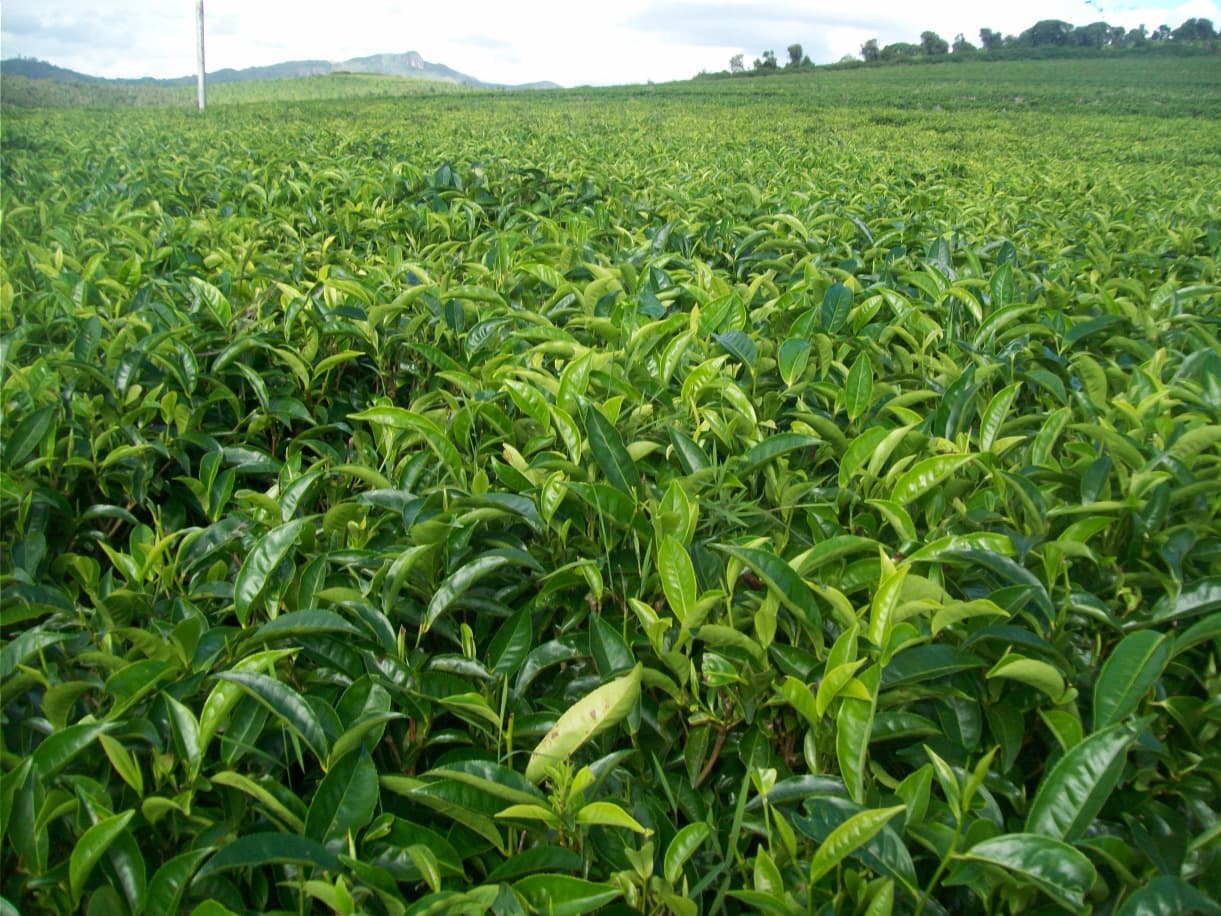
In any case, the drivers of trucks transporting tea are impressive! As you approach the tea estate, the landscape changes abruptly, shifting from scrubland to verdant valleys that seem to undulate like the sea!
In the midst of this greenery: A factory overlooking a lovely small lake bordered by the stilted rooms of Lac Hotel. The main attraction, however, remains the hundreds of hectares of brilliantly green tea fields! The backdrop is equally magnificent: valleys covered with pine forests, reminiscent of the Landes in southwestern France.
A distinctive tea production hub
It seems incredible to think that no one had seriously considered tea cultivation in Madagascar before the 1970s. Yet the first attempts to transplant tea cuttings (originating from Kenya) were made only in 1970, at Sahambavy of course. The Malagasy State established the first tea processing factory there in 1978. The company became private in 1996 when Mauritian investors purchased two-thirds of the capital.
Here, 20 tons of tea leaves are hand-picked daily! Approximately 250 women work at this task, each harvesting between 50 to 100 kg for a wage of around 2 euros. Sahambavy, which means "the women's field" in Malagasy, certainly lives up to its name! The leaves are then spread on large horizontal drying racks for withering. In the factory, tea undergoes several stages:
· Crushing / rolling
· Fermentation (oxidation)
· Drying / roasting
· Sieving then packaging
80% of production is exported to Kenya, to Mombasa, one of the world's largest tea markets.
A tea of character
During sieving, the tea passes through and is sorted using large mechanized sieves. Electrostatic defibrillation allows the grades (types) to be distinguished, namely Dust, Pekoedust, Pekoefannings, BrokenPekoe. The air is infused with the pronounced astringency and sharp acidity of Sahambavy tea! In the factory, the aroma is heady!
If you're eager to taste it, you'll have the chance at the end of the tour. Be warned, however! This is a robust tea, quite similar to English tea! A little milk and sugar will soften the flavor. For a smoother and more balanced tea, reach for Madagascar vanilla tea!