The Vezo, Nomads of the Sea, Genealogy Spanning Ten Generations
Only after performing the fombafomba, a sacred ritual of the region celebrated with toka gasy, does the village elder, aged 85, agree to speak of the Vezo. Tradition forbids, within this community, evoking the firazanana (lineages) without making offerings to the ancestors. It is best not to offend them and not to awaken the spirits. The Vezo of the Andavadoaka region descend from six clans of this ethnic group.
March 1, 2018
Only after performing the fombafomba, a sacred ritual of the region celebrated with toka gasy, does the village elder, aged 85, agree to speak of the Vezo. Tradition forbids, within this community, evoking the firazanana (lineages) without making offerings to the ancestors. It is best not to offend them and not to awaken the spirits. The Vezo of the Andavadoaka region descend from six clans of this ethnic group: the Tsimamaoke Bolotsoke, the Namanoa, the Marofobe Kimija, the Omalagny Bekiho, and the Tsihole.
Through successive migrations, beginning from Anjero Manombo, located in the western part of the Atsimo-Andrefana region, they eventually chose to settle in Andamotibe. Essentially, the inhabitants of this village are descended from these clans, established there for six generations.
Their deep connection to these lands has granted them an intimate mastery of their environment. Thus they instinctively locate their fishing grounds far out at sea without ever losing their way. No compass needed, and certainly no meteorological instruments. They first trust their knowledge, built on the wisdom of their elders and their own lived experience with the ocean. The breath of the wind, the horizon and the shifting light of the sky, the coral, the reefs, the position of the stars, the movement of the sea and the subtle variations of its colors—all of these are precious pieces of information for the safety of their boats and the success of their catch.
The Vezo (men, women, and children) are regarded as Madagascar's finest fishers. They are capable of holding their breath for long minutes, diving to depths of dozens of meters below the surface. In Andavadoaka, the fishers do not use bottles when harvesting janga—sea cucumbers—from the seabed, hunting sea turtles, or catching octopuses and lobsters.
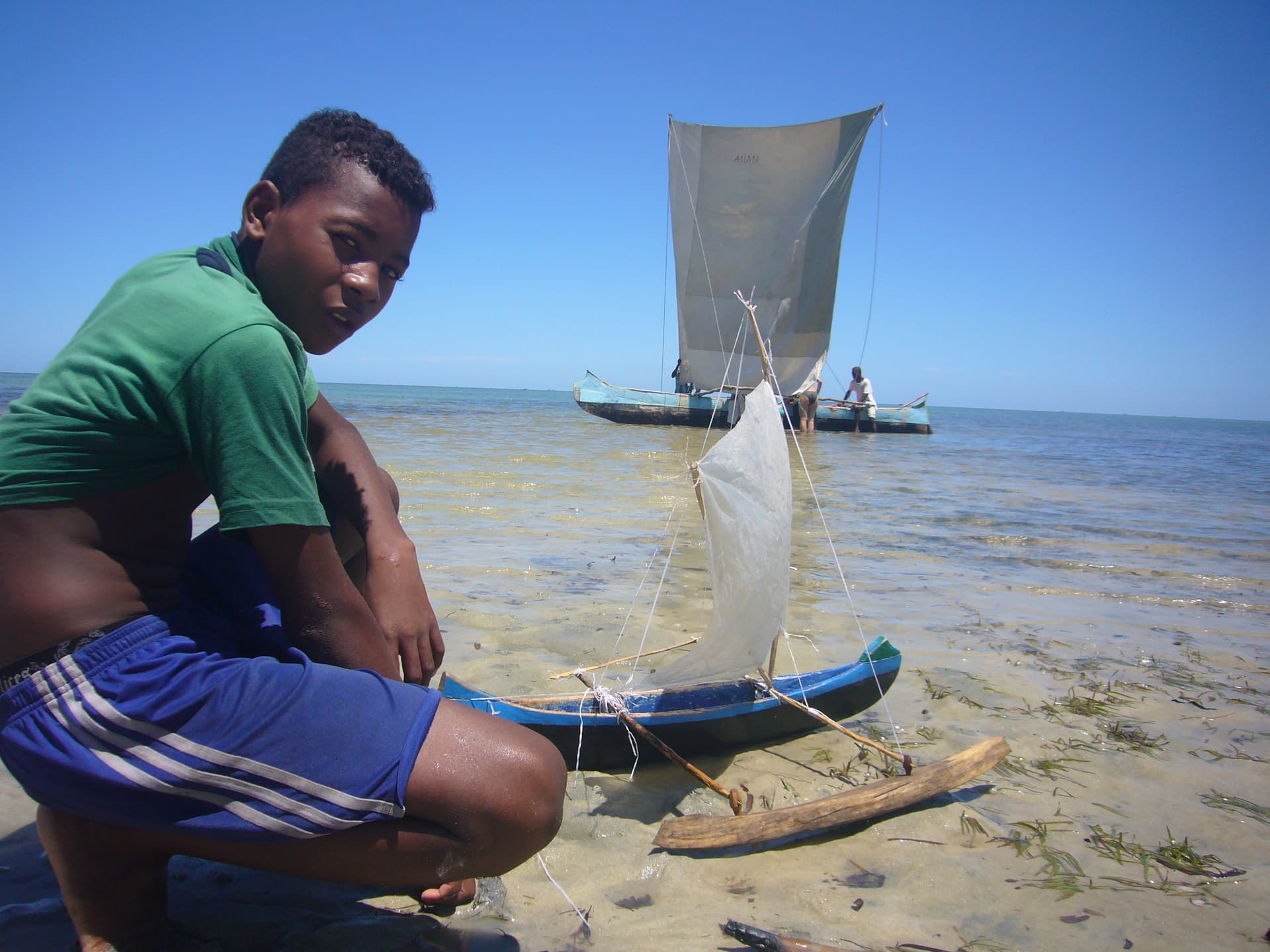
The Vezo practice all forms of fishing, both on foot and from pirogues. In their boats, which they construct from a special wood called farafatse, they depart with masks, harpoons, nets, and hooks. For the Vezo, the sea is their life-giving mother. She holds the power of life and death over them. In their tradition, she punishes those who do not respect their customs. Their relationship with the sea is forged from birth. The remnants of the umbilical cord are placed inside a shell, which is then cast into the sea as an offering to seal the newborn's destiny. Vezo children learn the techniques of fishing from a very young age. By age five, they begin learning navigation with miniature sailing pirogues. They also fish from small boats two meters long, gradually familiarizing themselves with the various methods of catching fish. Later, they will choose to become mpagniriky (divers) or fishers working from their own pirogues.
Resources on the Brink of Extinction. In 2000, 9,000 tons of wild shrimp were harvested from the ocean. By 2008, this had plummeted to just 3,000 tons. This collapse is the result of overfishing, which also affects fish stocks. European and Asian factory ships divide the open ocean among themselves. The near-complete absence of Malagasy coastguards allows them to encroach upon the 350-kilometer coastal zone reserved, under international law, for the coastal state. Traditional fishers, who account for between 70 and 80 percent of national production, also contribute to the deteriorating situation. Both offshore and along the coast, predatory fishing practices condemn the country's marine resources, to the detriment of some 500,000 people whose livelihoods depend upon them.
Bernard CONCHON — Détours Madagascar
The Vezo, called the nomads of the sea, form a people of Madagascar who once inhabited the entire southwest coast of the Great Island. They live essentially from fishing. The Vezo are one of the country's last nomadic ethnicities.