Baobab Derived Products
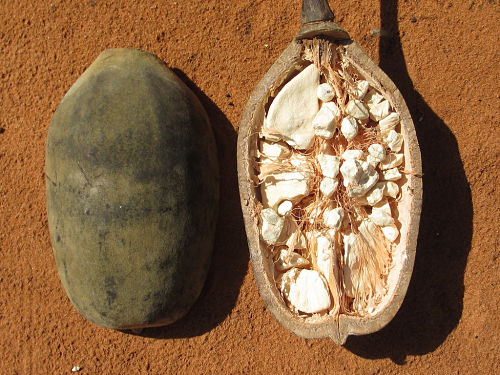
The baobab produces a fruit with a tangy taste, highly nutritious! It can be made into jam, nectar, powder for use in pastry-making, and more. Thanks to exceptional levels of vitamin C, potassium and fiber, baobab fruit is exploited on a large scale in nutrition and cosmetics.
The baobab produces a fruit with a tangy taste, highly nutritious! It can be made into jam, nectar, powder for use in pastry-making, and more. Thanks to exceptional levels of vitamin C, potassium and fiber, baobab fruit is exploited on a large scale in nutrition and cosmetics.
Madagascar, the country best endowed with baobabs, has yet to harness this treasure trove, so this superfruit is becoming increasingly famous worldwide, even reaching as far as Hollywood! The seeds from which oil is extracted, the leaves, flowers and bark can also be put to use!
Do you know the baobab?
The baobab is a tree of the genus adansonia, distributed across 8 species, one of which is found throughout Africa and another is endemic to northwestern Australia. The remaining 6 species are endemic to Madagascar. Here, this majestic tree is called reniala, meaning "mother of the forest".
The Avenue of the Baobabs
The baobab is one of the emblems of Madagascar's flora, found especially in the western part of the island. Inland, by the sea or along a river, baobabs create splendid landscapes. The most famous remains the Avenue of the Baobabs, composed of a dozen trees around thirty meters tall, located 19 km from Morondava.
Baobabs lining the rivers
The best way to admire baobabs in Madagascar is to take a river trek on the Mangoky or the Tsiribihina. Ridges, canyons, and dry forests are also waiting to be discovered! The experience is simply magical!
What is the baobab used for?
The baobab has always fascinated the Malagasy people, who regard it as a special tree, turned upside down by God: roots in the air! In certain regions of the island, the reniala is an object of veneration, particularly in the village of Andombiry, in the southwest of the island (Morombe region). It also serves many purposes!
Water reservoir
In the south of the country, on the Mahafaly plateau, villagers in Ampotaka use the trunks as water reservoirs to cope with the dry season.
Materials and medicines
It makes sense that baobab wood would serve a purpose too: for making walls and tiles, and so forth. The bark, leaves, roots, seeds and flowers are used in traditional medicine. The fruit is what holds the most interest…
Is baobab edible?
The pulp of baobab fruit is a superfood! It contains 6 times more vitamin C than an orange, 6 times more potassium than a banana, 3 times more vitamin C than a kiwi, and 10 times more antioxidants than goji berries! 100 g of baobab fruit powder contains 162 kcal, 1 g of fat, 44 g of fiber and 42 g of carbohydrates.
The fruit in all its forms
The fruit in its natural state has a tangy and slightly sweet taste. You can consume it as is by sucking on it. Children are particularly fond of it! The pulp can be used to make baobab nectar, baobab jam (taste reminiscent of coconut milk), concentrated baobab pulp, and more. Transformed into powder, it can be used to make baobab juice or baobab smoothies!
Baobab oil
The seed is also edible and proves to be very oily! You can tell this by biting into it raw. It can therefore produce oil from baobab seeds. This oil possesses nourishing, regenerating, softening and soothing properties. It is yellow in color with a fluid and silky texture. The smell and taste are reminiscent of walnut. It is also anti-allergenic and anti-inflammatory.
Baobab honey
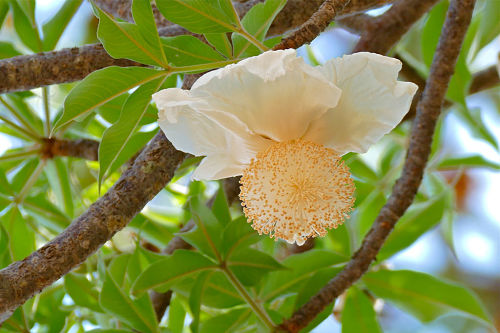
When bees draw their nectar from baobab flowers (a variety of small baobabs), the resulting honey is rare and highly fragrant! This medium-strong and refined honey is dark in color, reminiscent of chestnut honey and maple syrup!
see also > https://www.voyagemadagascar.com/les-baobabs-de-madagascar-arbres-emblematiques-et-mythiques/