Tsimanampetsotsa National Park
Tsimanampetsotsa National Park
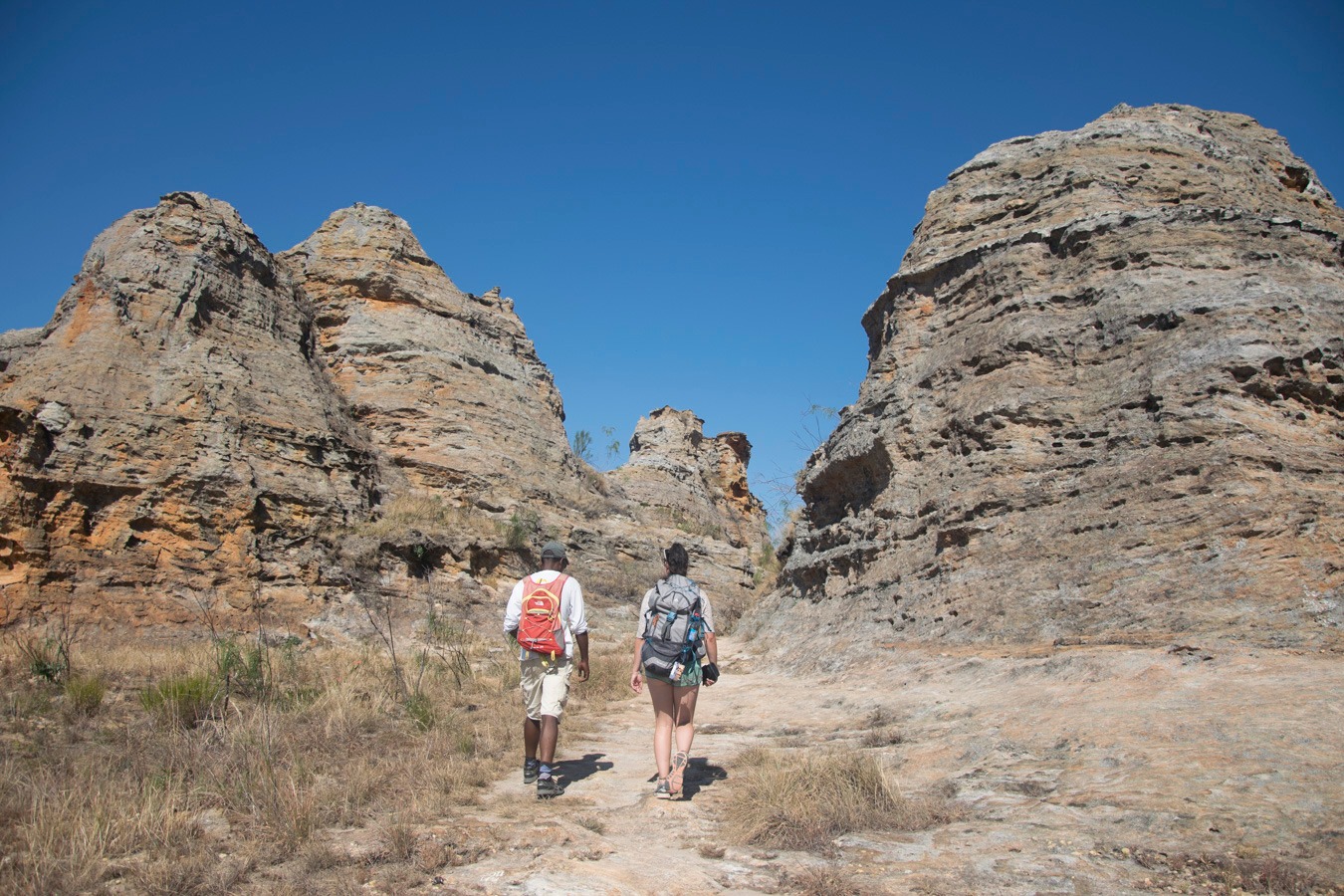
Salt lake with shifting hues, thorny forest on limestone plateau and submerged caves: Tsimanampetsotsa concentrates the endemic biodiversity of southern Madagascar.
Tsimanampetsotsa National Park spans approximately 230,740 hectares in southwestern Madagascar, encompassing thorny forest, the limestone Mahafaly plateau, a salt lake, and underground caves. Designated a RAMSAR site in 1998, it ranks among the largest protected areas on the island and harbors remarkable endemic biodiversity, notably its Grandidier's mongoose found nowhere else on Earth.
Why visit Tsimanampetsotsa Park
Tsimanampetsotsa brings together three rarely combined ecosystems in a single territory: a shallow salt lake, a dry xerophile forest on limestone plateau, and a network of submerged caves. This diversity shelters species absent from the more visited parks of the north and east, in a rawer setting still relatively untouched by tourism.
The park particularly appeals to travelers interested in:
- Bird watching, with 112 recorded bird species including several endemic to southern Madagascar
- Thorny forest landscapes populated with baobabs and pachypodiums
- Karst geology, its sinkholes and submerged caves
- Discreet but distinctive mammal fauna specific to the Mahafaly plateau
What to see in the park
Tsimanampetsotsa Lake
Madagascar's fifth-largest lake, it measures roughly 15 km long by 2.5 km wide with a depth of only 2 meters. Its surface area fluctuates between 1,600 and 2,900 hectares depending on the season. The high concentration of calcium sulfate and white clay causes its color to shift throughout a single day: milky white in the morning, it transitions to turquoise blue then topaz green. The name Tsimanampetsotsa literally means "without dolphin," alluding to the fact that no fish can survive in its brackish waters.
Flamingos and birdlife
From April through November, during the dry season, flocks of greater and lesser flamingos nest on the lake's shores. Ornithologists also observe several endemic species here:
- Verreaux's Coua
- Archbold's Newtonia
- Madagascar Plover
- Lafresnaye's Vanga
Lemurs and reptiles
Four lemur species inhabit the park, including the ring-tailed lemur (maki) and Verreaux's sifaka. On the reptile front, 39 species have been recorded, among them the radiated tortoise (Geochelone radiata), endemic to southern Madagascar and threatened with extinction. The Grandidier's mongoose (Galidictis grandidieri), a mammal found strictly within this park, stands as one of its scientific emblems.
Submerged caves
Three submerged caves, formed by limestone plateau collapse, harbor blind cave fish (Typhleotis madagascariensis) that evolved in total darkness within the underground network. In October 2014, a paleontology expedition uncovered the island's largest fossil deposit within a cave here, drawing attention from the international scientific community ever since.
Xerophile flora
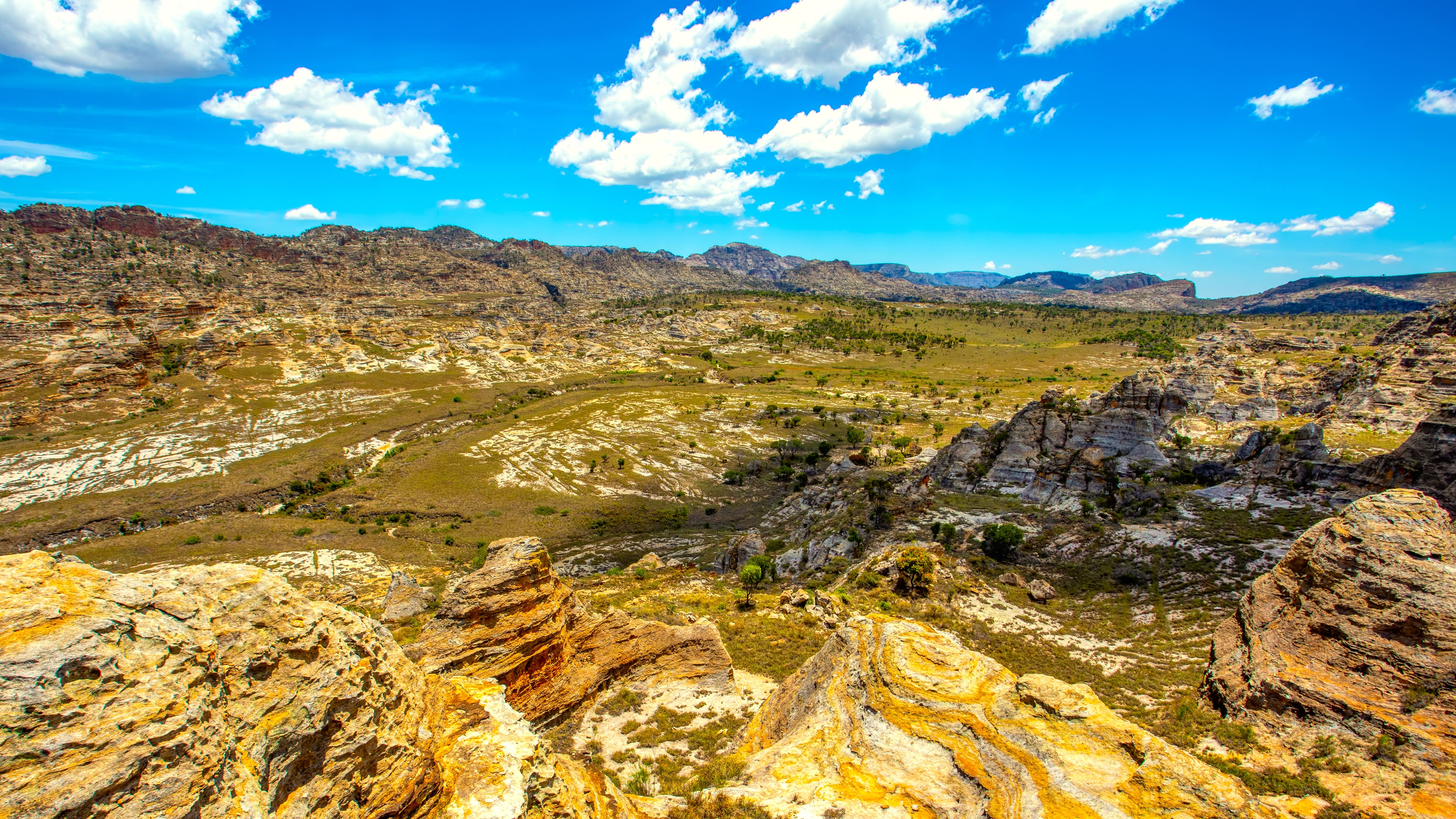
Across the limestone plateau spreads a dense xerophile forest adapted to aridity, populated with baobabs (principally Adansonia rubrostipa), pachypodiums, and euphorbias typical of southern Madagascar.
When to visit Tsimanampetsotsa
The climate is semi-arid, with 7 to 9 months of dry season, annual rainfall around 300 mm, and average temperature of 23 °C. The best period runs from April through November:
- April to June: mild temperatures, landscapes still verdant after rare rains, flamingo arrival
- July to September: peak dry season, optimal waterbird observation and ideal trekking conditions on the plateau
- October to November: increasing heat but final favorable months before the rainy season
From December to March, access roads become difficult or impassable after showers.
Practical information
- Duration of visit: plan one to two days to explore the main circuits (lake, caves, thorny forest)
- Guide required: hiring an authorized local guide from Madagascar National Parks is mandatory at park entrance
- Difficulty level: easy to moderate walking on sometimes sharp limestone terrain; sturdy closed-toe shoes essential
- What to bring: plenty of water (few water sources), hat, sunscreen, binoculars for bird watching
- Accommodation: equipped campsite near park entrance, basic lodges in Efoetse and Ambola
Entrance and guide fees are updated regularly; check with Madagascar National Parks or your agency before departure.
How to get there
Tsimanampetsotsa lies in southwestern Madagascar, approximately 85 km south of Toliara (Tuléar). Access is exclusively by 4x4 via the coastal track passing through Saint-Augustin, Anakao, and Beheloka. Allow 5 to 7 hours of driving from Toliara depending on track conditions, particularly challenging after rains.
Toliara connects to Antananarivo via Route 7 (approximately 950 km, multiple days with stops) or by domestic flight. Most travelers incorporate Tsimanampetsotsa into a combined southern circuit with Anakao, Andohahela Park, or the baobab route.
Nearby and beyond
Southern Madagascar offers several natural extensions to a Tsimanampetsotsa visit. Along the route between Antananarivo and Toliara, the Andringitra massif offers high mountain landscapes contrasting with the southern limestone plateau. Further east, the Ranomafana National Park allows complementary lemur observation in humid forest.
On the Highlands, meeting the Zafimaniry artisans and their hand-carved wooden houses adds cultural dimension to the circuit. Near Antananarivo, Lemurs' Park offers an introduction to lemurs before or after wild park visits.
Frequently asked questions
Frequently asked questions
The high concentration of calcium sulfate and white clay on the bottom, combined with sunlight and wind stirring the sediments, causes the lake to shift from white to turquoise blue then topaz green over the course of a single day.
No. Greater and lesser flamingos nest primarily during the dry season from April through November. During the rainy season, they disperse to other wetlands.
Yes. As in all parks managed by Madagascar National Parks, an authorized guide is required. They ensure safety, orientation on the limestone plateau, and species identification.
April through November, during the dry season. Tracks are passable, temperatures are manageable, and flamingos are present on the lake.
One to two days suffice to explore the main circuits: lake tour, bird watching, cave visits, and thorny forest trekking.
Incorporating Tsimanampetsotsa into your journey
The park lends itself particularly well to customized circuits in southern Madagascar, combined with Anakao, Isalo, or the baobab route. To build your itinerary and select the best season according to your interests, consult our Madagascar travel suggestions.
Interested in this visit?
We can include it in your personalised itinerary.