Madagascar's Vanilla: A Precious Commodity in Peril
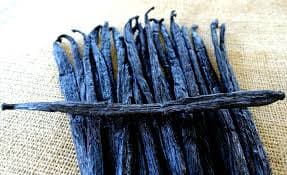
Vanilla is a highly prized spice widely used in the food industry (to flavor food products) and the cosmetics industry (for fragrance development), otherwise known as black gold.
Vanilla is a highly prized spice widely used in the food industry (to flavor food products) and the cosmetics industry (for fragrance development), otherwise known as black gold.
Vanilla is greatly appreciated by pastry chefs and chefs around the world for its taste and aroma, especially the variety from Madagascar. It is indeed possible to discover this spice during your trip to Madagascar : visit the plantations of SAVA or Nosy-Be, taste dishes flavored with vanilla…
It is one of the symbols of the Big Island, introduced in 1871 through Réunion planters. The SAVA region alone accounts for nearly 80% of global production! Yet experts and observers agree that Madagascar's vanilla is in danger!
The flagship export product of the Big Island
Vanilla is very important to Madagascar, as it sustains more than 80,000 planters, producing over 80% of the world's vanilla, representing 5% of Madagascar's GDP. A decline in vanilla exports and prices devalues the local currency, the Ariary. The SAVA region (including 4 localities: Sambava, Antalaha, Vohémar, and Andapa) has approximately 65,000 hectares of plantations on its own. It is in this northeastern part of the country that the majority of Madagascar's vanilla is produced: around 1,500 tons per year!
A lengthy, complex, and struggling production process
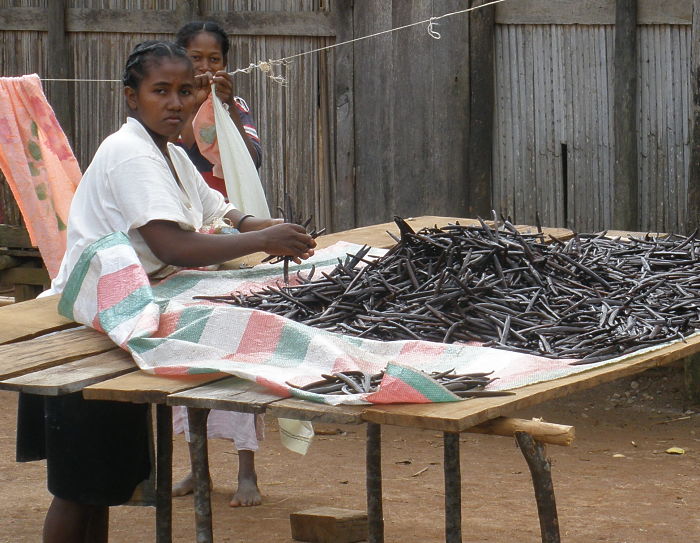
Vanilla production is lengthy and difficult, as pollination requires human intervention and the transformation of fruits into spice is time-consuming. To give you an idea of the vanilla production stages, here is a summary:
- Vanilla is a tropical vine orchid grown along tree trunks (understory cultivation)
- The flower is hand-pollinated
- Mature, odorless fruits are harvested and plunged into 65°C water (blanching)
- The pods are immediately placed between wool blankets in large boxes (sweating)
- Vanilla is dried in a 65°C oven, then in the sun, and finally in the shade (drying for two to six weeks)
- Vanilla is aged for 8 months in wooden chests to develop aroma (boxing)
- The spices are finally graded and packaged
Unstable prices and quality
The price per kilogram has experienced significant fluctuations, ranging from nearly $500 in 2004, dropping to $50 in 2012-2013, and rebounding to $600 (€485) in 2017. However, the price should not exceed $200 for the sector to survive, according to exporters. The main reason for these increases is the passage of powerful tropical cyclones: Gafilo in March 2004 and Enawo in March 2017. Not to mention theft and money laundering, which further strain the sector! As planters try to catch up on production, they harvest immature fruits and shorten aging, degrading the quality of vanilla produced!
Fierce competition
To make matters worse, this decline in quality opens the door to competition! Other countries are capitalizing on the European Union's enthusiasm for organic and premium products. Indonesia has been able to capture 5% of global production, Uganda 4%, Papua New Guinea 3%, and India 2%. The greatest threat remains synthetic vanillin, the aromatic molecule of vanilla synthesized industrially and offered at $12 per kilogram. From the Chinese: vanillin produced through a bio-fermentation process, using natural raw materials (potato, beet, etc.). It is marketed at $50 per kilogram.
An uncertain future
So-called "Bourbon" vanilla remains highly appreciated by world-renowned chefs, particularly in France. This label accompanies vanilla from Madagascar, the islands of Réunion, Mauritius, and the Comoros. It is perfectly organic and suits the European market as long as quality is maintained. Madagascar's authorities and sector operators will need to unite to find a sustainable way to protect plantations and crops during cyclone season. Theft and money laundering must also be combated! Concrete actions, drastic changes, and considerable effort will be needed to save this sector!