The Aloalo, an Essential Component of Mahafaly Culture
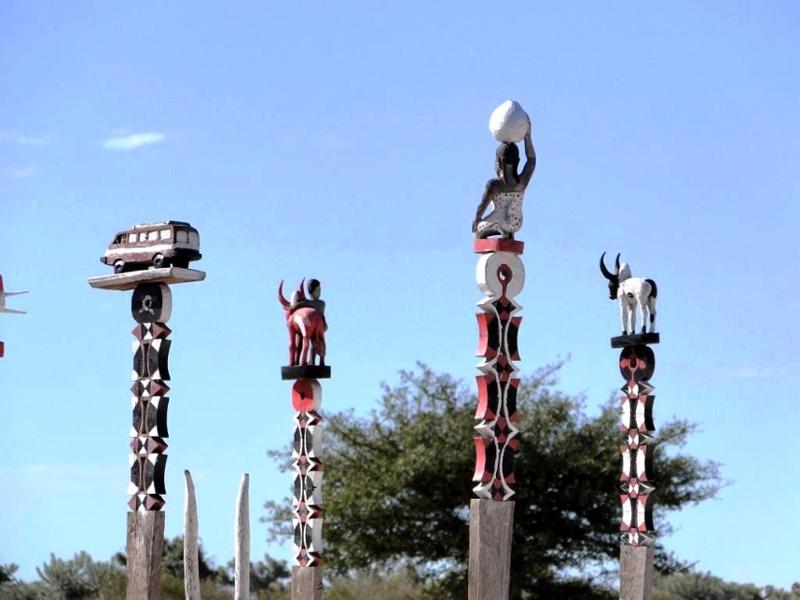
Aloalos are richly carved wooden totems adorning the tombs of the Mahafaly people in the southwest of the Great Island. They can be found notably along RN10 during an extensive journey to southern
Aloalos are richly carved wooden totems adorning the tombs of the Mahafaly people in the southwest of the Great Island. They can be found notably along RN10 during an extensive journey to extreme southern Madagascar. They hold great significance in local beliefs and culture beyond their artistic appeal!
An Exceptional Funerary Art
Indeed, the aloalo is a funerary art, but an art that is not for everyone! The creation of these carved and painted funerary poles is reserved for a select few who pass their expertise from father to son. Since families are not permitted to craft their own totems, each family or tribe retains a dedicated craftsman. This artisan works far from the village and dwellings, particularly in the forest, using "nendoravy," a wood also used for coffin-making. This is a rare and dense wood.
The ritual object measures approximately 2 meters and is divided into two sections: a lower portion composed of geometric patterns ending with a full moon design, the "volamiratse," and an upper portion consisting of sculptured zebu, women, buses, and more representing the wealth of the deceased. The motifs and iconographic elements are highly symbolic: a pair of birds representing love and loyalty, law enforcers representing justice and righteousness, warriors symbolizing sovereignty and devotion, and so forth. All of this represents the life and journey of the person.
The name Efiaimbelo (1925-2006), aloalo sculptor, became renowned for breathing new life into the art form by introducing more vibrant colors using acrylic and oil paint, as well as contemporary elements. His works were first exhibited at the Perrotin Gallery in New York in 2018. Many other museums and galleries worldwide have since showcased aloalos as icons of Malagasy culture. However, according to Mahafaly tradition, this ritual object truly belongs only in burial grounds.
A Facet of Mahafaly Culture
The aloalo represents death and must remain removed from the living. The burial sites are even forbidden from access except during burials or in cases where herds have strayed there. Otherwise, strict rituals must be observed. The ones visible along national roads were originally located in forests, but roads had to be built to facilitate travel. Some Mahafaly saw this as an opportunity to display their status to the world! If you wish to see them during your journey to Madagascar, be sure to include in your itinerary the Ifotaka forest, the Ilakaka region of the Mahafaly, and Betioky.
These totems were originally reserved for kings and queens to symbolize their nobility, but today anyone can use them to display their wealth. The more totems a tomb possesses, the higher the status of the deceased. Additional elements enhance these displays of wealth, notably zebu horns, whose number corresponds to the livestock the deceased owned. In fact, all must be consumed during the funeral rites.
The very forms of the tombs are exceptional, ranging from simple vaults to palatial structures, even airplanes and boats. One must understand that these tombs are the eternal dwellings of the deceased, where they will live forever. It is only fitting that they be grandiose, especially as they become ancestors, a razana, whom the living venerate. According to Malagasy belief, ancestors serve as intermediaries between God (Andriamanitra or Zanahary in coastal dialect) and the living.
© Détours Madagascar - October 22, 2019