The Volambetohaka Festival: The Event of the Year in Amoron'i Mania
Madagascar is an island remarkably rich in cultural events. Nearly every region has its own distinctive festival. There's the "Alahamadibe" for the Merina people; the "Fitampoha" for the Boeny region;
Madagascar is an island remarkably rich in cultural events. Nearly every region has its own distinctive festival. There's the "Alahamadibe" for the Merina people; the "Fitampoha" for the Boeny region; the "Sambatra" in the Mananjary area; the "Donia" for Nosy Be; the "Jerijery" of Analanjirofo; and the "Volambetohaka" of Amoron'i Mania. Witnessing these festivals is a must-see during your trip to Madagascar.
Volambetohaka, the Identity of Amoron'i Mania
In the Amoron'i Mania region (in the southern part of the Island's Highlands), the year is divided into two periods: the "Volandrimorimo" (from September 15 to March 14), a period of demanding agricultural work, devoted to field cultivation. The "Volambetohaka" (from March 15 to September 14) is a period of celebration, construction, and rice harvest. The festival takes place in late August and draws inspiration from this second period of the year; it is primarily cultural and artistic in nature. It was created in 1995 but became widely known in 1998. The name is composed of "volana," meaning moon, and "tohaka," meaning joy. The festival takes place every two years in one of Amoron'i Mania's districts, rotating between Ambositra, Ambatofinandrahana, Fandriana, and Manadriana. Its goal is to showcase and promote the region's distinctive cultural and artistic heritage. It also strengthens solidarity and exchange among the "betsileo tavaratra" (the region's ethnic group). The festival aims to celebrate Malagasy culture, especially that of Amoron'i Mania. 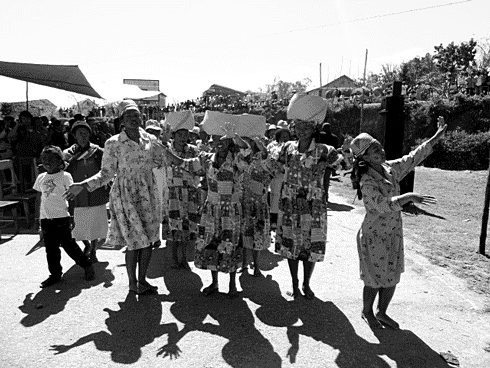
Four Days of Complete Festivities
The festival lasts four days. Participants are representatives from the five districts of the region in each field of activity. Day 1: begins with the "toakaja" (paying tribute). This is the reception of participants and guests. Local authorities offer traditional Betsileo spirits to guests, followed by "sokela betsileo" (speeches specific to the ethnic group) and cultural entertainment. Day 2: The official opening consists of a carnival, official speeches, and an opening ceremony. At midday, a communal meal is offered by the organizers, along with the sharing of zebu meat. The day continues with cultural entertainment and a grand popular ball, where people dance the kidodo, a Betsileo dance. Day 3: Early in the morning, there is a collective traditional circumcision ceremony, followed by a "tevika zazavavy" (ear piercing for young girls). Subsequently, a demonstration of traditional marriage proposals is performed. Yes, marriage proposals in Madagascar must follow an entire protocol. To close this day, you can witness the "fetrika" (a form of traditional boxing) and cockfights. Day 4: In the morning, zebu combat opens this final day. Then comes the "savika," during which a man mounts a robust zebu and must hold onto its hump while the animal charges, one of the specialties of Fianarantsoa. At the end of the day, to close the festival, prizes are awarded and the flag is passed to the district that will host the next "Volambetohaka" edition.
This program varies depending on how the host district organizes the "Volambetohaka." This festival is truly rich in ancestral celebrations, Betsileo customs and traditions, and various speeches and discussions specific to the region. Attending this festival during your circuit through Madagascar will be a truly enriching experience.