The tuk-tuk
The tuk-tuk, an unofficial national symbol of Thailand, is gaining popularity in Madagascar. Its vibrant colors and practicality make it an uncommon means of transport, offering travelers a unique and entertaining experience. Yet these advantages mask some drawbacks, including pollution and driver training shortcomings.
What is a tuk-tuk?
If you have never traveled in Thailand or other Southeast Asian countries, it is natural that you do not know what a tuk-tuk is. This term designates the Thai version of a motorized rickshaw. The name comes from the word "tuk" meaning cheap, repeated endlessly by drivers throughout the day.
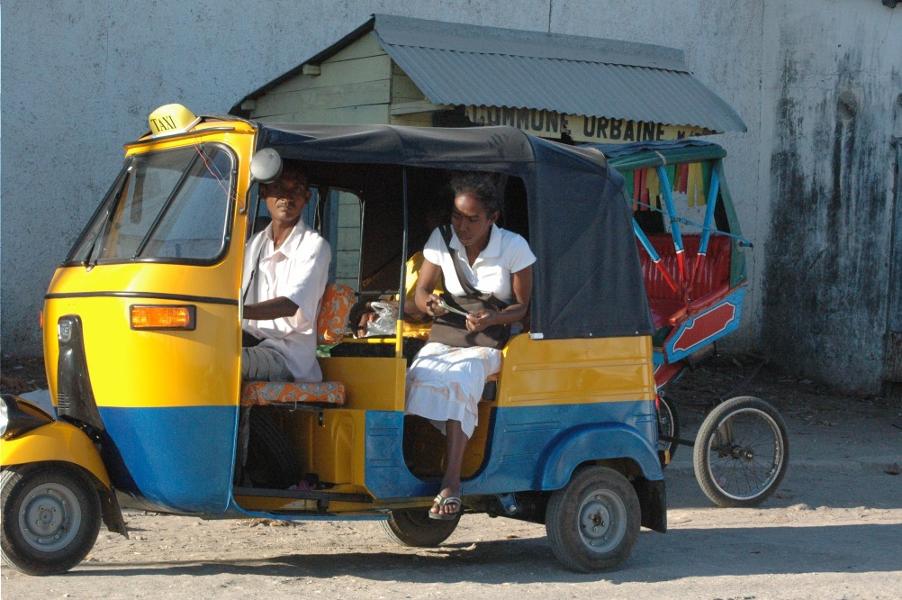
Typically, this tricycle can carry up to three people of average build, plus the driver. In Madagascar, passengers readily squeeze together to fit 4 or even 5. The front seat is reserved for the driver and a bench at the rear accommodates travelers. Sometimes, a passenger even finds a spot on the driver's seat!
More modern versions of tuk-tuks have up to two rear benches and even a rear trunk. The sides are open and the roof is securely covered with fabric or an integrated frame. Travelers are thus protected from the sun's heat and rain.
Where do these motorized tricycles that have recently invaded Madagascar's streets come from?
Tuk-tuks, typically painted yellow, originate from Thailand or Cambodia. They also exist in India where the local population calls them auto or autorickshaw. In Indonesia, they are known as bajaj. It is even possible to find them in Paris, notably models from the Piaggio brand.
In Madagascar, they are called "tuk-tuk" just as it is spelled. Malagasy people do not use the Thai pronunciation "touk touk". Indonesian influence has also introduced the name "bajajy" as the common designation for tuk-tuks in everyday language.
Used as taxis running either on electricity for some or gasoline for others, these three-wheeled vehicles have been flooding the streets of Madagascar's major cities for several years, notably in Diégo-Suarez, Majunga, Tuléar, Antsirabe, Ambositra, Fort-Dauphin, Tamatave and on the islands of Sainte-Marie and Nosy-Be.
It also serves as a shared transport mode, carrying up to seven people with the driver, at a cost of 500 to 2,000 Ariary per ride, per person per journey.
Representing a necessity for the local population, the tuk-tuk has become a true tourist attraction. It is a highly popular local transport option valued for its accessibility and speed, weaving between cars in traffic jams.
These tricycles are very easy to find, particularly in tourist areas and near markets.
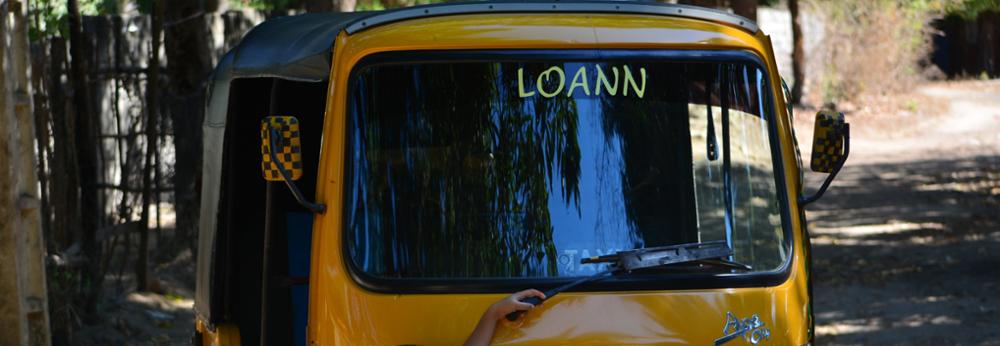
The advantages of the tuk-tuk
Many tourists make the effort to travel to the Great Island solely to see and ride in this means of transport. Indeed, the vehicle offers several advantages in terms of ecology and maintenance.
The tuk-tuk for a unique and fun travel experience
The tuk-tuk offers a unique and fun experience through often potholed, noisy and congested streets. Riding in this type of vehicle allows you to get closest to the hustle and bustle of the local population. Often decorated by the driver according to his inspiration, this tricycle also lets tourists take beautiful photos while traveling. It provides an adventurous feel without taking too many risks. Note that in most situations, traveling by tuk-tuk is faster than by taxi or personal car. Like a motorcycle, it can smoothly travel on secondary roads.
Lower energy consumption
This advantage applies particularly to electric tuk-tuks. As its name suggests, it runs on electricity, an energy source more affordable than gasoline. From an economic perspective, the tricycle offers real benefits. 10 hours of charging equals 14 hours of use, although several factors influence consumption (average load, speed). Additionally, the driver charges the vehicle from 8 PM using a special power supply system. From 6 AM, the tuk-tuk is ready to start its day.
Minimal maintenance
In terms of maintenance, this vehicle is undemanding. There is no need to constantly check oil changes, oil levels and spark plugs. The tricycle requires only regular greasing. In case of breakdown or malfunction, parts are easily available. Gasoline-powered models can only carry 3 passengers maximum despite some violations. Be careful though, as the Tamatave police ensure compliance with these regulations. Again, the electric model surpasses its gasoline counterpart, as it can accommodate up to 6 travelers. This is why they have halved their price, ranging from 500 to 1,000 Ariary.
The disadvantages of the tuk-tuk
The low-displacement engine is the main disadvantage. Speed is thus comparable to two-wheeled vehicles. Adding to this weakness are the lack of driver training and the environmental impact.
Lack of training
The driver has not necessarily undergone training in driving before self-proclaiming himself a tuk-tuk driver. At minimum, a week of learning would be worthwhile, if only to master the mode of operation, speed and battery autonomy (for electric versions). Like drivers, mechanics and electricians benefit from receiving some training from manufacturers. These courses would help them become familiar with the vehicle.
A source of pollution
The management of batteries at the end of their life remains a mystery. It should be noted that accumulators are lithium-ion based. Models running on fossil fuel are major CO2 emitters. Black exhaust fumes are extremely visible. Tricycles have the sad reputation of poisoning the air more than cars and motorcycles. Also be aware that the vehicle is hydrophobic. Stagnant water (not rainwater) remains its worst enemy. It will have great difficulty crossing flooded areas and will require a full day of drying after its journey.
A risk for passengers
The level of safety compared to other means of transport often discourages passengers from boarding. Indeed, protective features amount to open sides and minimalist benches. Seats lack seatbelts. No windows protect passengers and driver from heat and wind on the road. To reduce accidents, drivers should focus on controlling their speed.
© Détours Madagascar - May 13, 2020