Madagascar's Baobabs: Emblematic and Mythical Trees
An emblematic tree of Madagascar, characterizing the landscape of the south and west of the country. It is featured on one side of the 50 ariary coin, leaving its mark on the past and present of the Malagasy people.
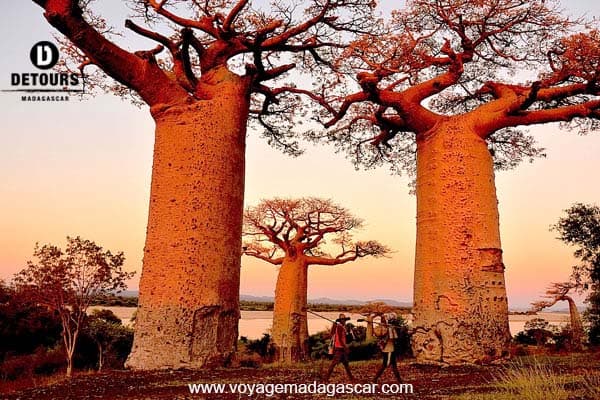
This is an emblematic tree of Madagascar, characterizing the landscape of the south and west of the country. It is featured on one side of the 50 ariary coin, leaving its mark on the past and present of the Malagasy people. This majestic tree is impressive when seen in person, with its enormous trunk of smooth bark and its dizzying height. Indeed, special tourist circuits are dedicated to discovering baobabs. It's worth noting that 6 of the 8 species recorded in the world are endemic to the island!
The Queen of the Forest
Baobab and myth. Several myths surround this great tree, which can reach up to 30 meters in height, with its very distinctive appearance. Among them, the most well-known is perhaps the one that tells of the baobab being planted upside down by God. In Madagascar, it tells a different story depending on the village. In the southwest of the island (Morombe region), for example, in the small village of Andombiry, the largest tree in a vast baobab forest is venerated by the inhabitants.
Baobab and daily life. The baobab is used daily: The pulp (rich in vitamin C and calcium) and leaves are consumed, while the bark, flowers, seeds, and roots are used as medicine. The wood also serves as a building material, notably for making tiles and walls. In Ampotaka, on the Mahafaly plateau in the south of the island, the baobab serves as a water reservoir to withstand the harsh and long dry season. The trunks are then hollowed out and filled with water during the short rainy season.
Baobab and eternity. The baobab is called reniala in Malagasy, meaning "queen of the forest". The tree is decidedly imposing: approximately twenty meters in height for adult specimens, with a circumference of about twenty meters as well (trunk). A trunk's diameter can reach 10 meters. The oldest baobab known in Madagascar is the one in the Tsimanapetsotse park south of Tuléar, called "grandmother." This one belongs to the Adansonia rubrotispa species and is 1,600 years old.
The Baobab Landscapes
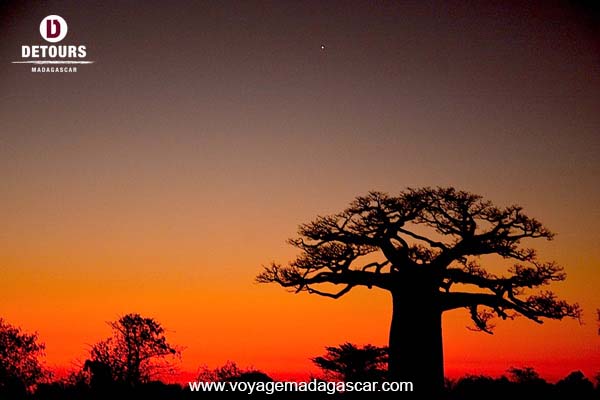
Baobabs and earth. When this tree's name is mentioned, those in the know immediately think of the famous Baobab Avenue. This is a small dirt road lined with a dozen baobabs more than 30 meters tall and over 800 years old. They are well-aligned and offer an exceptional setting, particularly when the sun rises or sets. The site is located in a protected area 19 km from Morondava in western Madagascar.
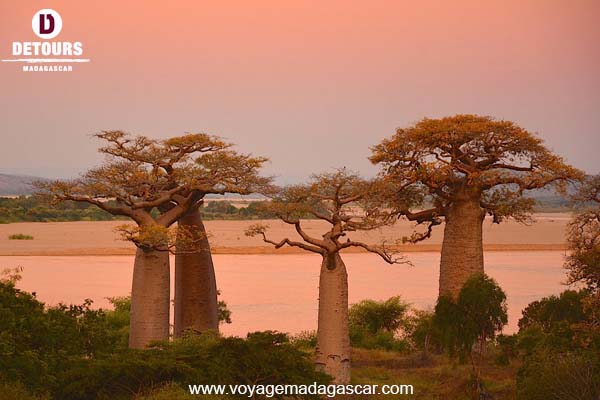
Baobabs and river. One of the best ways to admire baobabs is to follow the Mangoky River, revealing an unparalleled landscape! It's a paradise for photography enthusiasts and nature lovers! The descent of the 170 km river should last at least a week to enjoy the wonders it offers: baobabs lining the waterway, stretching along ridges, or filling canyon bottoms. This river in the western part of the island, accessible between the towns of Beroroha and Ambiky, invites adventure.
Baobabs and sea. The baobab is never far from the ocean in the western part of the Great Island, and characterizes the inland landscape. Sometimes the trees grow in pools of brackish water. You notice this when traveling by four-wheel-drive vehicle to the seaside resorts of Ifaty or Anakao. However, the most famous baobab located by the sea is the one in Majunga. Bouye be has become the symbol of the city!
For an unforgettable experience, it is recommended to attend the baobab festival in Morondava in July. For total immersion in Madagascar among the baobabs, discover the trailer for the film Baobabs Between Land and Sea by Cyrille Cornu. Visit his website Baobabs land-sea, where the DVD is for sale.