Caviar in Madagascar: The Future 3rd Global Producer
Madagascar's potential for economic development is truly unlimited! Agriculture, livestock, mining, labor, tourism... There's no shortage of growth opportunities! While most people and leaders seem to live on another planet, lucid individuals are taking action. The country never ceases to astound with its wealth and opportunities. After Malagasy oil, today comes Malagasy caviar! Yes, caviar!
Madagascar's potential for economic development can never be overstated! Agriculture, livestock, mining, labor, tourism... There's no shortage of promising markets! While the majority of the population and leaders seem to live on another planet, some far-sighted individuals are taking the necessary steps. The country never ceases to astonish with its wealth and the opportunities it offers. After Malagasy oil, today comes Malagasy caviar! Yes, caviar!
Acipenser: The First Sturgeon Farm in the Indian Ocean
An ambitious project... but a very sensible one! Although Madagascar has no native sturgeon species, as the genus Acipenser originates from Europe, Asia, and North America, it is possible to recreate the living conditions of these freshwater fish in Malagasy waters. Indeed, everything seems remarkably conducive, judging by the results Acipenser has achieved so far. However, it requires substantial financial investment and considerable patience, since sturgeons reproduce only every 5 years at minimum, up to 15 years for certain species. The three partners behind the venture are executives of a ready-to-wear apparel company for major French brands. Seeing Madagascar's potential, they decided to launch this adventure in 2009, obtaining the first larvae from the initial eggs on April 1st, 2013. Depending on the species, the fish measures 1.5 to 6 m in length and weighs from 20 kg to a ton (for the largest beluga).
Excellent Breeding Conditions
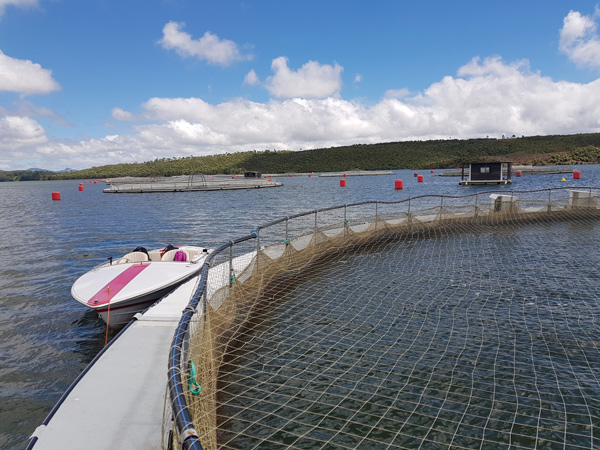
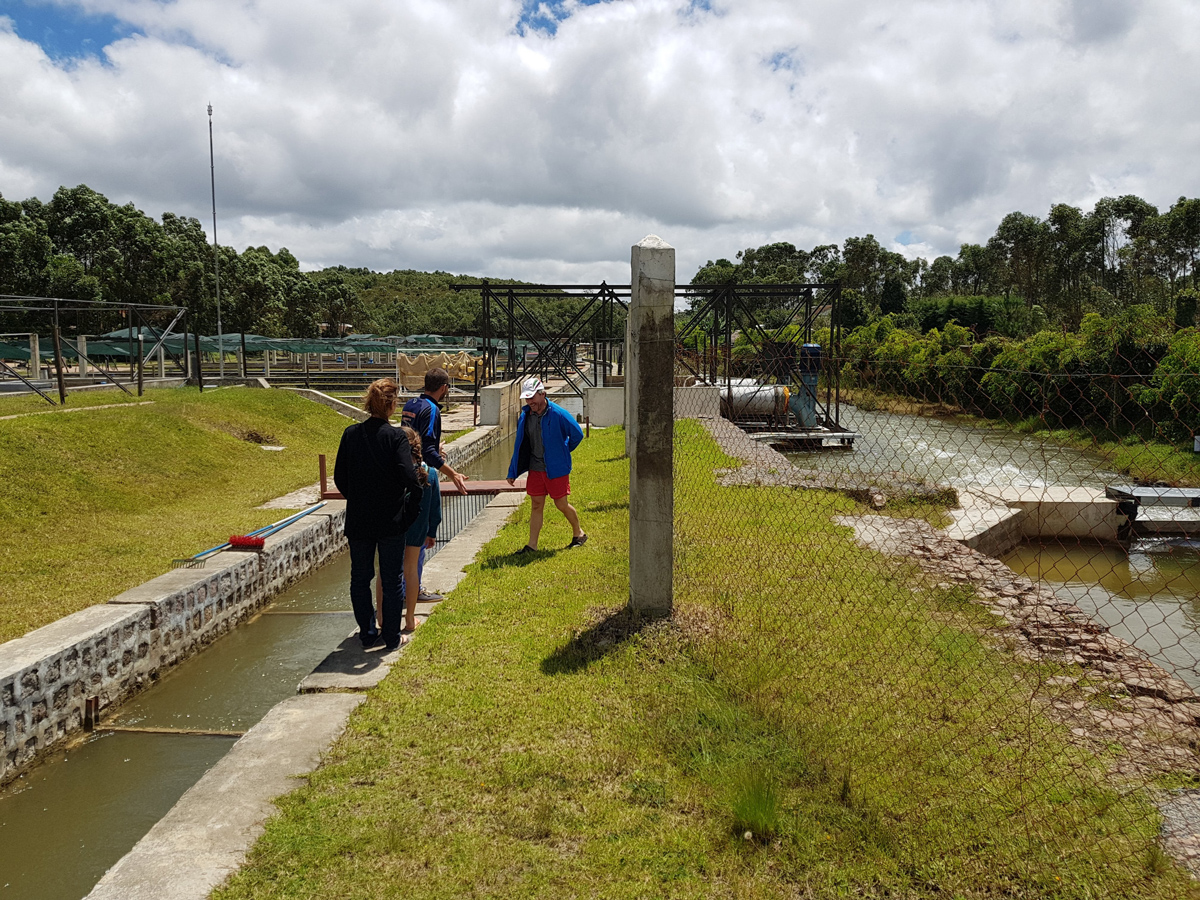
The breeding site is located on a 6-hectare estate in the municipality of Ambatolaona, approximately ninety minutes from Antananarivo. The region's distinguishing feature: Lake Mantasoa. Acipenser's production site is partly built on this lake. It is an immense water reservoir covering approximately 2,000 hectares, developed during the colonial era to regulate the Ikopa river's flow. These waters are renowned for their abundant fish populations, and raising sturgeons here is far from unreasonable. Acipenser holds a CITES permit for production complying with international standards. Fertilized eggs are imported from Europe and incubated in the farm's facilities. Then Acipenser's homemade feed and the incubation, pre-growth, and growth units come into play. The large pools where sturgeons evolve are built with cut stone to make the site as authentic and natural as possible. The farm also has a processing workshop certified to European standards for preparing Madagascar caviar: ROVA.
A Farm Meeting International Market Standards
Environment - The fish farm comprises a "land site" and a "cage site" directly implanted on the lake at 1,300 meters altitude. Water quality is exceptional, ideal for producing exceptional caviar. All breeding conditions are optimal, comparable to European and American farms. Furthermore, the region is simply outstanding, with its red soil valleys, rice paddies, eucalyptus trees, and pines... Nature at its most generous! The Feed Production - Acipenser's sturgeon feed is produced on-site using raw materials 80% of local origin, free from GMOs, terrestrial animal meal, and blood meal. The feed is therefore manufactured by the farm itself, meticulously analyzed and verified by experts. The goal is to achieve perfect and complete control of the operation, guaranteeing high-quality caviar. The Farm's Values - Acipenser will soon obtain ISO 14001, 26000, and 22000 certifications. The company's commitment concerns quality, as well as society and the environment. The team comprises 90 Malagasy and French staff members, including executives trained at the fisheries and marine science institute in Toliara. Fish farming technicians come from surrounding villages and receive in-house training. Ultimately, Acipenser aims to become the world's 3rd caviar producer.
The Sturgeon Species Produced
- Siberian Sturgeon (Acipenser baeri)
This brown-gray or gray-black long-nosed fish is a reliable choice, producing caviar grains averaging 2.4 mm in diameter. The color ranges from brown to black or anthracite gray. Maximum size: 2 m.
- Russian Sturgeon (Acipenser gueldenstaedtii)
The Russian Sturgeon, also called the diamond sturgeon, has a green-gray or blue-black body with white star-shaped plates. The caviar, called Osciètre or Ossetra Caviar, will be dark amber in color, tinged with gold, measuring at least 2.8 mm.
- Huso Huso (Beluga)
The beluga (huso huso), originating from the Caspian Sea and Black Sea, is the largest and heaviest sturgeon of all. It produces large caviar grains of pearl gray (3.2 to 3.5 mm) with a buttery flavor that lingers long on the palate. Its maturation takes considerable time, however—18 years—due to its longevity: up to 118 years.
- Acipenser persicus
This is an extremely demanding species, difficult to raise in captivity, yet produces particularly golden caviar of exceptional quality with a unique flavor. Few producers manage to raise this sturgeon, with its elongated body of 1.5 to 2 m, weighing 80 to 150 kg.
- Acipenser Nudiventris
This Danube-origin sturgeon is an innovative species in caviar production, reflecting Acipenser's desire to stand out through product originality. The fish has a gray-blue body and white plates.